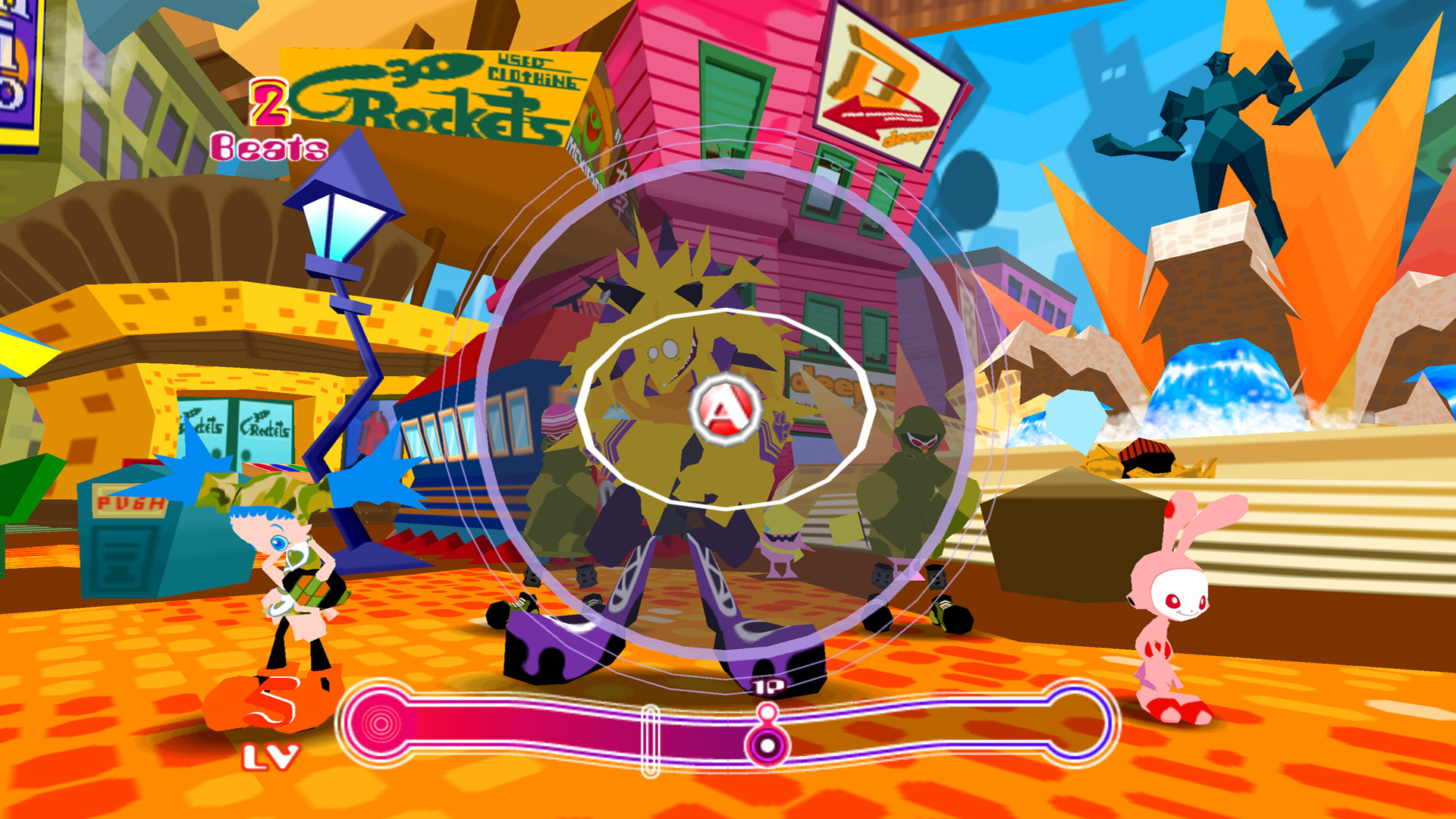
Cool Cool Toon stands as a unique entry in the library of SEGA’s final home console, originally launched exclusively in Japan on August 10, 2000. Developed and published by SNK, this title diverges from traditional gaming norms by focusing entirely on its rhythm-based music video game format. Designed specifically for the Dreamcast, the experience combines fast-paced musical cues with straightforward input mechanics, creating a playful yet demanding challenge that quickly gained a cult following among import enthusiasts.
Gameplay and Rhythm Mechanics
At its core, Cool Cool Toon operates as a timing-driven rhythm experience. During each track, the letters A, B, X, and Y continuously appear at various points along the edges or center of a large circular display. Players must utilize the Dreamcast analog stick to maneuver a moving marker toward the highlighted letter and press the corresponding face button on the controller at the precise moment. Success relies heavily on rhythmic accuracy and quick reflexes. The game enforces a strict failure threshold, meaning that missing too many letter cues will result in a failed run. This straightforward yet unforgiving structure demands consistent practice and sharp auditory attention, rewarding players who can maintain their tempo without faltering.
Visual Style and Storytelling
Visually, the game distinguishes itself through a vibrant, zany aesthetic driven by cel-shaded comic art. The visual direction is the work of illustrator Ippei Gyoubu, known for his contributions to the Gundam franchise, which brings a dynamic and slightly surreal atmosphere to every stage. While the gameplay takes center stage, Cool Cool Toon also features a complete narrative experience woven through its tracks and cutscenes. For years, this storyline remained inaccessible to Western audiences due to the game’s Japan-only release. That barrier was recently overcome by a dedicated community translation patch, which meticulously converted all menus, cutscenes, and on-screen text into English, finally unlocking the full narrative context for global players.
Platform Features and Technical Support
Released in 2000, Cool Cool Toon was built to leverage the Dreamcast’s hardware capabilities while embracing its peripheral ecosystem. The game supports a variety of features designed to enhance the player experience:
- Memory Card compatibility for saving progress and high scores
- Controller vibration feedback to emphasize musical beats and impacts
- Offline versus multiplayer modes for local competitive play
- Native support for the Dreamcast maracas controller, adding a physical layer to the rhythm gameplay
- Integrated bonus content access via the community translation patch, including unlockable save files, development artwork, and preserved web assets from the original Dricas network
Who Should Play Cool Cool Toon
This title primarily appeals to rhythm game enthusiasts who appreciate straightforward, beat-matching mechanics without complex command inputs. Fans of visually distinct, anime-inspired art styles will find the cel-shaded presentation particularly engaging. The game is also frequently compared to Space Channel 5 due to its accessible gameplay loop and energetic tone, making it a familiar touchstone for players who enjoyed that era of music-driven console titles. Additionally, Dreamcast collectors and import gamers will value Cool Cool Toon as a historically significant release, marking one of SNK’s final projects before exiting the console hardware market. With the recent completion of the English translation, the game is now fully accessible to a wider audience, offering a nostalgic yet fresh rhythmic challenge that remains distinct within the Dreamcast catalog.