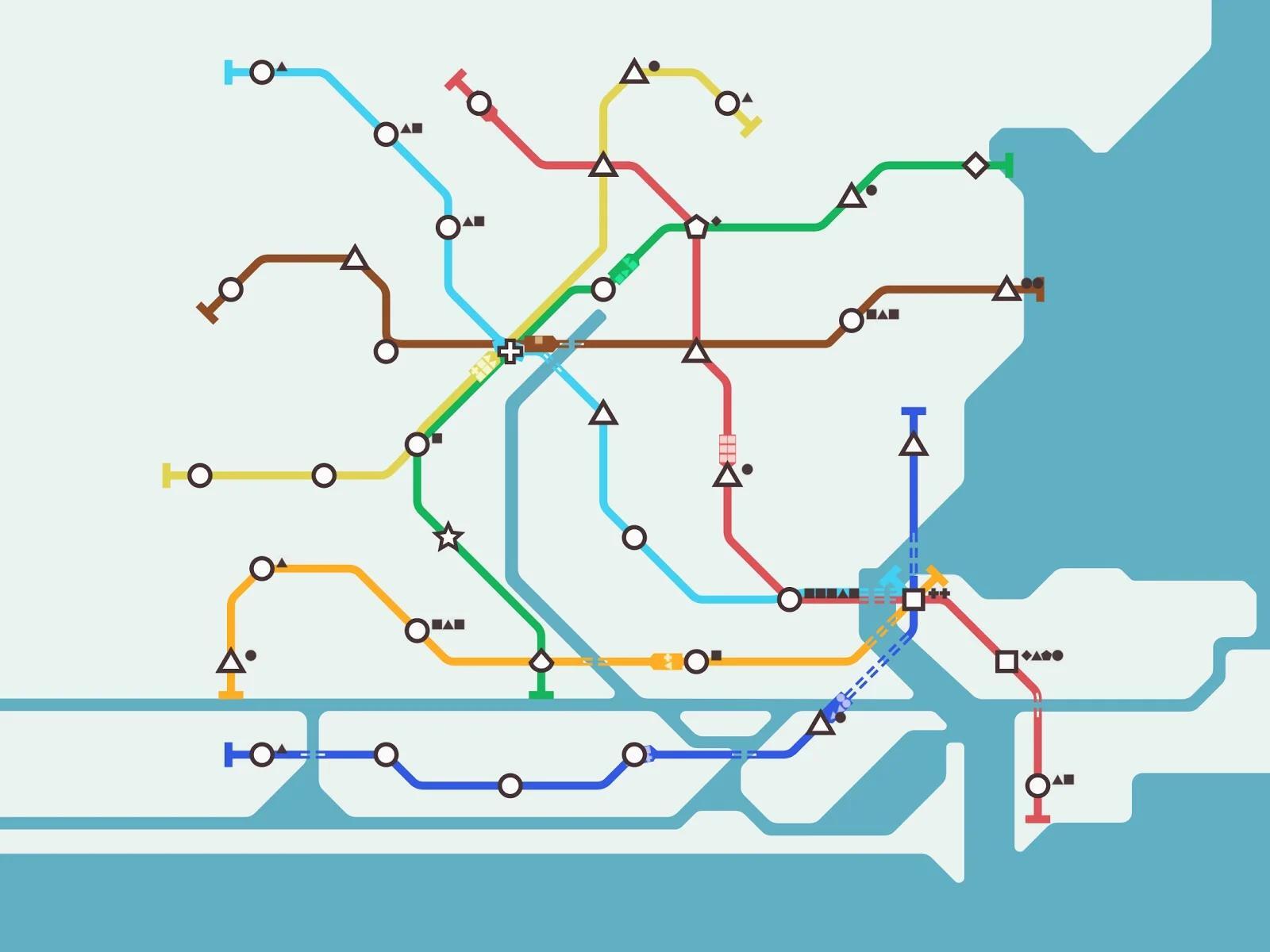
Mini Metro is a critically acclaimed indie puzzle strategy game that challenges players to design and manage an efficient rail transit network for continually growing cities. Released in late 2015, this title has carved out a unique niche in the simulation genre by stripping away complex interface elements in favor of pure, elegant gameplay mechanics. It is not merely a game about moving trains; it is a test of spatial reasoning, resource management, and adaptability under pressure.
Gameplay Mechanics and Strategic Depth
At its core, Mini Metro tasks the player with providing transport solutions for cities that expand in real-time. The objective is straightforward yet demanding: build stations and railways to move passengers to their destinations before any single station reaches its capacity limit. If a station becomes full, the game ends immediately, making every decision critical.
The gameplay loop revolves around managing limited resources. As the in-game weeks progress, passengers increase in number, requiring more frequent and reliable connections. Players are rewarded with new trains and upgrades, which must be strategically allocated to maintain efficiency. These upgrades can enhance station capacity, provide additional tunnels, extend rail lines, or add extra train carriages. The tension arises from the constant balance between expanding the network to accommodate growth and maintaining the existing infrastructure to prevent bottlenecks.
One of the most compelling aspects of the gameplay is its simplicity. There are no complex menus or intricate control schemes. Instead, the player interacts directly with the map, drawing lines between stations and assigning train types. This minimalist approach ensures that the focus remains entirely on strategic planning and quick thinking.
Story, Setting, and Artistic Style
While Mini Metro does not feature a traditional narrative, the setting provides a rich context for the gameplay. Each level in the game is based on a real-world city, allowing players to experience the urban layout of places like New York, London, or Tokyo. Some levels incorporate unique features reflective of their real-life counterparts; for instance, the Tokyo level includes high-speed Shinkansen trains, adding a distinct flavor to the challenge.
The game is particularly notable for its minimalistic art style. Almost every element on the level is constructed from simple shapes and bold colors, creating a visual experience that is both clean and functional. This aesthetic choice was intentional, designed to imitate real-life railway map schemes. In this system, different shapes represent different types of stations and passenger destinations, allowing players to quickly identify key areas and prioritize their network expansions. The visual clarity aids in decision-making, reinforcing the game’s focus on efficient urban planning.
Platform Availability and Accessibility
Mini Metro is widely accessible, having been released across a variety of platforms to reach a broad audience. Players can enjoy the game on PC, PlayStation 4, and Nintendo Switch, as well as on mobile devices running iOS and Android. This cross-platform availability allows gamers to engage with the game’s strategic challenges whether they are at a desk or on the go.
Notable Features
- Real-World Inspiration: Levels are based on actual city layouts, providing familiar yet challenging environments.
- Minimalistic Design: The use of simple shapes and bold colors creates a visually distinct and functional interface.
- Dynamic Difficulty: The continuous growth of cities and increasing passenger numbers ensure that no two playthroughs are identical.
- Strategic Upgrades: Players must carefully choose which upgrades to implement to overcome escalating challenges.
Who Is Mini Metro For?
This game is ideal for fans of strategy, simulation, and puzzle genres who appreciate clean design and deep mechanical complexity. It appeals to urban planning enthusiasts, puzzle solvers who enjoy optimizing systems, and gamers who prefer concise, replayable experiences over lengthy narratives. The low barrier to entry combined with a high skill ceiling makes Mini Metro accessible to newcomers while offering enough depth to keep seasoned strategy gamers engaged. With a Metacritic score reflecting its positive reception, it stands as a testament to the power of simple ideas executed with precision.