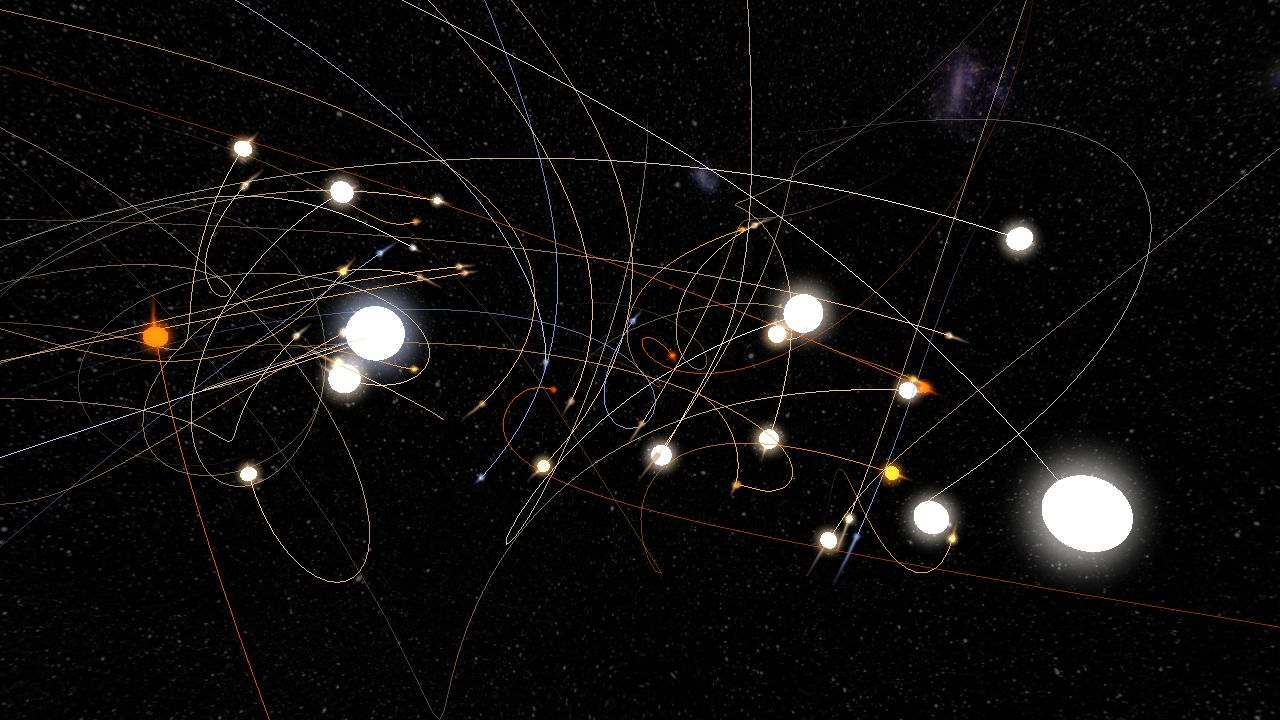
Universe Sandbox is a groundbreaking simulation game that lets players explore the cosmos in an interactive and educational way. Combining elements of casual and indie gaming with deep scientific principles, the game offers a unique blend of entertainment and learning. Since its release on April 29, 2011, it has captured the attention of both gamers and educators alike, offering a platform where users can manipulate celestial bodies and observe the effects of gravity, physics, and other natural forces on a grand scale.
Genre and Gameplay Mechanics
Falling under the genres of casual, indie, and simulation, Universe Sandbox provides a highly flexible and open-ended experience. The game’s core mechanic revolves around the ability to create, modify, and simulate various astronomical systems. Players can alter the properties of celestial bodies—such as mass, temperature, and orbital path—in real-time, allowing for a dynamic exploration of astrophysical phenomena.
With built-in tutorials and step-by-step activities, the game ensures that even those new to the subject can easily grasp the underlying physics. The simulation engine is grounded in real scientific data, using accurate units and principles to reflect the behavior of objects in space. This allows for both educational value and engaging gameplay, as users experiment with different scenarios to see the theoretical changes unfold.
Customization and Creativity
Universe Sandbox encourages creativity and experimentation. Players can design their own solar systems, tweak planetary orbits, and even simulate the birth and death of stars. The game’s intuitive interface allows users to drag and drop celestial objects, adjust their attributes, and witness the consequences of their actions in real-time. Whether you're launching a spaceship, creating a black hole, or watching the effects of a supernova, the possibilities are nearly endless.
The game is available on multiple platforms, including PC, macOS, and Linux, making it accessible to a wide range of users. Its release in 2011 marked a significant milestone in interactive science simulations, and it continues to be a favorite among those interested in space, physics, and astronomy.
Universe Sandbox appeals to a broad audience, from casual gamers looking for a unique and engaging experience to educators seeking a tool for teaching complex scientific concepts. Its combination of educational content and creative freedom makes it a standout title in the simulation genre.