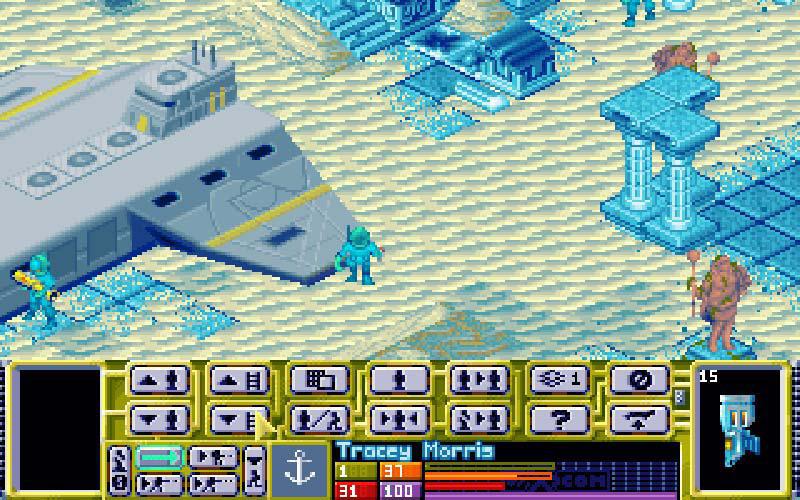
Overview of X-COM: Terror From the Deep
X-COM: Terror From the Deep stands as the second major installment in the celebrated strategy franchise, originally released on March 31, 1995, by MicroProse Software. Following the galactic scope of its predecessor, this title shifts the battlefield entirely to the depths of Earth’s oceans. As a foundational entry in the turn-based tactical genre, it challenges players to manage resources, advance technology, and command elite squads against an extraterrestrial threat that has abandoned space for the sea. The game maintains the series' reputation for high-stakes decision-making while introducing a distinctly atmospheric twist that redefines the tactical experience.
Story and Underwater Setting
When Earth's deep space adversaries recognize a weakened planetary defense, they unexpectedly pivot their strategy, launching a powerful second front from the ocean floor. The narrative draws heavily from H.P. Lovecraft’s cosmic horror tradition, centering on a desperate race to stop the aliens from reawakening their ancient, unstoppable leader who has slumbered beneath the waves for centuries. This underwater backdrop creates a gloomier, stranger, and profoundly oppressive environment. The game’s aesthetic embraces a unique blend of nautical exploration and subtle steampunk influences, featuring harpoon weaponry, underwater bases, and distinctly maritime alien vessels. The setting is not merely a visual change; it fundamentally alters the tone of the conflict, making humanity’s fight against the unknown feel increasingly desperate and claustrophobic.
Core Gameplay Mechanics
Success in X-COM: Terror From the Deep demands mastery over two interconnected systems: strategic base management and tactical turn-based combat. Players must construct and expand underwater facilities, research alien technology, and continuously upgrade their squad’s gear. The aquatic environment imposes strict limitations on traditional armaments, forcing commanders to study and manufacture specialized equipment to survive. Melee combat is introduced as a viable tactical option alongside firearms and special devices, adding another layer to close-quarters engagements. Missions vary significantly in scope, ranging from coordinated assaults across multiple locations to sprawling terror missions that test squad survival on massive map layouts. The difficulty is notably steep, often punishing rushed decisions and demanding meticulous planning for every engagement.
- Strategic layer focused on base building, technological research, and squad progression
- Turn-based tactical combat adapted for underwater mobility and environmental hazards
- Introduction of melee combat mechanics to complement ranged engagements
- Diverse mission objectives including multi-location strikes and large-scale terror scenarios
- Atmospheric design featuring nautical aesthetics, slow-firing specialized weapons, and cosmic horror themes
Platform Availability and Target Audience
Originally launched for PC, the game was later ported to the PlayStation, bringing its demanding tactical gameplay to console players. It is best suited for strategy veterans, fans of classic turn-based tactics, and players who appreciate high-difficulty challenges. Those who enjoy deep resource management, scientific progression systems, and atmospheric sci-fi narratives will find the underwater campaign deeply engaging. The game also appeals to enthusiasts of Lovecraftian horror and tactical squad command, offering a gritty, unforgiving experience that tests both strategic foresight and battlefield adaptability. Its legacy endures as a bold, challenging evolution of the series that proved the X-COM formula could thrive even in the most hostile environments imaginable.