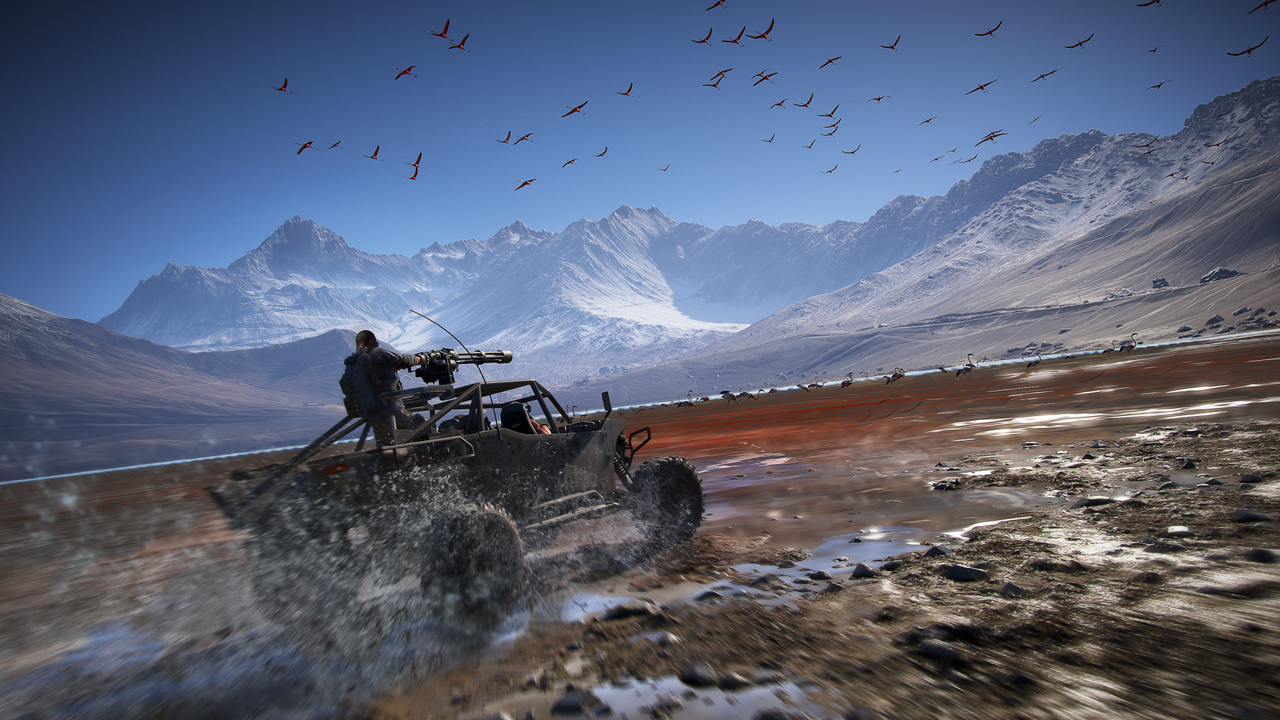
Even years after its release, Ghost Recon Wildlands remains a standout title that defies simple categorization. While I have clocked dozens of hours in this 2017 open-world military shooter, it took me quite some time to realize I hadn't even finished the game's opening mission. Instead, I found myself caught in a single, addictive cycle: fighting the Bolivian cartel through a haphazard series of disconnected tasks, from kidnapping henchmen to raiding haciendas and inviting pure, unadulterated chaos.
Embracing the Chaos of Ghost Recon Wildlands
In this sandbox, things spiral quickly. A simple plan to commandeer a convoy can result in a helicopter being shot down, followed by a hijacked minibus becoming undriveable after a roadside accident. The gameplay loop is less about following a linear path and more about surviving the beautiful mess you've created.
Unlike the more rigid, tactical squad-based entries in the Ghost Recon series dating back to 2001, Ghost Recon Wildlands focuses on environmental navigation and wits. The game provides a toolkit designed for both stealthy approaches and loud, explosive raids. Within the first fifteen minutes, you are already engaging in:
- Stealthy reconnaissance using drones and binoculars.
- Precision strikes utilizing the Sync Shot ability with AI squadmates.
- High-stakes extractions, such as stealing vehicles or rescuing targets.
- Large-scale assaults involving mortar bombardments and heavy weaponry.
The brilliance of the game lies in this immediate delivery of mechanics. You aren't bogged down by wordy tutorials or bloated skill trees; you are simply given an armoury and told to dismantle a drug empire.
A World More Than the Sum of Its Parts
While the game is undeniably chaotic, it isn't without its flaws. Some players might find that mission variety lacks depth over long sessions, and the stealth mechanics can occasionally feel thin. The structure—allowing you enough freedom to tackle regional bosses in any order—can also lead to a sense of repetitive gameplay, reminiscent of the outpost-clearing loops seen in Far Cry or the icon-heavy maps of Assassin's Creed.
However, Ghost Recon Wildlands manages to transcend these criticisms through its unique systems. One standout feature is the ability to extract "intel" from lieutenants. By intercepting and interrogating these NPCs, you unlock vital map information and collectibles. This process drives progression, providing:
- New weaponry found in hidden weapon cases.
- Upgraded abilities, such as thermal vision or enhanced vehicle damage.
- Improved AI, making your squadmates significantly more competent in combat.
Crucially, the game avoids the "fear of missing out" (FOMO) prevalent in modern titles. Many weapon cases aren't even marked on the map, making discovery feel organic rather than a chore.
A Striking, If Caricatured, Setting
The setting itself is a character. Ubisoft’s version of Bolivia is a visually enchanting landscape, filled with atmospheric effects and biome-specific wildlife that make exploration a joy. While it functions as a bombastic caricature of a Latin American nation—reminiscent of the Just Cause series—the physical environment is undeniably captivating.
The narrative follows Nomad, the leader of an American special forces team tasked with destabilizing the Santa Blanca cartel. While the plot leans heavily on "hawkish" Tom Clancy tropes and occasionally unconvincing revenge arcs, it provides a solid backdrop for the gameplay. Even if the protagonist's patriotic soliloquies are a bit heavy-handed, they don't distract from the core experience: a glorious, unpredictable, and deeply engaging military sandbox.