AMD Explores Alternative Chip Manufacturing with Samsung
AMD and TSMC have maintained a strong partnership since AMD spun off its chip-making operations in 2008. However, recent reports suggest that the company is now exploring alternative manufacturing options. According to Nikkei Asia, AMD is reportedly in talks with Samsung to produce some of its future CPUs starting in 2028. This development comes as a response to capacity constraints at TSMC, which has been struggling to meet the high demand for its cutting-edge semiconductor processes.
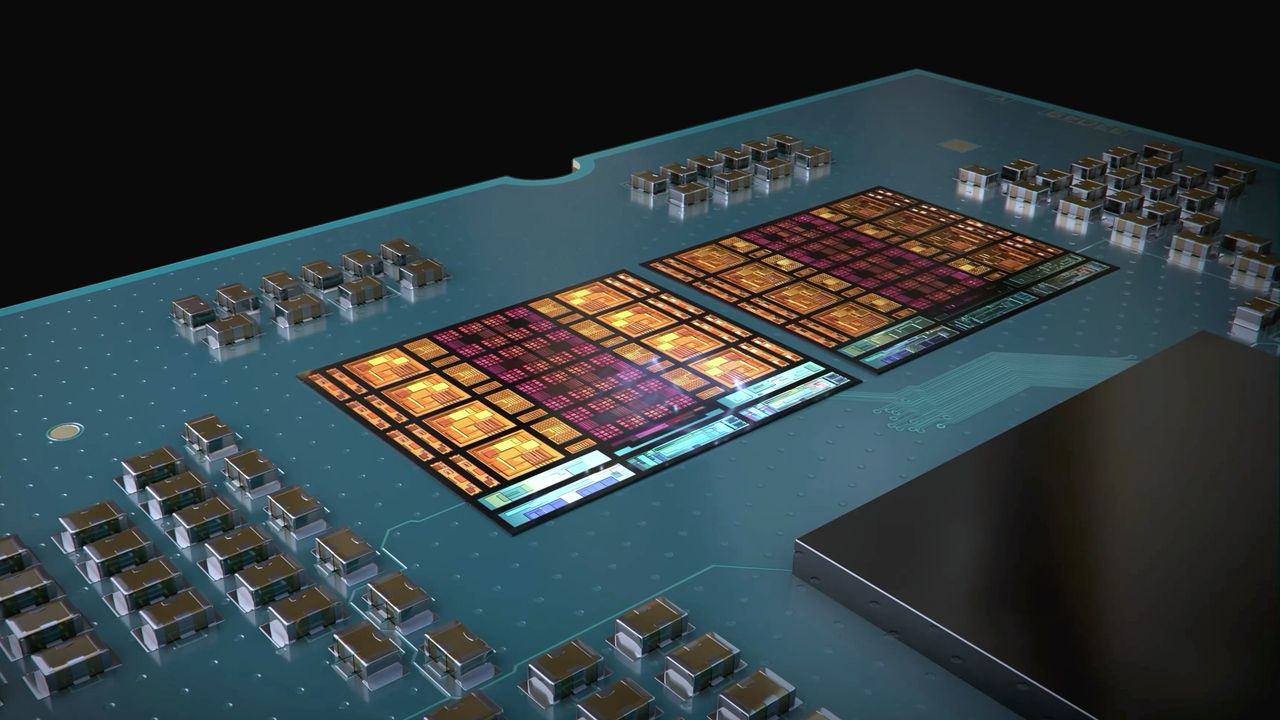
Currently, AMD relies on various TSMC nodes for its products. For example, the Ryzen 7 9800X3D features two chiplets: a Core Complex Die (CCD) built on the N4P node and an Input/Output Die (IOD) fabricated on the N6 node. The N4P node is widely used for AMD’s Ryzen AI 300 and 400-series laptop APUs as well as its latest Radeon GPUs. Additionally, TSMC’s N3 process is being utilized for some of AMD’s Zen 5c chips.
Future Manufacturing Possibilities for AMD
AMD is set to use TSMC’s N2 process node for its upcoming Epyc server-grade processors. While this doesn’t guarantee that all Zen 6 chips will be made on this node, it does highlight the importance of TSMC’s advanced manufacturing capabilities. However, due to the higher cost and relative newness of the N2 node, it may be more limited in capacity compared to the N4 node.
With Nvidia utilizing the N4 node for its Blackwell AI chips, there could be a limited supply of this process for AMD when it launches its next generation of processors. This may be the reason behind the reported talks with Samsung, which could offer a more cost-effective alternative for certain components.
Potential Use Cases for Samsung’s Process Nodes
Two main areas could benefit from Samsung’s manufacturing capabilities: low-end APUs and the IOD (Input/Output Die) for Zen 6 processors. Budget-level CPUs often use older architectures with only minor updates, making them suitable for larger, cheaper process nodes. The IOD houses analogue circuitry for handling Infinity Fabric, DDR5 memory, PCIe, and USB, which doesn’t necessarily benefit from process node shrinks.
Samsung’s 4LPP process node appears to be a strong candidate for these components. However, one might wonder why AMD wouldn’t just use TSMC’s N4 node instead. The answer could lie in the high demand for the N4 node from Nvidia’s Blackwell AI chips, which could leave less capacity available for AMD’s consumer-grade products.
Cost Considerations and Market Dynamics
The discussions with Samsung may also be influenced by cost considerations. The global memory crisis has driven up the prices of DRAM and NAND flash, making PC components more expensive. This has led to a decline in PC shipments across most sectors, except for data centers.
As a result, AMD and its competitors are likely evaluating all possible options to reduce manufacturing costs. If Samsung can offer significantly lower prices compared to TSMC, it’s understandable why companies would be interested in exploring this partnership.
For PC gamers, these manufacturing decisions might not have a direct impact. Regardless of the performance of upcoming CPUs or GPUs, the high cost of DDR5 memory kits and SSDs will likely remain a more pressing concern for the average consumer.