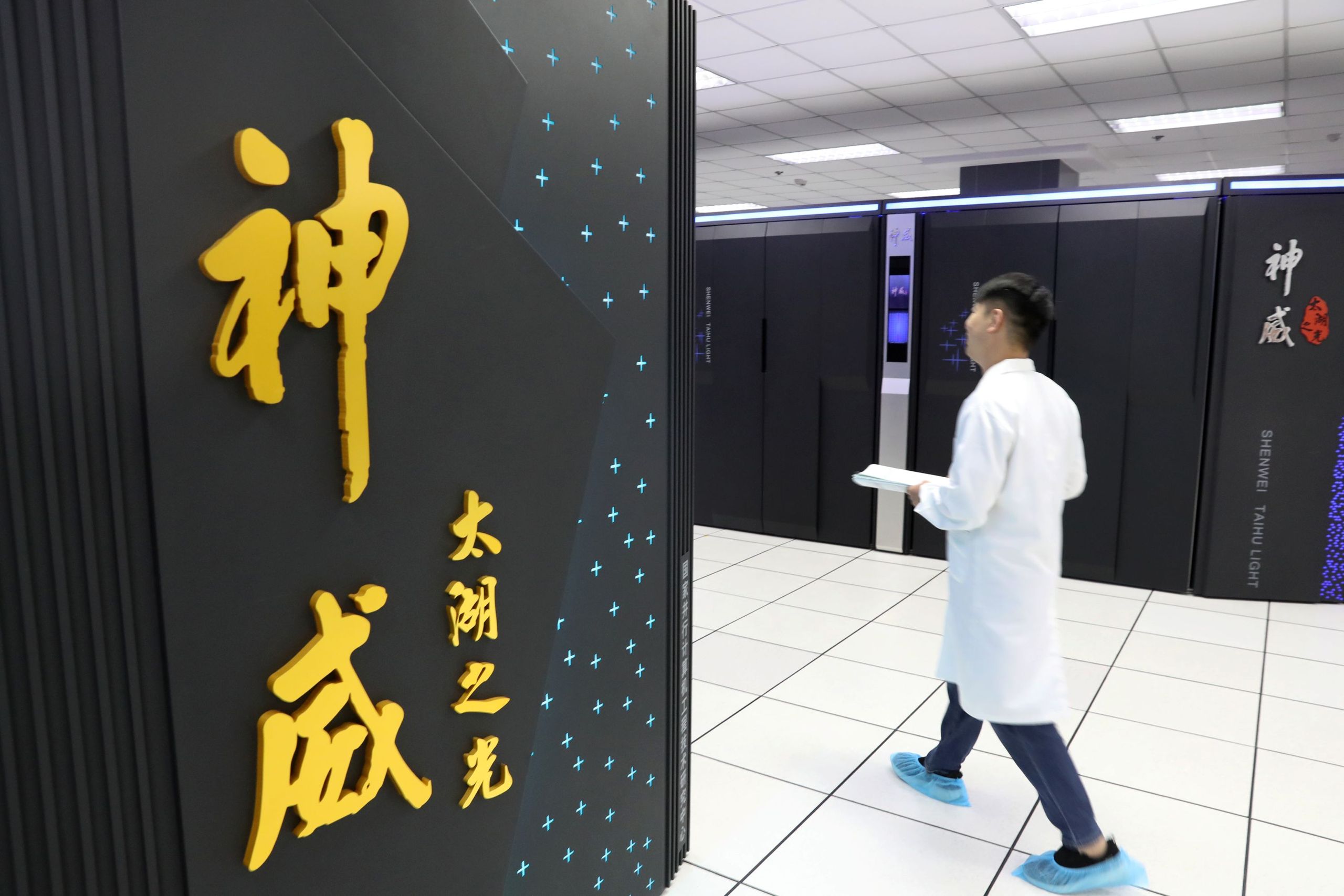
China Defies US Restrictions and Builds the World’s Fastest Supercomputer
Since 1993, the TOP500 list has served as a benchmark for global supercomputing power, tracking the world’s most advanced systems every six months. For decades, U.S. systems dominated the rankings, but a recent shift has seen China reclaim the top spot with the deployment of LineShine, a supercomputer that defies conventional design and U.S. export restrictions. This moment marks not just a technological leap but a symbolic rebuke of geopolitical tensions that have sought to stifle Chinese innovation in high-performance computing.
A New Era in Supercomputing Architecture
LineShine’s rise to the top of the TOP500 list is remarkable not only for its speed but for its architecture. Unlike most modern supercomputers, which rely heavily on graphics processing units (GPUs) to handle massive parallel computations, LineShine is built entirely on central processing units (CPUs). This approach is unconventional, as GPUs have long been the preferred choice for tasks requiring high computational throughput, such as AI training and complex simulations.
The system uses roughly 45,000 LX2 processors, each with 304 cores and a clock speed of 1.55 GHz. These CPUs are part of the LingKun platform, a homegrown Chinese design. The processors are interconnected via a high-speed network called LingQi, optimized for low latency and high data transfer rates.
This departure from traditional GPU-centric design illustrates China’s ability to innovate independently, even in the face of export restrictions that have limited access to U.S.-made components. It also signals a broader trend: the development of alternative computing architectures tailored to national needs and constraints.
Geopolitical Implications and Technological Autonomy
China’s achievement is more than a technical milestone—it is a strategic message to the U.S. and the rest of the world. With export controls tightening under both Trump and Biden administrations, Beijing has been forced to accelerate its domestic tech development. The result is a supercomputer that doesn’t just match but surpasses the performance of the U.S.’s El Capitan, delivering 2,198 exaflops while consuming about 42.2 megawatts of power.
The implications of this shift are profound. For years, the U.S. has held the upper hand in high-performance computing through its control of advanced semiconductor manufacturing and AI-specific hardware. Now, China has demonstrated that it can build world-class systems without relying on those components, using a combination of Kylin OS, a Linux-based operating system widely used in government and scientific computing, and indigenous hardware.
- The system’s reliance on CPUs suggests a different approach to parallelism and efficiency.
- It also highlights the growing importance of software optimization and system-level design in achieving performance gains.
- China’s push for self-reliance in computing infrastructure is part of a broader effort to reduce dependence on foreign technology.
This development is likely to influence the global tech landscape, prompting other nations to invest more in domestic semiconductor and computing research. It also raises questions about the long-term effectiveness of U.S. export controls in slowing China’s technological progress.
A Glimpse Into the Future of Computing
As LineShine stands at the forefront of supercomputing, it offers a glimpse into a future where technological leadership is no longer dictated by access to foreign components. China’s ability to build such a system without GPUs or advanced U.S. chips shows that alternative paths to computing excellence are viable. This could encourage other countries to follow suit, developing their own architectures and ecosystems to avoid the pitfalls of global supply chain dependencies.
The race for computing supremacy is far from over, but LineShine’s success underscores a new reality: the next generation of supercomputers may not be defined by the components they use, but by the ingenuity of the engineers and nations that build them. As the world watches, one thing is clear—China has not just built the fastest supercomputer, but also a powerful statement about the future of global tech innovation.