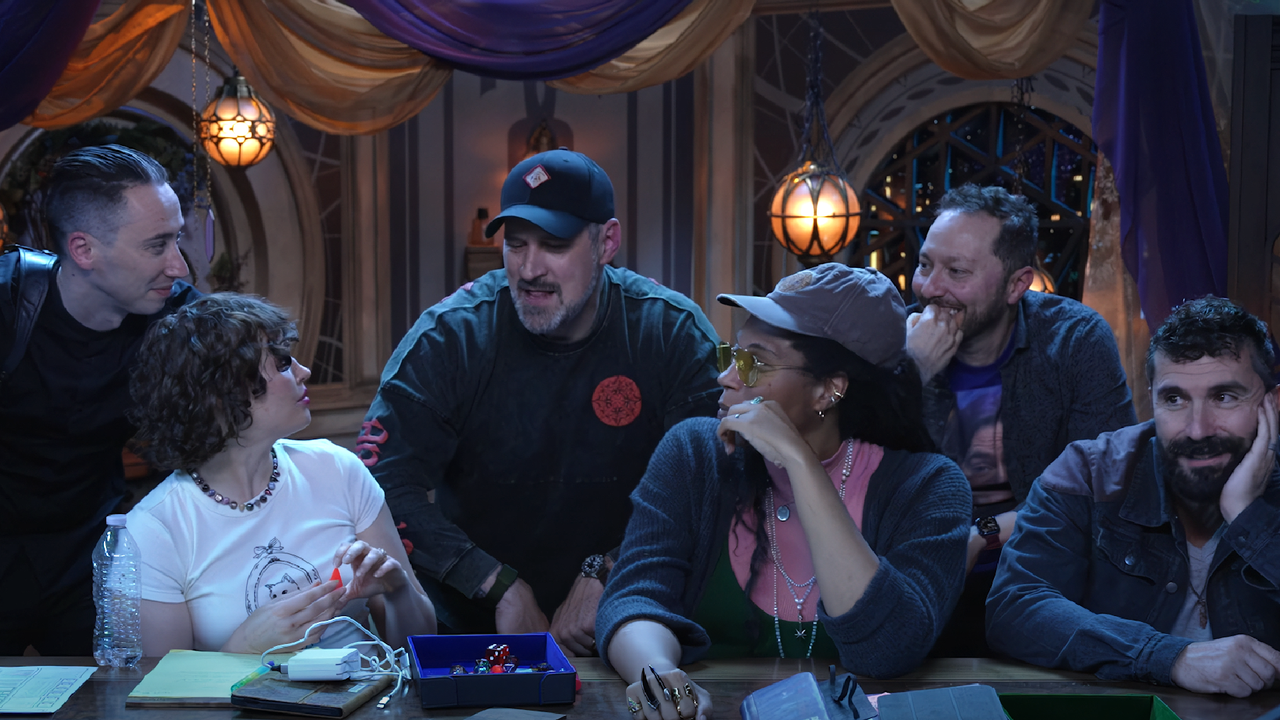
I had my doubts about Critical Role's new 13-player D&D campaign, but its latest episodes have me fully bought into its grand, ambitious promise. This article contains spoilers for Critical Role Campaign 4, episode 30.
Campaign 4 of Critical Role has been a spectacle—a 13-player, three-table epic aiming to reinvent the West Marches style of gameplay for a modern actual play show. It's an audacious undertaking, almost daedalian in scope, and yet, after 30 episodes, it's clear that the show is delivering on its promise. The first four-episode overture was impressive, with Brennan Lee Mulligan deftly juggling 13 individual storylines, a task that required the skill of someone deeply experienced in LARP, TTRPGs, and improv comedy—which, of course, he is.
The recent arc, where all three parties have returned to the main city of Dol-Makjar, felt like a significant challenge. It's one thing to manage three groups when the story is still finding its footing, but it's another to bring them all together for what essentially constitutes the actual-play equivalent of a first-season finale. The Hallowed Round, a ritual to heal a scar on the face of the world, became a focal point of this arc. Wicander Halovar’s cunning manipulation of her house’s shrewd matriarch, a prodigal son returning with his fingers crossed behind his back, and the witnessing of the Tachonis patriarch’s judgment by his power-hungry peers all added layers of tension. Most importantly, the ill-fated expedition into the Tachonis estate while the patriarch was away was a highlight of the arc.
A New Era of Consequences
One of the most intriguing promises of the 13-player campaign has been the idea that any character could die. This concept, often mentioned by Mulligan, had yet to be fully realized—until now. The idea behind this is simple: with a larger cast comes more opportunities for lethal encounters and uncompromising storytelling. This aligns with the Game of Thrones-esque plot currently unfolding, where institutions are vying for power and the stakes are high.
Episode 30 delivered on this promise with the tragic fate of Teor Pridesire. The encounter within the Tachonis Manor was designed with the potential for six fully-healed party members, and it was a brutal test of both luck and skill. This moment was the culmination of a long-awaited consequence for poor decisions and unfortunate dice rolls.
The Weight of Death
Up until this point, the cast had been largely unscathed, with a streak of good luck shielding them from death. There have been moments of near-fatal encounters—like Bolaire narrowly avoiding a Disintegrate spell—and the miraculous rolls of Azune Nayar, but the real test came with Teor’s downfall.
Mulligan’s decision to pull the trigger on this moment was both bold and necessary. He justified the existence of the Desperate Measures mechanic, which allows players to mark death saving throw failures for powerful boons. This mechanic was nearly enough to save Teor from a great evil before his fate was sealed.
Without the looming threat of death—whether from bad choices, bad rolls, or a combination of both—the oppressive weight of the Sundered Houses wouldn’t carry the same gravity. You can’t have a world filled with institutional big bads if none of them are actually dangerous.
A Campaign on the Rise
Episode 30, even more so than the impressive full-house episodes that came before it, confirms that this campaign could be a masterpiece. I ended the overture feeling overstimulated but grateful that the cast would be splitting into more manageable groups. Now, I’m counting down the days until the parties converge again.
With each episode, Critical Role’s ambition and storytelling prowess continue to shine. The balance between high stakes and character development has never felt more refined. As the campaign progresses, it’s clear that the 13-player format is not just a gimmick—it’s a bold experiment that’s paying off.