Crossfire was the most surprising game reveal I've attended in years
There's a good chance you haven't heard of That's No Moon. The Los Angeles-based studio is one of many that cropped up amidst the Covid-fueled videogames gold rush of the early 2020s, and up until now it's been working in total silence. The South Korean publisher backing the startup, Smilegate, is known for free-to-play shooters and MMOs, but much of the top brass at That's No Moon cut their teeth at Naughty Dog making Uncharted and The Last of Us.
It's an odd pairing, but it has produced a genuinely intriguing debut game. What if I told you:
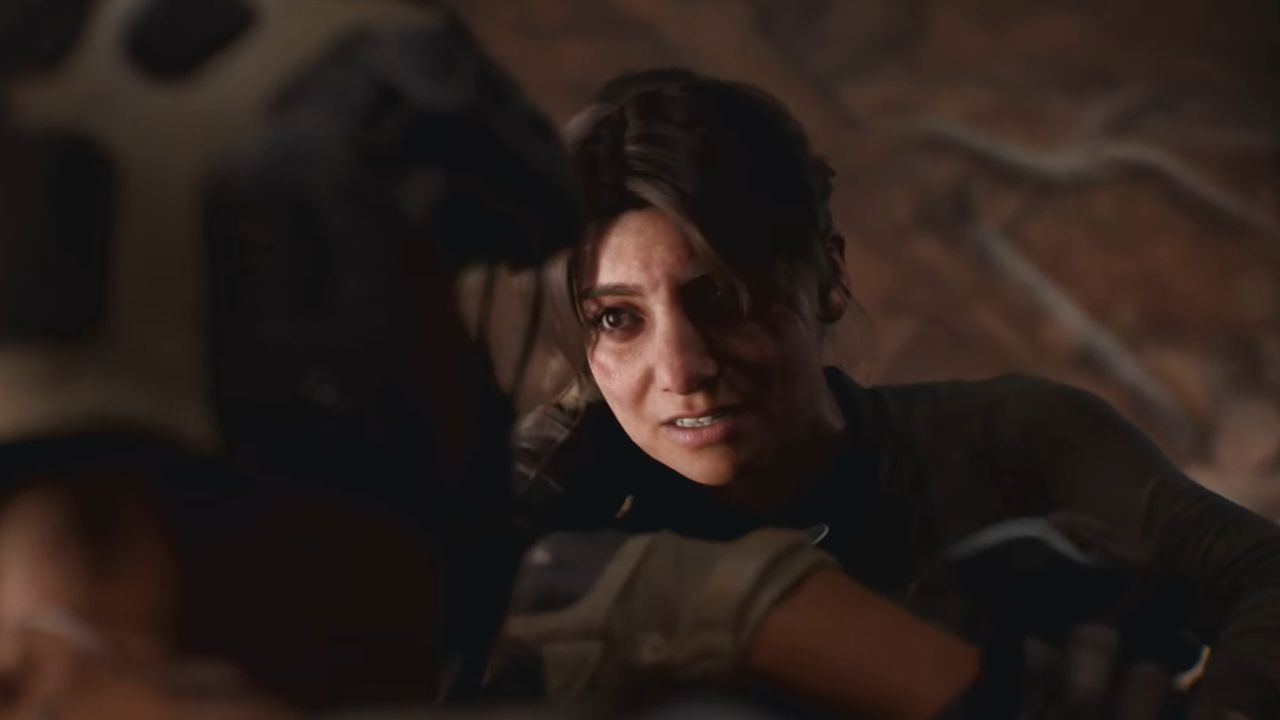
Crossfire, the same name as Smilegate's long-running FPS colloquially known as "Korean Counter-Strike", is not an FPS, or competitive, or even multiplayer at all. This Crossfire is a singleplayer, third-person, "stealth-forward" tactical shooter. The main character is voiced and performed by Claudia Doumit, known for her roles in The Boys TV show and the Modern Warfare 2019 reboot.
It's mashing the cinematic stylings of a prestige console game with the systemic friction of a milsim—high lethality, limited healing, manual magazine reloading, etc.
Weird! But also: Cool!
That's No Moon is drawing from the world of the competitive FPS—particularly its factions—but this is an original story with new characters. CCO Taylor Kurosaki is well aware that most of the West doesn't know the first thing about Crossfire, let alone its fiction, and you don't have to. During a visit to the That's No Moon studio in Los Angeles, Kurosaki called Crossfire a canvas.
The world had lore, but not much in the way of stories, until now.
This Crossfire takes place in a militaristic theatre, but its story won't take the shape of a Call of Duty-style global conflict. The game centers on the relationship between protagonist Layla Qassem, an idealistic gun-for-hire, and Delroy Cross, a mercenary who "fights for institutions." Kurosaki danced around the specifics of their meeting and the conflict that brings them together, but in an interview with PC Gamer he compared Layla and Delroy's relationship to classic "unlikely duo" cinema like Midnight Run.
As I watched Crossfire played live by game director Jacob Minkoff, my eyes widened with surprise. The behind-the-back camera angle, cinematic cutscenes, and believable exchanges between Layla and Delroy had all the markings of The Last of Us (on which Minkoff was lead designer), but when action broke out, we quickly left PlayStation prestige behind.
Firefights were loud, scrappy, and brief. Minkoff fired in controlled bursts, as full-auto recoil seemed difficult to control at distance. Tanking just a few shots would tear through Layla's ceramic plates, triggering a bleed that he had to mend within seconds or pass out. There was no first-person view as far as I saw, but in its place was one of the coolest on-screen reticles I've ever seen: a projection of what your current gun's sights would look like in first-person, instead of a traditional cross or dot. What a neat way to convey an experiential difference in FPS guns (preferring one gun's iron sights over another's) that third-person shooters are usually left out of.
That's just one of the ways Crossfire is pulling from milsims like Escape From Tarkov, Arma, Squad, or what have you. After stealth-killing a soldier, Minkoff looted the body and revealed an elaborate, Tarkov-style modular inventory with slots for backpacks, vests, and ammo belts. At one point he replaced Layla's busted helmet with a fresh one, then looted ammo from a pack, which required the extra steps of loading bullets individually into magazines.
The Future of Tactical Shooters?
None of these mechanics are wholly unique on their own, but it's the context they exist within that excites me. This isn't a battle royale, an extraction shooter, or an Arma scenario—it's a linear, authored campaign. We just don't get singleplayer shooters with characters and stories that you (ideally) care about and this level of simulation. The closest analog is Ubisoft's recent run of Ghost Recon, though to call those sims is a long stretch.
Minkoff's vision for Crossfire is to bridge the gap between a milsim and an accessible action game. The third-person camera certainly helps in that way, but so does one feature that Kurosaki and Minkoff were endlessly excited to show off: adaptive cover.
Essentially, Crossfire's cover system isn't a binary state of standing or crouching. Cover comes in all shapes and sizes (not just waist-high boxes), and so Crossfire's cover system automatically adjusts Layla's stance to obscure her behind whatever cover is available. Minkoff said the system is based on how real-life soldiers use cover—ducking and lurking behind shallow rock croppings at whatever height and stance is necessary to break line-of-sight.
"I love milsim, but I recognize that the experience is somewhat niche," Minkoff told PC Gamer. "When I play those games for my own enjoyment, I'm always thinking about how I can make this more accessible to a wider audience, so that was the vision for adaptive cover from the start."
(Image credit: That's No Moon)
Stance management is, again, not a new concept for the Arma crowd, but it will be for most people, and the way Crossfire automates a stance through the blending of hundreds of animations is impressive. That doesn't mean the game will always automatically hide you—it's still up to the player to survey the area for adequate cover and avoid patrols.
After watching Minkoff fail twice in an encounter he's likely played a hundred times, I was reminded of how I like to play stealth action games: taking risks in the pursuit of doing something cool, getting curbstomped, then trying a new route the next time. Crossfire will be hard by default, but the full game will have a range of difficulty settings.
"If I can give somebody an experience where they can learn the controls in just a few minutes, but they have all the challenge and tactical freedom that would get from a lighter milsim, that's the goal," Minkoff said.