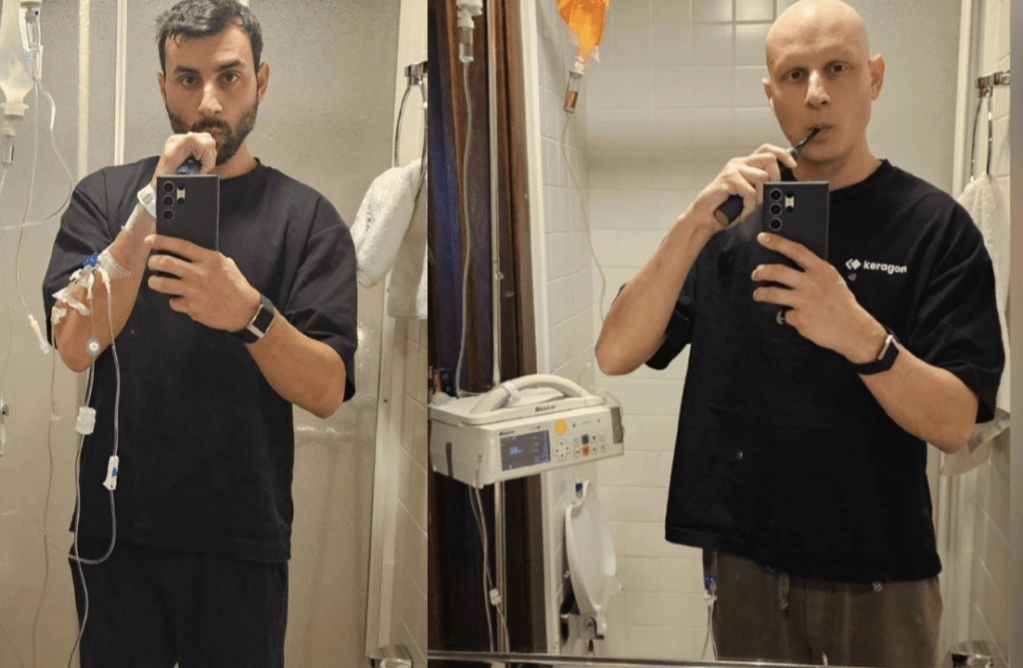
The Fittest Founder in the Room Got Cancer. Here’s How He Used AI to Fight Back
A swollen arm after a workout led to a diagnosis that would upend the life of Conno Christou, a 35-year-old entrepreneur and AI innovator. His journey through the medical system, marked by multiple doctor consultations, data-driven decision-making, and the use of AI tools, reveals a new frontier in patient advocacy. Christou, who had built a career on leveraging technology to optimize performance, found himself on the other side of the equation—using the same principles of data and analysis to navigate a crisis that had no precedent in his life.
The Data-Driven Patient
Christou’s approach to cancer treatment was shaped by his background in technology and business. He treated chemotherapy like a product launch—planning each cycle, tracking outcomes, and adjusting variables in real time. His wearable devices and personal health journal became tools for monitoring his body’s response to treatment. The Whoop band, for instance, gave him early warnings about his immune system’s state, while the symptom log helped identify patterns in his side effects.
The data he collected wasn’t just for personal tracking. He used it to inform his medical decisions, feeding it into an AI assistant to help identify trends and possible explanations for his condition. The AI didn’t offer a diagnosis, but it did highlight medical literature and flag anomalies that human doctors might have missed. This became particularly crucial during his final PET scan, which initially suggested the need for further aggressive treatment.
AI as a Patient Advocate
Christou’s use of AI reflects a growing trend among patients who are turning to technology to fill gaps in the healthcare system. The AI didn’t replace his doctors, but it empowered him to ask more precise questions and understand his options with greater clarity. This is especially significant for conditions like his, which are rare and may not be encountered by even the most experienced oncologists.
- He used AI to cross-check his PET scan results with known medical data
- The AI flagged a possible thymus rebound, a phenomenon overlooked by some doctors
- Christou’s ability to access and interpret this information helped avoid unnecessary treatment
Experts caution that AI tools are not yet a substitute for professional medical advice. But for Christou, they were a means of democratizing access to medical knowledge. “It didn’t replace the doctors,” he says, “but it helped me ask the right questions.”
A New Era of Patient Empowerment
Christou’s story is a glimpse into a future where patients are no longer passive recipients of care but active participants in their treatment. His experience highlights the potential of AI to bridge the knowledge gap between medical professionals and the public, especially in cases where conditions are rare or complex.
The medical system, as he saw it, was overwhelmed by administrative tasks and standard protocols. His treatment was the same as someone decades his senior, even though his body was responding differently. AI, in this context, became a tool for personalization—allowing him to tailor his approach to his unique biology.
As Christou recovers, he’s reflecting on the broader implications of his journey. He’s now more focused on being present, on the small moments that matter. His company, Keragon, which helps medical practices with administrative automation, has taken on new meaning. The system he once sought to improve from the outside is now one he understands from within.
The tools he used—wearables, AI, data analysis—are becoming more accessible by the day. And for those who are willing to engage with them, they can be more than just gadgets. They can be lifelines.