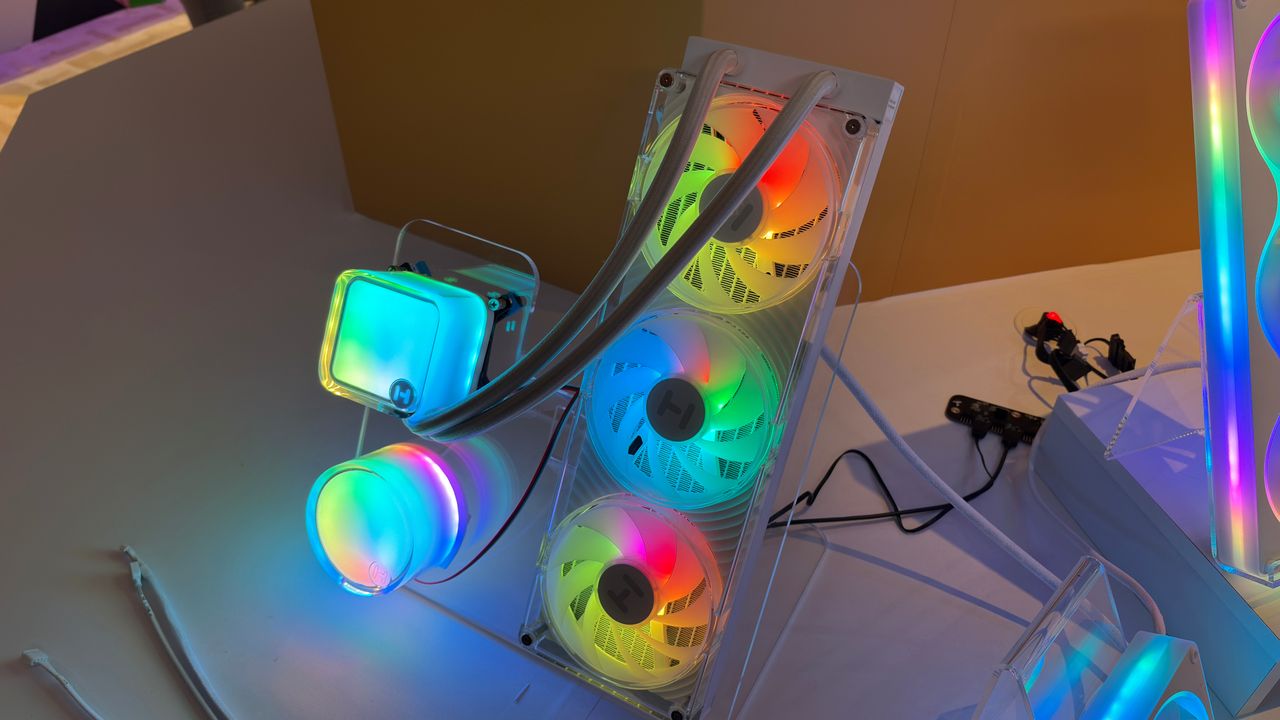
Hyte's New Prototype AIO Cooler: A Fresh Take on Design and Affordability
Hyte has been making waves at Computex with its latest prototype AIO cooler, offering a unique blend of aesthetic appeal and affordability. This new design focuses on integrating RGB lighting and transparent shrouds, aiming to provide users with a visually striking cooling solution without breaking the bank. While the core technology of AIO coolers remains largely unchanged, manufacturers like Hyte continue to innovate in design to stand out in a competitive market. The transparent shroud around the radiator fans is a notable feature, allowing users to see the radiator fins clearly. This could be a significant draw for those building systems with a transparent or translucent theme.
A Focus on Aesthetics and Performance
The cooler's design isn't just about looks—it also includes a stylish pump cap that features rotating RGB lighting. This rotating effect, while not visible in still images, promises to add a dynamic visual element to the cooler, especially when viewed from the front. Although the prototype hasn't been given a specific name, Hyte has indicated that the cooler is expected to start at around $100, a price point that could make it a strong contender in the budget liquid cooling segment.
While the exact configuration of the cooler isn't clear, the prototype shown appears to be a triple-fan version, which is a popular choice among enthusiasts. If this is indeed the case, it could offer a compelling balance between performance and price. For context, the Cooler Master MasterLiquid Core II, currently priced at $120 on Amazon, is often considered the best budget liquid cooler. However, Hyte's new prototype aims to offer similar features at a lower starting price, potentially appealing to a broader audience.
The Role of Design in Cooling Performance
One of the key questions surrounding this prototype is the practical benefit of the transparent shroud. Given that the radiator is large, the transparent section might not offer much visibility when viewed head-on. However, from the side—where users are more likely to view the cooler—it could showcase the RGB fans in a more prominent way. This might be intentional, as it allows users to appreciate the lighting effects from different angles. Ultimately, the true value of the design will depend on how well it performs in real-world scenarios.
Hyte's previous products have had mixed reviews in terms of performance, so the success of this new cooler will depend on its ability to deliver reliable cooling alongside its visually appealing features. As the prototype continues to evolve, we'll be watching closely to see how it stacks up against other options in the market.