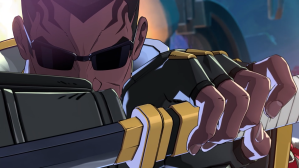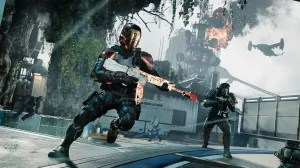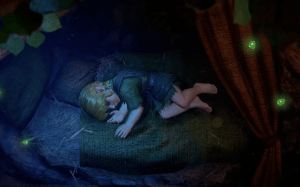
A lot of the mainstream buzz around Magic: The Gathering in recent months has revolved around its Universes Beyond initiative, which has introduced outside IP into the decades-old card game. Final Fantasy, Avatar: The Last Airbender, and most recently Marvel Super Heroes have released full expansions, with The Hobbit and Star Trek set to arrive later this year.
However, the reason those outside IP were able to join Magic was because of the strong universe of characters and locations the game has built in those 30-plus years. At MagicCon Amsterdam, the Preview Panel focused on Magic's established multiverse, as the hour-long panel revealed all three in-universe sets coming to Magic in 2027, with the Universes Beyond announcements saved for another day.
After the panel, we sat down with many of the key architects of the 2027 slate, both in Q&A roundtables and in one-on-one interviews, to talk about each of the three Magic multiverse worlds players will visit next year. We'll explore an underwater world making its MTG debut, a new twist on an established plane, and a place thought lost in Magic's lore.
Under the sea with Nauctis: The Sunken Realm2027's first Magic: The Gathering expansion will be Nauctis: The Sunken Realm on February 5, which is set in a world that's entirely underwater. The plane is inhabited by humanoid sea creatures, some of which resemble those we see in the real world. The preview video showed concept art of seals, sharks, and other marine life standing alongside merfolk and humans in full armor.
As lead designer Mark Rosewater describes, the denizens of Nauctis fall into two categories: "humanoid" animals and "normal" animals. "The set has shark people, but it also has sharks," Rosewater says. "We have a lot of humanoid versions of things, but there's also just the normal versions of the animals in the world."
However, not every being living in Nauctis is grounded in reality; "We are a fantasy game, we can make stuff up, and we did in fact make stuff up," Rosewater said. "Some of them may be based on real-world things, some of them might just be our fever dream imagination, but the most important thing was making sure everything feels like an underwater thing, so even the stuff we made up is borrowing some elements of real-world animals, so they can feel like an underwater creature."
When designing Nauctis, the team looked at all sorts of media that have told underwater stories before, and they were surprised to find that it was not as well-trodden as they expected. "There are a decent number of sources, but none of them really go that far, so we had a lot of space to play in," Rosewater said. "We had a lot of freedom to do our own thing, only because the other things that have played in the space really haven't been that imaginative."
From a storytelling point of view, Nauctis is the start of a new story arc for Magic: The Gathering, with October's Reality Fracture serving as the finale of a three-year arc. Principal story lead Roy Graham says that starting a new story on a new plane was a natural fit, and Reality Fracture played a big part in that.
"A story like Reality Fracture is all climax, it's the end of a symphony. You get these big movements that are influenced by everything that's come before it," Graham said. "You can't follow that with another climax. I didn't feel a lot of pressure to have the story of Nauctis to do more than tell a story about the people who live there, the challenges they face, and the conflicts that arise from the conditions of the world."
Introducing a new setting like this, in Graham's mind, offers another major benefit; it calms the story down for a while. "I think people will be ready for a break from multiverse-level crises," Graham said, "and that feeling lends itself naturally to following up Reality Fracture with a story that really puts a spotlight on a new setting and the story from that setting."
https://www.youtube.com/watch?v=cC6ebvZg-_Q Kamigawa: Titanbreach brings kaiju battles to MagicThe MTG universe will transition from under the sea to over-the-top kaiju battles next, as Kamigawa: Titanbreach will launch as the second in-universe Magic set on June 4. Where Nauctis focuses on a new world and its inhabitants, Titanbreach returns to a known world facing a new set of problems.
"Titanbreach is about Kamigawa versus Ikoria, mechs versus monsters, and the focus there is a lot more on the action that's going on in the set," product architect Ben Bleiweiss said. "We've shown you Kamigawa in Neon Dynasty, and there's going to be some new amount of showing you Kamigawa for Titanbreach, but it's more about putting what you loved about Kamigawa in a different context with this huge crisis going on that everyone needs to be up in arms about."
The design team knew they wanted to get back to Kamigawa after Neon Dynasty's success in 2022, but its encounter with Ikoria almost hit a bump in the road. "Originally, one of the three worlds that was going to be featured in [2025's] Aetherdrift was Ikoria," Rosewater said, "but then the design team came to me and said we had to save Ikoria for this set, so we switched it to Muraganda."
Despite that small obstacle, however, Kamigawa's mechs versus Ikoria's monsters was a no-brainer internally. "Sometimes we come up with stuff that no one would ever think of, and sometimes we come up with something super obvious, " Rosewater said. "When we made Ikoria [in 2020] and we did the tie-in to Godzilla, and then we made Kamigawa Neon Dynasty, of course we had to do this."
One early challenge for the set involved its framing; what was the best way to highlight both of these planes in one set? "When we started, it was 50-50, but eventually we realized that really, we're telling a Kamigawa story," Rosewater said. "When you watch Godzilla, he's in Tokyo crushing buildings, it's a Tokyo story, so we decided it was monsters invading, Kamigawa dealing with that, and then asking 'Where do the monsters come from? Ikoria!' and we got it figured out."
From there, the team focused on making each side of the battle feel as authentic as possible. "Mechanically, it's like, okay, I need the mechs to feel like mechs. What does that mean?" Rosewater said. "I need the monsters to feel like monsters, but also these Ikoria monsters to do cool new stuff, how do we bring that all together?"
The design process also gave rise to an interesting problem. "Whenever people pitch me ideas, usually I say, 'Okay, that's a mythic rare fighting a mythic rare, what are the commons?' and we have to solve that," Rosewater said. "The world just can't be the mythics; the commons have to help sell the world. Godzilla's got to step on something."
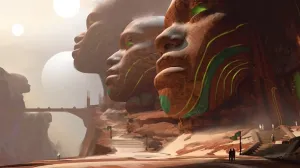
https://www.youtube.com/watch?v=ZaUhdKIc-yQ The afrofantasy of ZhalfirThe final in-universe set of 2027 is Zhalfir, launching on October 1, and on the surface, it's the Magic community's introduction to a world they've heard about for many years, but haven't really seen before. However, Zhalfir will also mark Magic: The Gathering's first foray into a subgenre of fantasy it's never seen before: Afrofantasy.
The design team took an incredible amount of care to make sure the first Afrofantasy set in Magic did the genre justice. "We felt a lot of pressure to do it right," Rosewater said. "A lot Afrofantasy-centric is futuristic or sci-fi, like Wakanda for example. We wanted an Afrocentric story that's fantasy based, and we found that there's not a lot of that. For good or for bad, the things that we do are going to put stakes in the ground and define Afrofantasy for some people, and so we took it very seriously."
In developing Zhalfir, the team was careful not to pull from just one subsection of Afrofantasy culture, but to instead include different interpretations from around the world. "If you watch the trailer, there's a lot of time spent on details of hair, different body types, and the complete diaspora of African fantasy, Caribbean inspiration, North African fantasy, Egyptian, etc." senior executive producer Zakeel Gordon said. "We brought in a variety of Afrofantasy authors and designers who have taken on similar fantasy challenges in the past to really help us have additional voices in the room, as well as creative consultants, both from the world-building side as well as the art side, to really make sure that the set was set up for success."
Gordon also said that the experts Zhalfir's design team called on were active participants in the process. "It wasn't just a checkbox effort for us, it wasn't just like, 'We need someone to come in and babysit us for a month,'" Gordon said. "They were in the room the entire time during development for two years, at different stages and with a variety of different teams."
Rosewater revealed that Zhalfir's development marked the first time in MTG history that a consultant was brought in to assist with the earliest exploratory phases of the development process. Gordon added that designing the set also took an extra year's worth of development time, due in part to the team seeking out advice and consultation from experts on the subject matter.
For the team, that time and attention to getting it right has paid off. "Sometimes you realize that you have to step up, this is really important, and you don't want to mess this up; this was the big challenge of the set," Rosewater said, "We spent a lot of time and brought a lot of people in, we wanted to do right by by the story and by the world, and I think, in the end, we did."