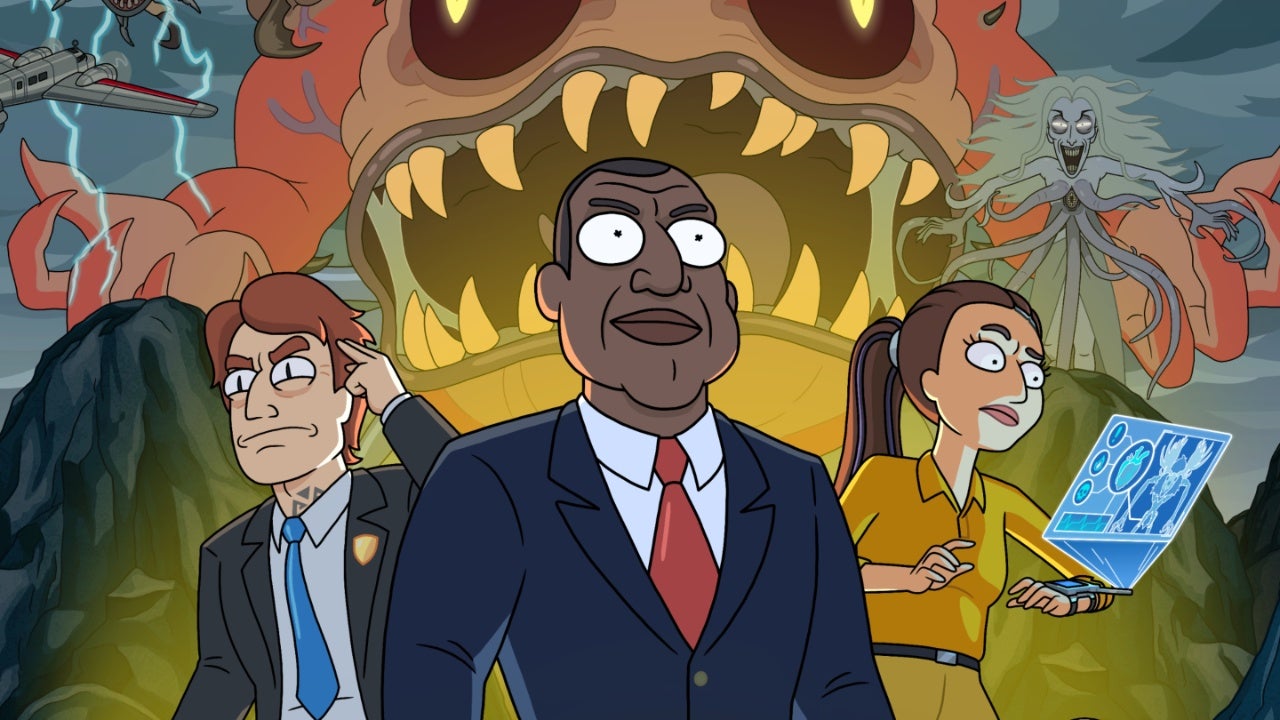
This is a spoiler-free review of the first season of President Curtis. The first episode debuts on Adult Swim on July 26 and the following day on HBO Max.
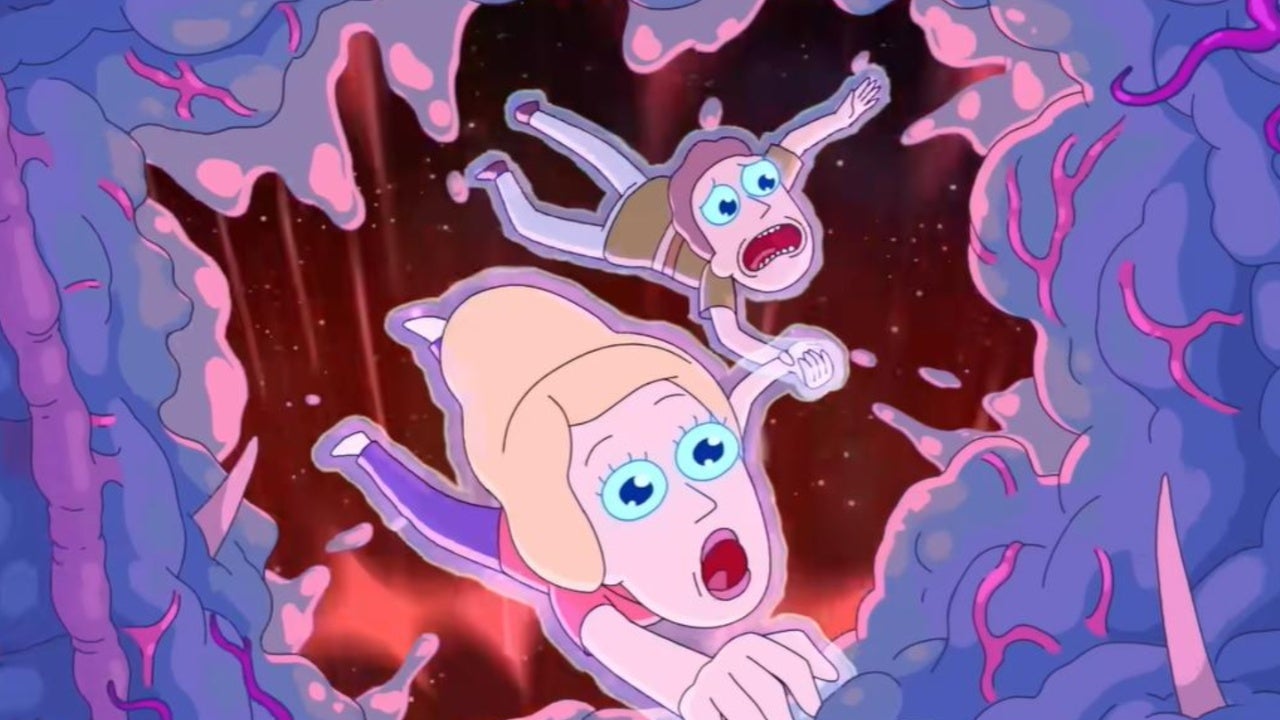
For a series that takes place in a multiverse of infinite possibilities, Rick and Morty doesn’t have the greatest track record when it comes to spinoffs. 2022’s Vindicators 2 was a fine but forgettable short-form web series that never received a second season. 2024’s Rick and Morty: The Anime debuted to middling reviews, with IGN’s Allegra Frank writing, “The slow pacing and overall humorlessness may be hard for more casual Rick and Morty fans to stomach for 10 full episodes.” And now we have President Curtis, a spinoff that also struggles in its own ways to capture the magic of its parent series. Your enjoyment of the show will depend entirely on how much affection you have for Keith David’s character.
And, to be fair, there is definitely some appeal to be found there. David’s President Andre Curtis has always been one of the more amusing of the many recurring players on Rick and Morty. As one of the characters in this series puts it, he’s a politician who thinks he’s Batman. There’s potential in a show centered around a POTUS who’s too busy beating up Paul Bunyan and staking angry vampires to be bothered with the humdrum political day-to-day of his job. The idea with President Curtis is that the series explores the same kinds of zany antics that Rick and Morty get into on a weekly basis, only seen through the lens of a straitlaced, hotheaded, ultimately well-meaning action hero.
That’s exactly what President Curtis delivers in its first season, no more and no less. Created by Rick and Morty veterans Dan Harmon and James Siciliano, the series is basically about Curtis battling the sort of terrestrial problems and threats that a man like Rick Sanchez couldn’t be bothered with. Each episode introduces a new cryptid or paranormal entity that only a no-nonsense President with an armory of fancy gadgets can handle. The series also establishes a new supporting cast of White House staffers, most notably Curtis’ bodyguard, Special Agent O’Doyle (Jim Rash), and his cybernetic Chief of Staff, Banks (Stephanie Beatriz).
The resulting formula is entertaining enough. Curtis remains a very likable hero, one who’s far more idealistic and well-meaning than we’re used to from this franchise. If you’ve ever found yourself wishing that the high-concept storytelling of Rick and Morty could be tempered by 70% less cynicism and nihilism, President Curtis is your show.
It doesn’t hurt that the show’s voice cast is so impressive. David, naturally, is the real highlight in that regard. His rugged yet velvety voice always makes any given project shine that little bit brighter. The writers clearly recognize as much, as most episodes end with a fun little stinger of Curtis recanting the episode’s events by singing in the shower. But Rash and Beatriz both deliver fantastic performances in their own right. Rash’s gung-ho, macho yet stoic O’Doyle is about as far removed from Community’s Dean as you can get, yet he’s still very effective in the role. And with Beatriz, it never ceases to amaze that her bubbly, personable voice is the same one that gave us Rosa Diaz on Brooklyn Nine-Nine.
President Curtis establishes a decent formula right out of the gate. Its problem is that it never really builds on that formula or finds ways to escape the shadow of Rick and Morty. There’s a same-y quality to these episodes that builds over time (as such, I wouldn’t recommend binging the whole season in one go). It’s not as if Rick and Morty has a perfect track record, but there’s enough variety in terms of tone and subject matter from episode to episode that you never quite know what you’re going to get with each new installment. That’s not really the case with President Curtis. The show feels inherently more limited in scope.
It would help if the series offered something to offset this problem. Why not a more character- or plot-driven alternative to Rick and Morty? This spinoff is a bit more interested in building an ongoing narrative, but only slightly. There’s some emphasis on the conflict between Curtis and his political party and his struggle to appeal to fickle voters, but that only comes into play in a couple of episodes. For the most part, it remains fixated on Curtis’ weekly antics and the minor conflicts he experiences with O’Doyle and Banks.
What We Thought of Rick and Morty Season 9"It’s no easy task to keep any series fresh and exciting after nine seasons, but Rick and Morty pulls it off. If anything, Season 9 is an improvement over the relatively weaker Season 8. Certainly, not every episode is a banger, but there are several here that rank among the show’s best. The series continues to merge high-concept sci-fi with wacky comedy. It still finds novel ways of exploring how Rick Sanchez is his own worst enemy and how toxic the Smith family dynamic can be. With at least three more seasons left to go, the series still has plenty to offer fans. " -Jesse Schedeen, May 19, 2026
Click here to read our full review.
There’s just not a lot of depth to be found here. By the end of the season, I didn’t feel like I had any better a handle on Curtis as a character than I did from his original Rick and Morty appearances. He doesn’t grow or evolve. He doesn’t benefit from those stark moments of emotional insight like we occasionally get for Rick Sanchez and his family. His minions do fare somewhat better in that regard, at least.
Ultimately, President Curtis is an entertaining but generally one-note series that feels like it could be something more. It’ll probably scratch that itch for Rick and Morty fans who just want more of this universe after Season 9 wraps. But as far as truly finding its own identity or making the most of its title character, President Curtis still has a lot of growing to do. We’ll see if it beats the Rick and Morty spinoff trend and actually gets a chance at a Season 2.