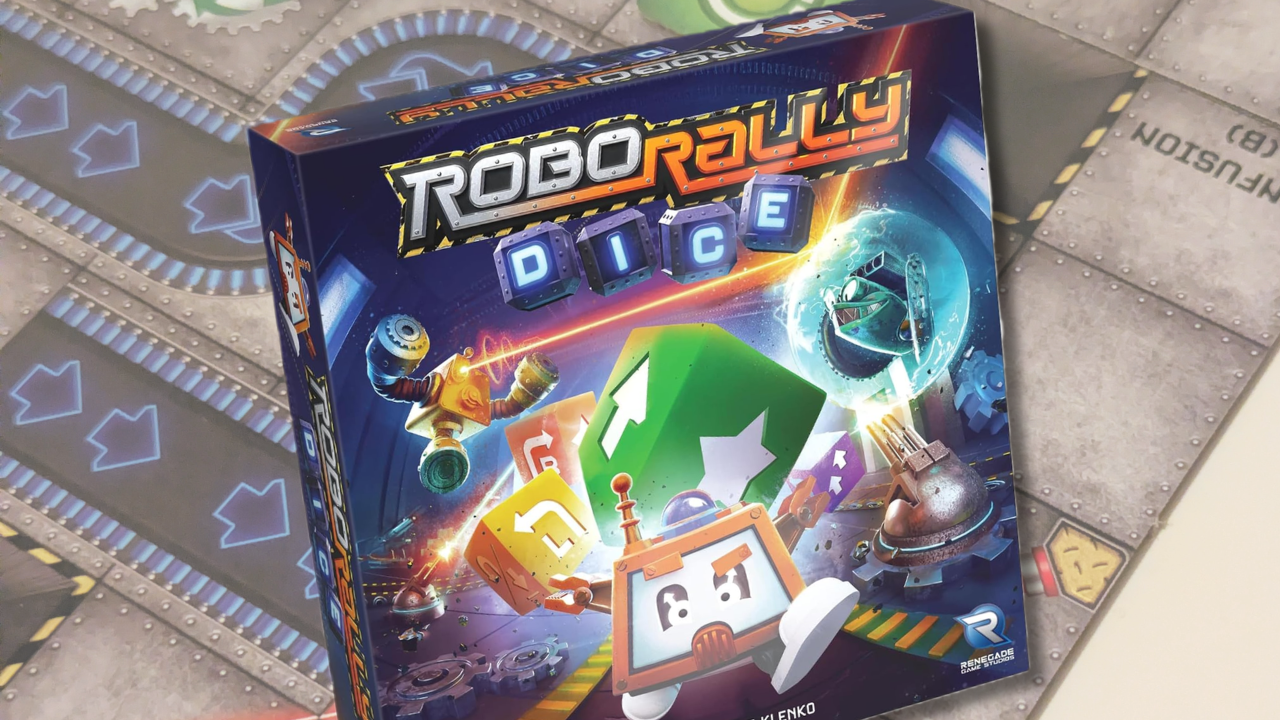
Robo Rally Dice Game Review
In 1994, Richard Garfield — the visionary behind Magic: The Gathering — introduced a unique subgenre of tabletop games with his creation, Robo Rally. This game, which involves programmed movement and chaotic robot racing through a hazardous factory, has since become a cult classic. Over the years, it has inspired both admiration and frustration among players, with numerous editions and expansions released. Now, 32 years after its debut, Robo Rally Dice emerges as a fresh take on the original, introducing new mechanics and a new designer. Interestingly, Garfield's name is absent from the box this time. Instead, Kane Klenko, known for his work on real-time games like FUSE, takes the lead in reimagining the classic.
What’s in the Box
- Players: 2-4
- Play Time: 30-45 minutes
- Ages: 14+
The production quality of Robo Rally Dice is on par with previous editions, offering a stripped-down but functional experience. The components include punch-out cardboard tokens that may become annoying over time, thin player boards, and modular map boards that slightly curve upon opening. The player pieces are wooden blocks with cartoon robot faces, each with a unique name and charm. The artwork is a standout, blending a blocky, retro-futurist aesthetic with comic-book flair that captures the game's quirky theme.
The custom dice, five in each of four player colors, are high-quality and comfortable to handle. These are accompanied by a standard black six-sided die with pips, essential for the game's mechanics.
Rules and How It Plays
In programmed movement games like Robo Rally, players pre-select a set of actions, revealing them simultaneously and then executing them on a modular board. The fun lies in trying to plan your moves in advance, only to see them unravel when others do the same. This concept is well-suited to the racing robot theme of the game.
Where the original game used cards to determine movement, Robo Rally Dice replaces them with dice, each bearing symbols that correspond to the same actions. However, the mechanics go beyond simple rolling. Players can roll as long as they like, selecting dice one by one to add to their mat. The catch? The first player to select five dice grabs the black die and starts rolling, calling out each time a six is rolled. After three sixes, any remaining players must stop, potentially ending their turn with an incomplete set of actions.
This time pressure introduces a unique psychological element. Players are eager to finish their dice selection, which can lead to suboptimal planning. This mechanism replaces the frustration of not having the right card in the original game, offering a more dynamic and engaging experience. The dice system allows for more flexibility, but also introduces the risk of mistakes and compromises.
After each die is resolved, players follow an ordered checklist of actions. If they are not bumping into other robots or landing on board icons, they can move quickly. However, when these effects come into play, the order and execution of actions become crucial, slowing down the game slightly. This balance between speed and strategy is what makes Robo Rally Dice both exciting and challenging.