Collecting Robot Training Data Is Dirty, Unglamorous Work. Some AI Labs Are Already Paying XDOF to Do It
The rise of physical AI has created an insatiable demand for training data that simply does not exist in the same volume or quality as the text-based datasets that powered the language model revolution. This growing imbalance is fueling a new category of infrastructure startups, with XDOF emerging as one of the most promising. The company is focused on building the data pipelines, collection tools, and annotation systems that enable frontier AI labs and robotics companies to train machines to operate in the real world — a task that is far more complex and labor-intensive than training models on text alone.
The Physical World Requires Physical Data
Unlike large language models, which can be trained on the vast repository of human-written text, robots require training data that captures the messy, unpredictable nature of physical interaction. This includes everything from the texture of fabric to the weight of an object, the friction of a surface, and the subtle movements needed to manipulate them.
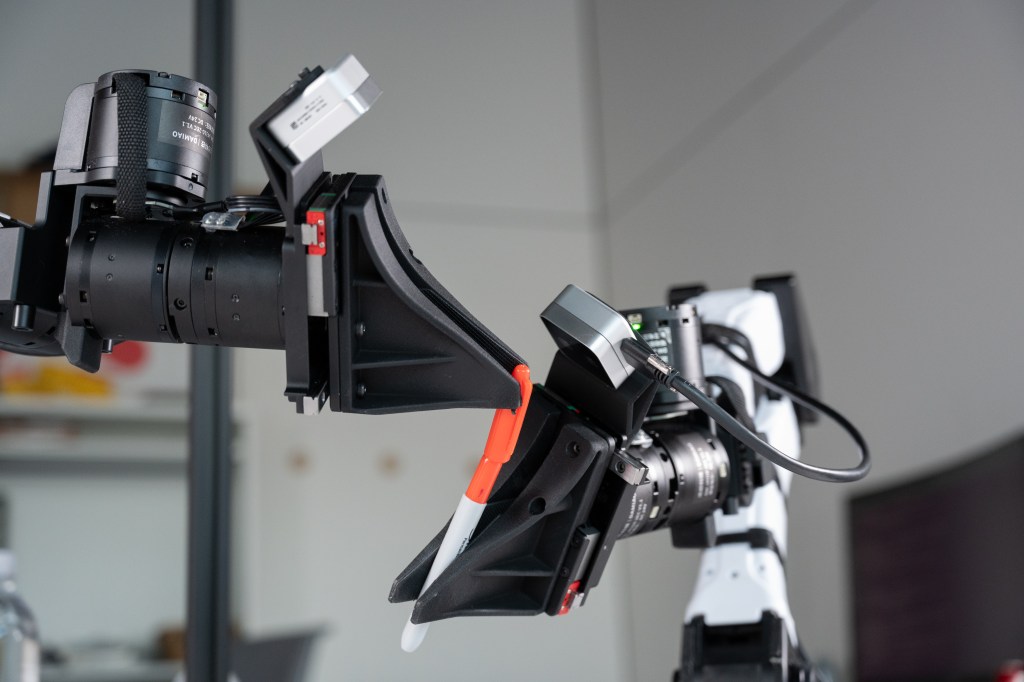
The data needed for this is not easily acquired. Unlike text, which can be scraped from the internet in bulk, physical data must be collected through real-world interaction — often in controlled environments or through human operators guiding robotic arms through tasks. This process is time-consuming, costly, and highly repetitive, making it a far cry from the glamorous image of AI development.
XDOF’s teleoperation system allows human operators to guide robotic arms through tasks, generating high-quality training data. The company is working with UC Berkeley’s AI Research Lab to release ABC, the largest collection of robot training data ever assembled. ABC includes 130,000 trajectories of robot manipulation data, 300 hours of simulation, and 100 hours of evaluations.
Building the Data Infrastructure for the Next Frontier
XDOF’s vision extends beyond just data collection. The company is building a full data ecosystem that includes hardware, software, and human labor — all necessary to train robots that can perform complex physical tasks with precision.
“We need to design the hardware from the start to ensure the data we collect is useful for training models,” said CEO Philippe Wu. “If you don’t have the right sensors and cameras, the data you get might not be usable for advanced tasks like hand-tracking or object manipulation.”
This layered approach to data — starting with teleoperation, moving to general robot data, and finally incorporating egocentric human data — is designed to create a self-reinforcing loop that accelerates the development of general-purpose robots.
A Labor-Intensive Future for Robotics
While the promise of physical AI is immense, the infrastructure required to support it is equally daunting. Training robots at scale demands not just data, but also the physical space, maintenance, and human operators to manage the process.
This is why even the largest AI labs are outsourcing much of this work. The cost and complexity of maintaining a warehouse of robots, calibrating them, and training operators are prohibitive — and not something most labs want to manage internally.
XDOF, with its $70 million funding round and growing team, is positioning itself as the go-to provider for this critical infrastructure. As the robotics race heats up, the ability to collect, process, and refine physical training data will become as crucial as the models and hardware that run on it.
The next few years will likely see the emergence of a new class of AI companies that focus not on models or algorithms, but on the foundational data that enables them to function in the real world. XDOF is one of the first to recognize this shift — and it’s betting that the bottleneck in AI’s next evolution is not the models themselves, but the data that makes them work.