Samsung has been making its foldables for eight generations now, and while the company has tacked on the ‘Ultra’ branding to the Fold 8, the Flip 8 isn’t all that different to its predecessor. The main difference this time around is that it’s using a more powerful processor, and the price has gone up by $100.
The Samsung Galaxy Z Flip 8 is packed with the same Qualcomm Snapdragon 8 Elite Gen 5 chip that’s powering both the Galaxy Z Fold 8 Ultra and the S26 Ultra. I haven’t had a chance to really put this phone through its paces yet, but just swapping to this high-end SoC, rather than the MediaTek chip in last generation’s model, should make the Flip 8 a much better gaming phone than last year’s version.
Purchasing GuideThe Samsung Galaxy Z Flip 8 launches August 7, starting at $1199. That starting price will get you 256GB of storage, along with 12GB of memory. You can, of course, spend more money for more storage, with the 512GB model costing $1399.
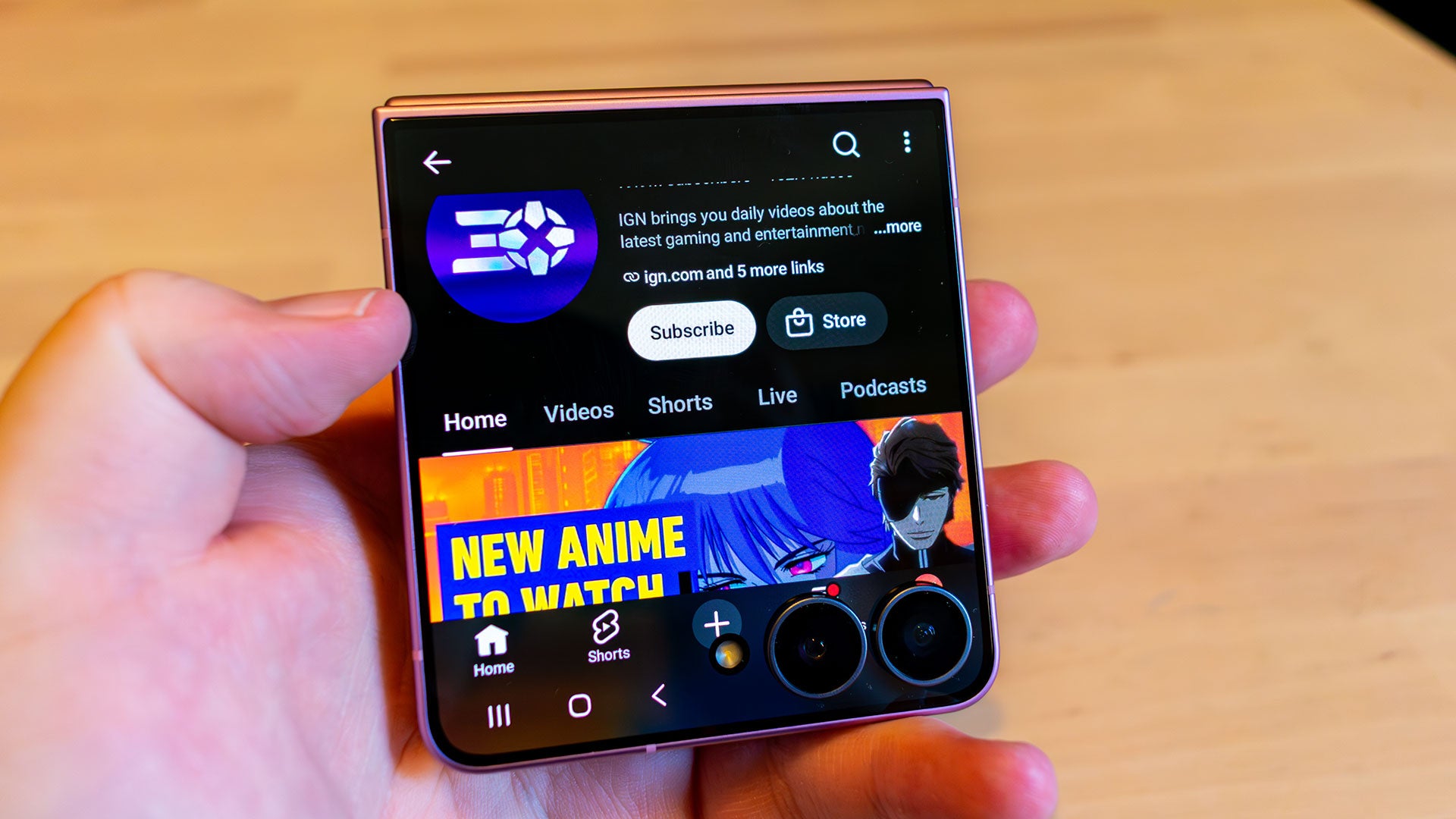
Design and FeaturesIf you’ve ever seen any iteration of the Samsung Galaxy Z Flip, the Flip 8 will look incredibly familiar. When the phone is closed, you can interact with a 4.1-inch display that’ll let you run most, but not all apps. You can then open it up to a full 6.9-inch display, albeit with a bit of a narrower aspect ratio than most phones.
Out of all the foldables I’ve used, this type of form factor has always been the most novel to me. There’s just something about being able to fold a phone up into a little square that fits into whichever pocket or purse I’m using that day. It does help that Samsung’s Flip phones have been getting thinner every year too.
The Flip 8 is no different, shrinking down to 6.1mm when unfolded, which is down from the Flip 7’s 6.5mm. That’s not a huge difference, and you probably wouldn’t even notice the difference when the phones are next to each other, but it does let Samsung call it the ‘thinnest Flip yet,’ I suppose.
Both displays are AMOLED panels, with the outer display having a resolution of 1048 x 948, along with a 2520 x 1080 inner display. The pixel density of 391 ppi isn’t great by modern smartphone standards, especially considering that the $799 Moto Razr has an incredibly similar display, albeit with a weaker chipset.
Like with any foldable, there is a crease in the middle of the inner display, but it is slightly less noticeable than it was on the Flip 7. I do notice it when I hold it at a certain angle, but in general with these foldables, it’s something my brain basically erases from my attention after a little while. The bigger problem on older foldables and, uh, flippables, was a gap between the edge of the crease and the rest of the chassis, which would allow dust to get in. Thankfully that’s not a problem anymore.
And just like with the Galaxy Z Fold 8 Ultra, Samsung has added a new titanium alloy film and a titanium plate underneath the display, which should help prevent any damage from unfolding and re-folding the display, as well as make bending it backwards incredibly difficult. I didn’t actually test whether or not I could snap it in half, of course, but it should be pretty durable.
CameraThe Samsung Galaxy Z Flip 8 has basically the same camera as the Z Flip 7, but it does include 2x optical zoom, where the 7 relied entirely on digital zoom. That was the biggest problem with last year’s flip, as the software-based ‘AI zoom’ wasn’t great at retaining detail.
I haven’t had the chance to go out and put the Z Flip 8’s camera through its paces yet, but Samsung is claiming that all of its foldables this year have much better night-time performance as well. However, I’ve never seen a smartphone come out that hasn’t claimed to be good at night photography, so we’ll just have to wait and see.
PerformanceFor the longest time, the Samsung Galaxy Z Flip has always been a bit slower than the Fold, mostly due to size constraints. However, Samsung has found a way to shove the Snapdragon 8 Elite Gen 5 and 12GB of RAM into the Z Flip 8, so it should be able to hold its own against other smartphones. And, it really needs to hold its own, because at $1,199, it’s charging flagship money.
I’ve only had a few hours with the Samsung Galaxy Z Flip 8 so far, so I can’t say definitively how well it stacks up against the other phones I’ve tested with this chipset. But, it’s likely that it will lag at least a little bit behind something like the Galaxy S26 Ultra or the OnePlus 11, thanks to the heat constraints that come with a thinner chassis that’s essentially split in half.
I did play a bit of Arknights: Endfield on the Flip 8, and it performed just as well as the Fold 8 Ultra did. There is a caveat there, though: because of the lower display resolution, the game is quite a bit easier to run. Endfield tosses up a big, scary warning whenever you try to change the frame rate from 45 fps to 60 fps, but because the Flip 8 only has a 1080p display, it should be able to handle this higher setting, but it will get quite toasty.
Even when you’re not running experimental settings in games, the Flip 8 has some heating issues. In any game where you have to hold the phone horizontally, the outer display gets quite warm to the touch. It’s not hot enough to burn you or anything, but it does get uncomfortable if you’re holding it a while. On top of that, it just feels weird to have half the phone heating up, while the other side is relatively cool.
You probably won’t get much longer gaming sessions out of the Z Flip 8, anyway, though. This year’s model packs the same 4300mAh battery as its predecessor. That’s not the end of the world, after all there’s only so much battery you can fit in such a small phone, but it is a disappointment, especially considering that Samsung was able to upgrade the Fold 8 Ultra’s battery.
I need to spend a bit more time with the Galaxy Z Flip 8 before I can say anything for sure, but I love that Samsung packed it with a more powerful chip this time around. However, with the added power comes added heat, and I’ll have to see whether or not the Galaxy Z Flip 8 actually keeps performance churning over long workloads. That’s something that Samsung’s thinner phones have been struggling with for a while now, but if the throttling problem has been solved, the Galaxy Z Flip 8 could be a great gaming phone for anyone that doesn’t want a thick slab in their pocket all the time.
Jackie Thomas is the Hardware and Buying Guides Editor at IGN and the PC components queen. You can follow her @Jackiecobra