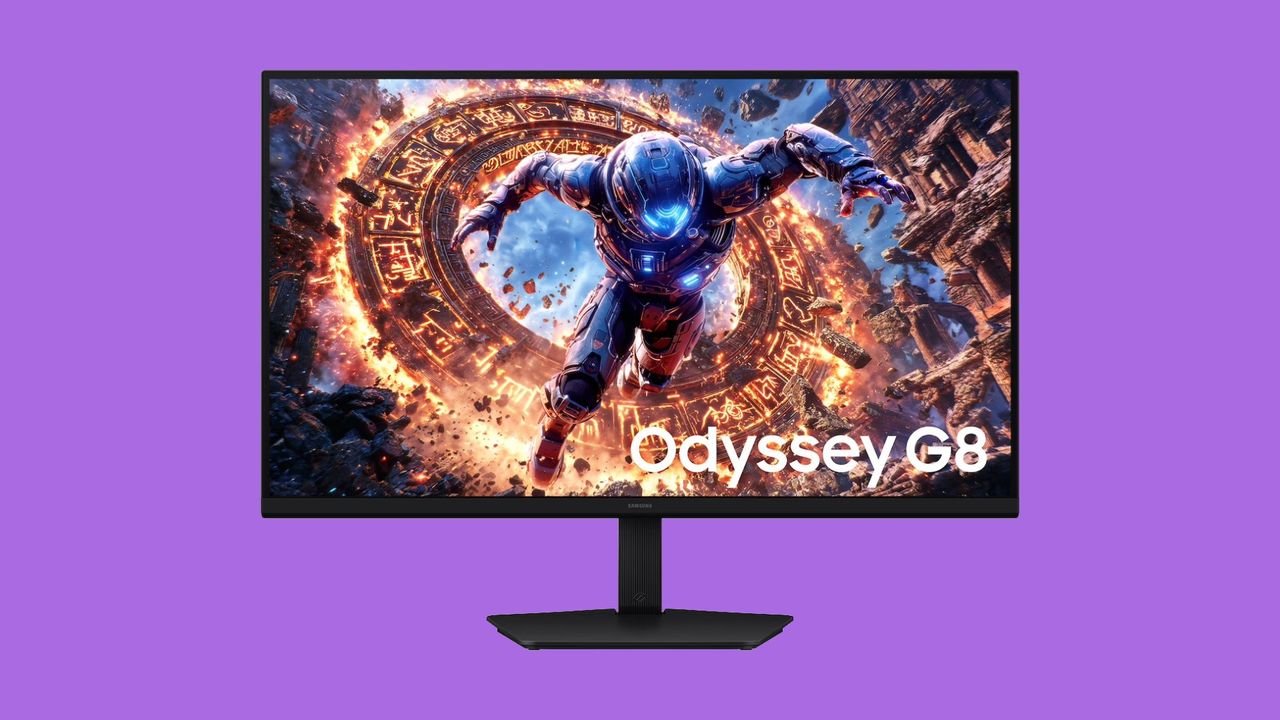
Samsung has officially launched its highly anticipated "world's first" 6K gaming monitor, bringing the device to pre-order on Samsung's German website for €1,499. While we expect a US dollar price point to sit around a similar figure, the arrival of the Samsung Odyssey G8 (G80HS) raises plenty of questions regarding its value proposition in a market dominated by OLED technology.
Technical Specifications of the Samsung Odyssey G8
The core of this monitor is a 32-inch 6K IPS panel with a native resolution of 6,144 by 3,456 pixels. Interestingly, Samsung has opted for an IPS panel rather than the VA or OLED technologies typically associated with their high-end displays. There is even speculation regarding the panel's origin; while the resolution aligns with LG's hardware, the listed static contrast of 1,000:1 is lower than what LG typically offers for its 6K units.
Key technical details include:
- Resolution: 6,144 x 3,456 (6K)
- Panel Type: IPS
- Refresh Rate: 165 Hz
- Dual Mode: 330 Hz at 3K resolution
- Peak Brightness: 350 nits
Is the 6K Gaming Monitor Worth the Premium?
The primary selling point for this hardware is the massive 224 DPI pixel density. For productivity tasks, such as reading text or high-resolution photo editing, a 6K panel offers incredible sharpness and superior font rendering. However, when applied to gaming, the benefits become more debatable due to several hardware limitations:
- Limited HDR Performance: With a peak brightness of only 350 nits and no full-array local dimming, HDR support is quite restricted.
- Contrast Concerns: The reported 1,000:1 contrast ratio may struggle to compete with the deep blacks found in OLED alternatives.
- Niche Use Case: While the 330 Hz 3K dual mode is a unique feature, its practical utility for most gamers remains unproven.
While the sheer resolution of this 6K gaming monitor is impressive, many enthusiasts might find a 32-inch 4K OLED panel to be a more balanced choice. An OLED setup would likely provide superior response times, better HDR, and higher refresh rates, making it a formidable competitor to Samsung's new high-resolution flagship.