Throughout the past decade, we've seen the gaming industry grow increasingly concerned with optimization and the fruitless endeavor of chasing perfection. Including Larian, Pearl Abyss, and Sandfall Interactive, studios big and small seem to be relying more often on generative AI to create placeholder art for their titles--even if "getting caught" often leads to negative PR. It's for precisely this reason that Slay the Spire 2's "shit" placeholder art holds a special place in my heart.
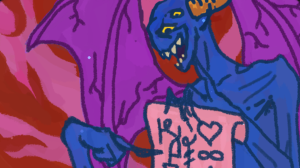
Upon its release in early access earlier this year, Slay the Spire 2 players were treated to not only one of the year's best games, but to a wide variety of Microsoft Paint-style art created predominantly by developer Mega Crit's co-founder Casey Yano. Found primarily in the game's Timeline section, which grows as players unlock epochs and helps to progress the game's overarching narrative, these MS Paint-esque portraits offer an endearingly crude look at the illustrations to come. It's easy to see these illustrations as a very clear rejection of the growing trend of using generative AI to create placeholder art, but according to Yano, this is only part of the story. There are a number of reasons that "bad, human art"--even when legally questionable--is preferable to generative AI art that no one "in real life" wants, Yano told GameSpot.
Setting expectationsAt the top of Yano's list of reasons for Slay the Spire 2's current art is how having "obviously incomplete" assets helps players create reasonable expectations for the game.
"I think our artists wanted a lot of the art that comes shipped with early access to be completed, but I knew that we were going to be drawing a bunch of garbage during early access," Yano said. "I wanted to set the precedent that some of the stuff is incomplete, and I wanted to make it obvious. I think things being obviously incomplete is actually pretty important for early access. Otherwise people would judge the game as if it's a 1.0, fully developed video game."
As with the original Slay the Spire, Slay the Spire 2 launched as an early-access title--and the studio plans to keep it that way for the next year or two, according to the game's Steam page. A lot of the reasoning for this move stems from the type of game Slay the Spire 2 is. As a deckbuilder roguelike, Slay the Spire 2 feeling well-balanced is absolutely vital. Too easy, and you alienate the players seeking that grueling experience these genres are known for; too difficult, and the game is no longer fun to play.
According to Mega Crit, player feedback is essential in establishing that balance. Early access also allows the team to "test experimental features, try exotic designs, [and] identify niche problems," but throughout it all, it's important that players remember all of this is in progress. "Shit" art is one way the team is keeping this top of mind.
"If we use art that looks nearly complete, then people would think that that's going to be the final art. It has to look like shit. It's important that it looks like shit."
A conflict between "a boulder-throwing individual and flying automatons."That said, it's also important that this art conveys the right information to the player. When deciding which assets needed to be finished prior to the game's early-access release date, Yano explained that it largely came down to ensuring the game was legible enough to play. While Slay the Spire 2’s gameplay might already be incredibly solid, all of that work (and the overall experience) is lessened when there is on-screen confusion or a disconnect between the player and the game’s content.
"Prioritization was mostly about making sure that our players have an emotional connection to the content and also recognize what content is what," Yano said. "If you look at the relics at the top, and they're just red boxes, it [conveys] nothing. It's so bad. You can't be like, 'Which relic is gonna trigger?' Like, I don't know; they're all red boxes. You just gotta put something in there."
However, not any old placeholder art does the trick. It was also vital that the work created was legible to the game’s other developers, too. Considering Slay the Spire 2’s level of intentionality in regards to its overall design, it’s perhaps unsurprising that its developers assume there is a level of intention behind everything--even placeholder art.
"When you draw placeholder art, there's a very high chance that when we pass it on to our artists--whether that's our art director, Marlowe [Dobbe], or another illustrator--what happens is, if you draw something a little too crude, they'll be like, 'This must be what Casey wanted. This must be intentional.' And then they base [the final art] off of something like that," Yano explained. "So I do want the [placeholder] art to be kind of like a framework, especially--especially--the art that's used in the timeline. They're the narrative beats, and I want to make sure that those kinds of compositions and colors and details [are] communicated through those drawings."
The artistic processArtistry in general is a big priority for Yano and the team at Mega Crit--hence the reason the team has opted for MS Paint-esque drawings rather than utilizing generative AI for placeholder art. Yano stated that, while he gets the intent behind generative AI, finds the process interesting, and understands why less artistically inclined developers might be enticed by its ability to quickly realize an idea, he has a firm stance against generative AI as "someone who draws."
"Anybody who has gone through the [artistic] process… I wouldn't say they would feel cheated, but they would feel a kind of sadness, right? You don't see the path that somebody took to get better and develop their own style. You just see somebody who's like, 'I just want something in this style,'" Yano said. "And there are a lot of artists out there that make works that are meant to imitate certain styles. There's a lot of jobs where we imitate different things. But in this case, the game is in our style, so I don't know why we'd need AI to mimic our own style."
Cultists gatherYano added that generative AI art also removes the intentionality that is vital in the artistic process. While there will always be new tools that aim to remove tedium from the creation process--and subsequently, questions of if these tools are cheating or lessen a work’s quality--generative AI goes a step further by removing “authorial intent.”
"When you draw anything, you draw a thousand lines. Each line is not some serious decision, but there's a decision process for nearly every line--every line you erase, every line you adjust, and everything that you do,” Yano explained. "There's also a very distinct look to [AI-generated art] as well. To me, it's very strange. It's very dense, very colorful, and very distinct. It doesn't fit with the rest of the art style and it's just clearly lazy."
While these are all reasons enough to forgo using generative AI, there's another reason why Slay the Spire 2's handmade art is so appealing to both Yano and me: It tells a story. While Slay the Spire 2 is far from grimdark, it's not necessarily a lighthearted or humorous experience. These placeholder pictures, however, add a sense of levity to the game, and show off a bit of the charm and personality of the team behind it. Yano referred to this as "the playfulness of development" before sharing a funny (albeit incriminating) anecdote about one of the game's younger developers.
"[I'll see something and] I know Jose drew this one because he's a fan of mechas so everything he draws is mechas. He's also a little younger, so he tends to draw a lot of inspiration from pop culture. It's really bad. We're [going to] get sued by Nintendo soon," Yano joked. "He's no longer allowed to draw placeholder art now that we're in early access and it's more public-facing. We have some suspicious things in there. Some Among Us, some SpongeBob."
With this in mind, I asked Yano if--like the original Slay the Spire--the team had any intention of allowing players to use Slay the Spire 2's original assets even after the game leaves early access. Yano confirmed this is the intention and, if possible, he'd like to "take it even further" this time around. Once Slay the Spire 2's content is more solidified, Mega Crit wants to hold a community contest encouraging fans to draw "janky" art for some of the game's monsters. These would then be added to the game as optional art that celebrates the Slay the Spire community (and makes certain encounters more humorous).
However, Yano does have some reservations about doing this. Part of his hesitation stems from wanting to ensure there is a way for fan artists to be credited in the game; the other part comes from a fear that fans will use generative AI to create these assets, essentially defeating the purpose of the contest.
"We do explicitly say in our subreddit and our Discord that all fan art can't be AI art, but I get the feeling that when we get submissions for those community art contests, not everyone's going to read all the rules or [some] will try to cheat the system," Yano said. "Which would be a bit of a bummer because, you know, we're just trying to be like, "Hey, we're drawing silly, bad, very human art," right? If you use AI, [it] kind of subverts the entire thing. It's no good."
The perks of being indieWith all this in mind, the notion of games such as Clair Obscur: Expedition 33 and Crimson Desert using AI placeholders begins to feel a bit absurd--but Yano suspects there is more to the story. As more and more tech companies double down on AI, studios seeking funding from them might feel more inclined to rely on these tools. As an independent studio, this is an issue Mega Crit doesn't have to worry about.
"I think a lot of big companies are like, 'We're pro AI' because they want investments from people. Or [they say] 'AI is the future.' But we're an independent game company. We have no one to placate," Yano explained. "We just make games for people in the way that we think is the best, and [in] the way that people will like them the most. I haven't met anyone in real life, who is like, 'You know what the people want is an AI art video game.' That has not happened. Why would I take that kind of insane risk to harm my reputation forever, right? That's absurd. It doesn't make business sense, even, to use generative AI as a placeholder."
The Necrobinder speaks to PaelFollowing these discussions, I asked Yano if Mega Crit has a firm policy set in place against generative AI, as well as if the team uses AI in any other capacity. Yano explained that while he is against generative AI, he understands the usefulness of AI in other areas of game development and isn't firmly anti-AI. That said, he suspects that most of the developers on the team don't use it that often.
"Some of our programmers use AI for code reviews--it's like a glorified spell checker. I sometimes use it as a slightly more involved thesaurus. But we don't use generative AI," Yano reiterated. "I think there's a very different mentality, right? [When] you write code, you're just trying to write code in the best way you can to achieve the objective that you want. There's an end goal that's definable. Art is not like that. It's an expression."
When it comes down to it, expression--even when that expression looks like mechas and not-so-subtle SpongeBob references--plays a pivotal role in Slay the Spire 2. While you could perceive the game's silly, MS Paint-style images as embarrassing interim assets, I'd argue it's more interesting and accurate to view them as a story. Crude as they are, these pictures tell the tale of Slay the Spire 2's evolution, and the Mega Crit team's time spent working on the game. They showcase an admirable and fearless authenticity, and a willingness to reject optimization in favor of beautiful, janky humanity.