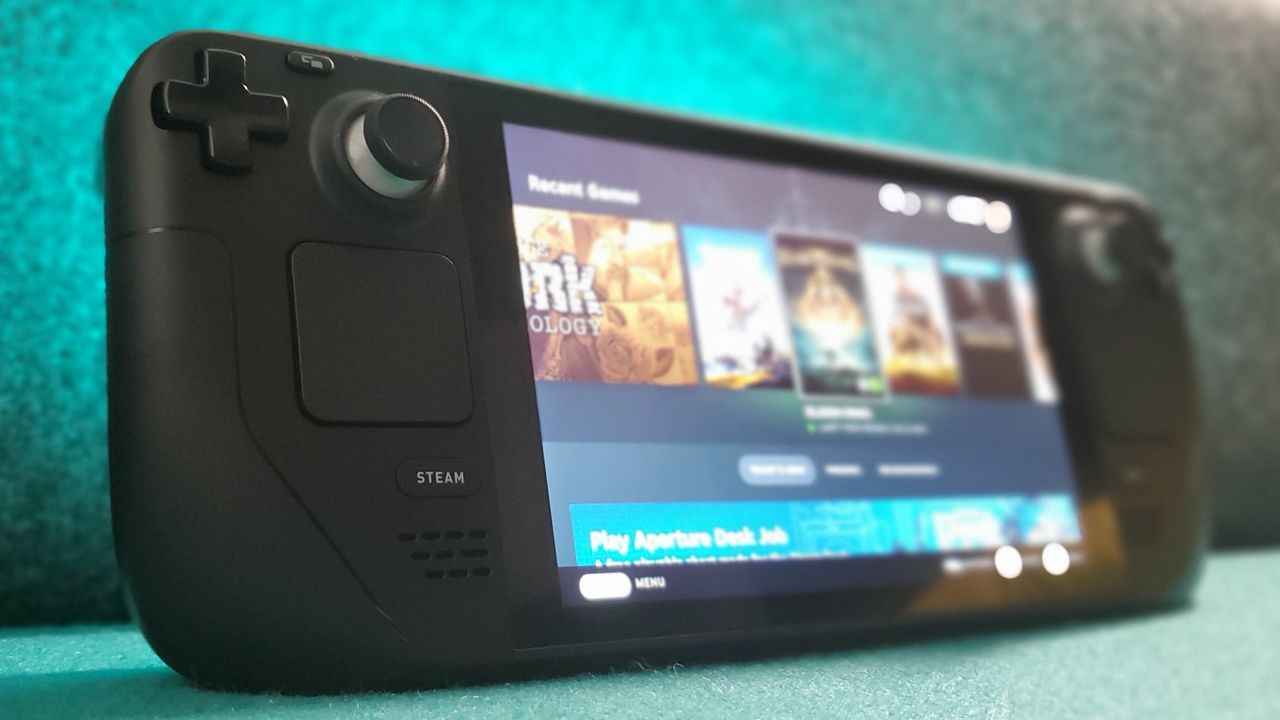
The Steam Deck was once a budget champion, but no longer. Ever since the price hikes earlier this year, Valve's handheld has become difficult to argue for as a value proposition—and according to recent sales estimates by Boiling Steam, it appears that consumers may agree.
The site has attempted to estimate the number of Steam Deck units sold by tracking its position on the Steam Top Sellers listing, and extrapolating data in relation to the entries above and below it (via XDA).
This back-of-the-napkin maths is hardly definitive, but it suggests that when the Steam Deck dropped from around fourth and fifth on the chart position to between tenth and fifteenth after the price adjustments in May of this year, the drop in weekly units sold would equate to roughly 80-82%.
Boiling Steam suggests that a slip to fourteenth on the Top Sellers list from its previous top five position represents a drop in gross revenue of approximately 72%, something the outlet characterises as a "complete collapse in total sales."
Presuming Boiling Steam's earlier estimate of between 11,000 and 18,000 units sold a week pre-price increase is correct, the figures would equate to between 1,400 and 3,000 units sold weekly in mid-2026. "The effect could not be clearer," says the outlet. "A 72% revenue contraction combined with a 54% price increase has completely shut down the demand for the Steam Deck."
(Image credit: Future)Immediately after the price increases, replenished stock was reportedly sold out in North America, so it seems that some well-heeled buyers bit the bullet—at least initially. In fact, it's worth pointing out that regional shortages in Steam Deck supplies may have had their part to play in the Deck's position in the Top Seller rankings, which could skew this data significantly.
There's also a fair amount of guesswork here, as the outlet has made assumptions about the average Steam Deck price across the range for 2025 sales data, and extrapolated estimated weekly revenues for the positioning of the surrounding top-selling games. All of which is to say, a pinch of salt may well be required.
Still, it's been a grim 2026 in general for handheld gaming fans. While there's been plenty to get excited about on the hardware front, including Intel's Panther Lake-based Arc G3 and G3 Extreme offerings and the magnificent MSI Claw 8 EX AI+, the memory crisis-induced pricing has tarnished what was once an excellent entry point into PC gaming.
(Image credit: Future)And the Steam Deck really was the entry point to beat all entry points. The cheaper LCD models have since been retired, the OLED models are hugely expensive given the performance you receive for your cash, and we're left wondering if the form factor will survive as anything other than a niche category for the very well-off.
I recently reported on a $5,299 handheld offering from Ayaneo, a 128 GB beast that I can't possibly see selling in large numbers for that sort of price. But, like Valve and countless other hardware providers, the company has felt the need to increase the pricing to cover memory and storage costs. Never mind global shipping uncertainty and a whole host of other contributing factors.
Those of you who picked up a Steam Deck back when it was cheap are probably feeling pretty pleased with yourselves right now, and rightly so. But, if these estimates are correct, I'd imagine Valve may be beginning to ask itself whether the hassle—combined with dropped sales figures—makes the whole endeavour worth it. And that, for PC gaming on the go, would be a sad state of affairs indeed.