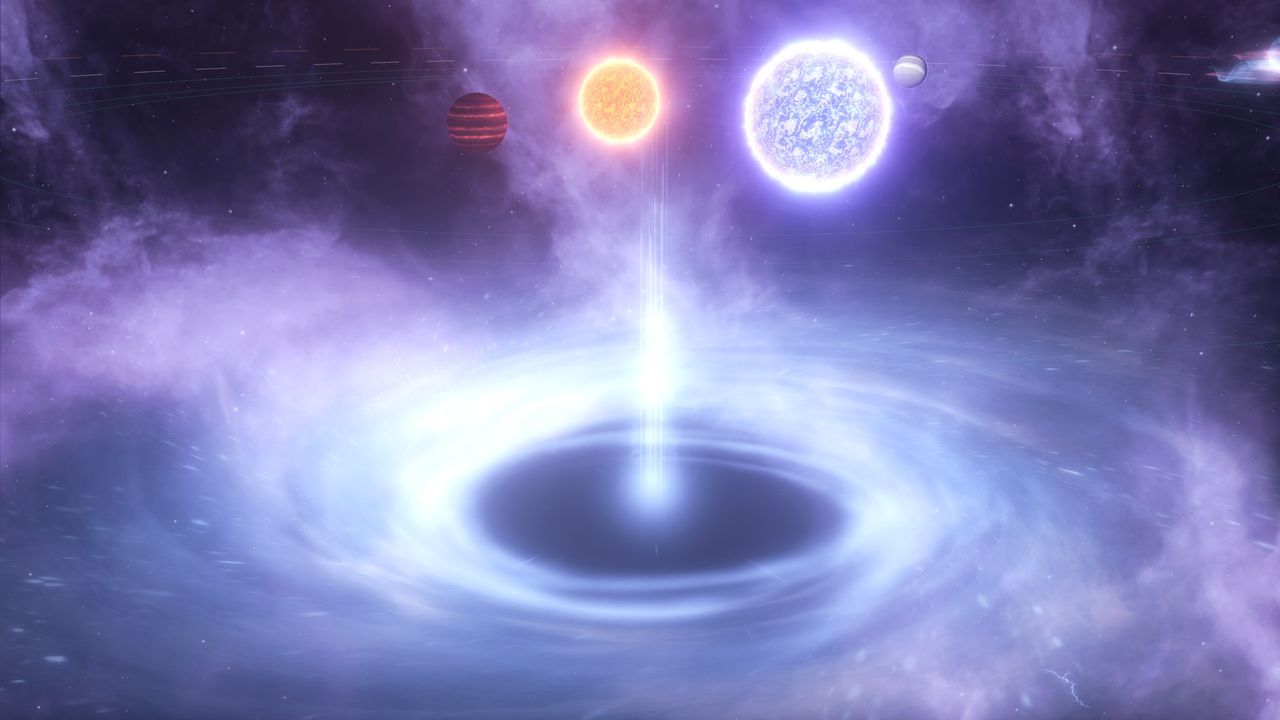
There is still a part of me that views 2016's Stellaris as one of the "new school" Paradox grand strategy games, even though it turned 10 years old just this week. If you were to add all of its 30+ DLCs to your Steam cart right now, it would run you upwards of $200—and that is even with a significant portion of them on sale. Despite its age, Paradox has already announced the next batch with Season 10, introducing new scenarios and nomads to the galaxy.
When Stellaris launched, it was clear that this specific DLC model was working for Paradox. By funding long lifespans through transformative free patches and paid expansions, they followed the successful blueprints laid by 2012's Crusader Kings 2 and 2013's Europa Universalis 4. However, during its early development, the idea that a grand strategy game could still be receiving major content updates for an entire decade was not yet obvious.
The Evolution of a Grand Strategy Icon
"It wasn't exactly clear that it was incredibly successful when I started scribbling down notes for what was to become Stellaris," says Henrik Fåhraeus, the original game director and current Paradox Chief Creative Officer. "But I guess sometime during development we realized that this is the model we should go with."
The sheer scale of how Stellaris is still getting DLC after ten years is reflected in its massive update history. The game has received:
- 41 major free patches
- Dozens of smaller incremental updates
- Significant version jumps (from 1.0 to the current 4.3)
These major version shifts have transformed the experience so fundamentally that the original release and the current build are almost unrecognizable as the same game. Current game director Stephen Murray even jokes on the forums that the title has become the "Spaceship of Theseus."
Maintaining the Core Identity
Much like the software itself, the leadership has changed; Murray is the fourth person to hold the position of game director. When asked what keeps the game grounded despite its constant metamorphosis, Fåhraeus points back to the fundamental gameplay loop.
"I still think it's at its core about the joy of exploring the unknown," Fåhraeus explained. "It puts so much emphasis on exploration and the events that you experience while venturing forth into the galaxy."
Murray agrees, noting that the game is built on fulfilling player fantasies. Whether players want to recreate the Borg from Star Trek or the Zerg from Starcraft, the empire builder accommodates them. "We're always trying to give you new things to do," Murray added.
The Future of Stellaris and the Challenge of Complexity
During his tenure, Murray has steered the game toward more narrative and RPG-based content. By focusing on expansions like Overlord and First Contact, he has infused the grand strategy mechanics with a deeper sense of storytelling.
However, maintaining such an expansive universe is not without its hurdles. As more systems are bolted onto the hull, the game becomes increasingly complex for even veteran players to track. Fåhraeus admits that this is a classic development hurdle for live-service games.
"What started out as our most approachable grand strategy game with a very clean interface is no longer that," Fåhraeus noted. He suggested that eventually, the studio might need to consider a sequel or a massive UI cleanup pass to manage the decade's worth of expansions.
Despite these growing pains, both directors believe the journey isn't over. While older titles like Age of Empires 2 continue to receive content, the team behind Stellaris remains optimistic about their ability to tell new stories without simply retreading old ground. For now, the galaxy continues to expand.