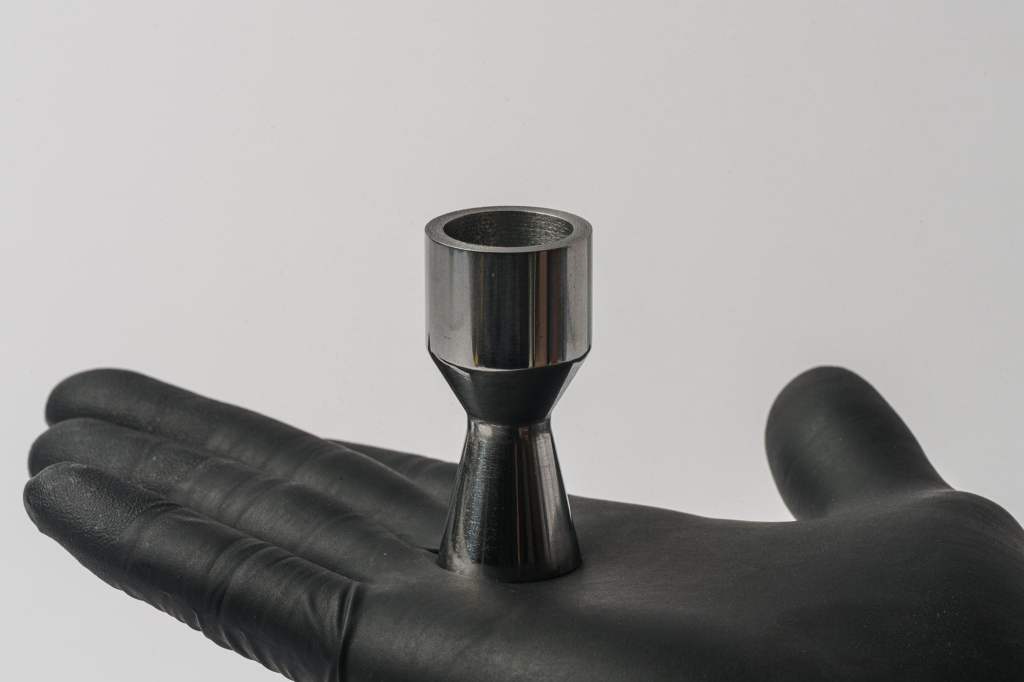
This startup’s super metals could soon be in military drones, luxury watches, and chef’s knives
What if the very materials that define our tools, machines, and weapons could be reinvented without melting a single atom? Foundation Alloy, an early-stage startup, is challenging the millennia-old practice of alloying metals by replacing the molten crucible with a high-precision mill. Instead of heating metals to their melting points and combining them, the company uses a solid-state alloying process that crushes metal powders together at room temperature, resulting in materials with superior strength, heat resistance, and durability. This method allows for the creation of composites that would be impossible to achieve using traditional techniques.
A New Approach to an Ancient Process
Traditional alloying methods have remained largely unchanged since the Bronze Age. The process involves melting different metals and mixing them until they form a new material. However, this method often leaves behind microscopic voids and imperfections that can weaken the final product. It also limits the types of metals that can be combined due to differences in their melting points.
Foundation Alloy’s process eliminates the need for extreme heat, dramatically reducing energy consumption and waste. According to Jake Guglin, the company’s CEO, the startup’s method allows for the creation of materials that are both strong and heat-resistant—properties that are typically mutually exclusive in traditional alloys. This breakthrough could revolutionize industries ranging from defense to consumer goods.
From Drones to Diamond Cores
The startup’s potential applications are as diverse as they are impressive. Military drones, which require lightweight yet durable materials, are among the first adopters. The aerospace and automotive industries are also showing strong interest, with pilots already underway for parts used in manufacturing and high-performance components.
- Military drones: Foundation Alloy’s materials are being tested for use in drone components that need to withstand both extreme temperatures and mechanical stress.
- Luxury watches: High-end watchmakers are exploring the use of the startup’s alloys for cases and gears that offer unmatched precision and longevity.
- Chef’s knives: The company’s ultra-durable alloys are being eyed for high-end kitchen tools that need to endure repeated use without dulling.
Beyond these consumer-facing applications, the startup is also working with semiconductor manufacturers and defense contractors, suggesting a broader impact on technology and national security sectors. The materials could even find their way into spacecraft and medical devices, where reliability is paramount.
A Future Forged in Powder
With a $22 million Series A round led by Voyager Ventures and including investors like Yamaha Motors and Kanematsu Corporation, Foundation Alloy is positioned to scale rapidly. The company aims to produce several tons of its alloys per week by 2027, with distribution networks already in place for key markets in Asia and beyond.
The company’s technology is rooted in decades of academic research led by scientists Tim Rupert and Chris Schuh. Their work at the nanoscale revealed new ways to manipulate metal structures without the need for high-temperature processing. This scientific foundation has enabled the startup to create materials that outperform conventional alloys in multiple ways.
As the demand for stronger, more efficient materials grows, Foundation Alloy’s approach may become a standard in industries that rely on metal performance. Its ability to blend traditionally incompatible metals could open new frontiers in engineering, offering solutions that were previously thought impossible.
The next few years will determine whether this startup’s vision becomes the new norm or remains a niche breakthrough. But with the backing of major investors and the support of industries eager for better materials, the future of alloying may soon be forged in powder, not fire.