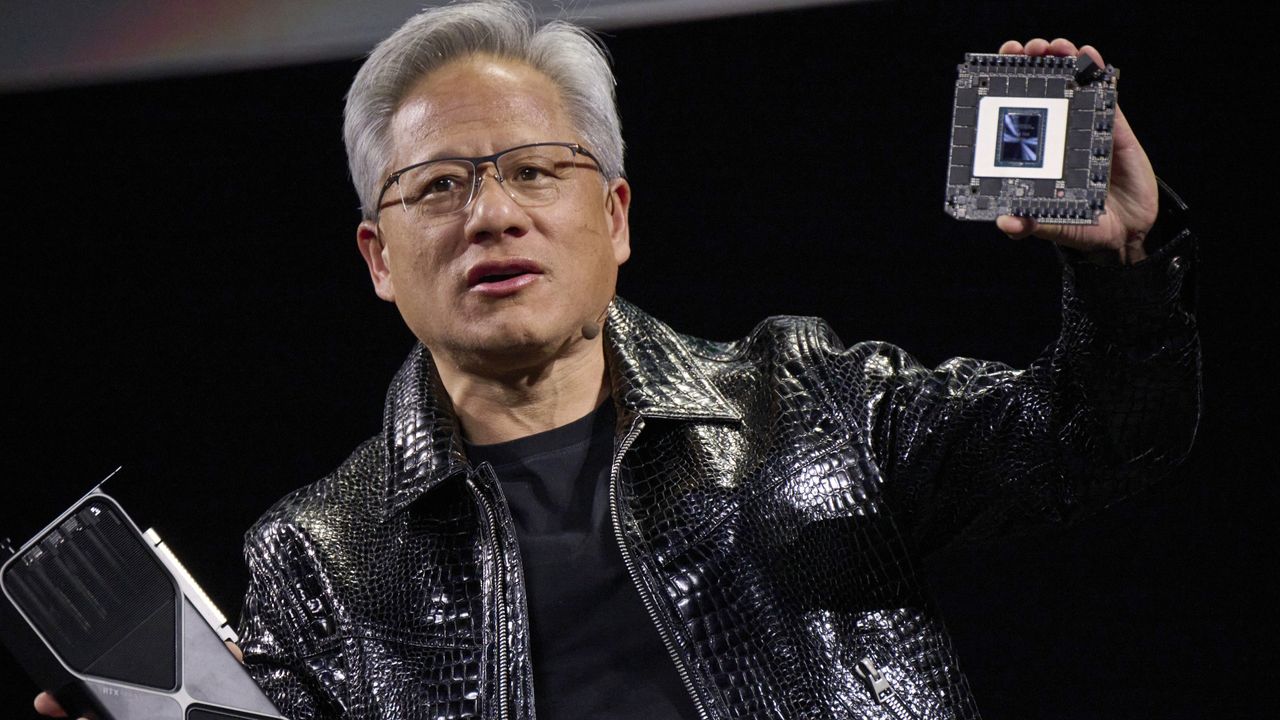
The geopolitical landscape is shifting, and at the center of this transformation is a high-stakes race for artificial intelligence supremacy. As Beijing pushes for hardware independence, Washington is pivoting toward an aggressive strategy of market penetration. In a move that signals a new era of tech-driven diplomacy, Donald Trump has confirmed he brought Jensen Huang on his expedition to convince China to 'open up' and accept American technological influence.
Nvidia CEO Jensen Huang is currently aboard Air Force One, traveling with the presidential delegation to Beijing. This maneuver aims to reintegrate American tech giants into Chinese markets despite a tightening web of trade restrictions.
Clarifying the presence of "The Great Jensen Huang"
Following rumors that Nvidia had been excluded from the official delegation, Trump took to Truth Social to set the record straight. Adopting his characteristic forceful tone, he dismissed reports suggesting Huang’s invitation was lost or overlooked.
Trump referred to the Nvidia leader as the "Great Jensen Huang," stating:
"In actuality, Jensen is currently on Air Force One and, unless I ask him to leave, which is highly unlikely, CNBC’s reporting is incorrect or, as they say in politics, FAKE NEWS!"
This correction highlights just how vital Nvidia is to the current trade dialogue. Trump has assembled a powerhouse group of industry leaders for this first US presidential visit to China since 2017, including:
- Elon Musk, CEO of Tesla and SpaceX
- Larry Fink, CEO of BlackRock
- Tim Cook, Apple CEO
- Representatives from Micron and Qualcomm
The presence of this "who’s who" of Silicon Valley and Wall Street suggests the administration views AI infrastructure as a foundational element of future US-China economic relations.
The strategic importance of Nvidia in China
Jensen Huang is far more than a passenger on this trip; he is a vocal advocate for maintaining American market presence in Asia. He has frequently argued that cutting China off from US technology could be a strategic blunder.
Huang’s stance is built on several critical observations regarding the global AI landscape:
- Market Proximity: Huang previously warned that "China is right behind us" in development, suggesting the US must export technology aggressively to maintain its lead.
- The Risk of Local Competition: He has noted that if Nvidia cannot supply chips, Chinese firms will simply build their own, permanently locking US companies out of the region.
- Security Perspectives: Huang has downplayed fears regarding chip usage in the Chinese military, suggesting that China's ability to rely on US hardware is limited regardless.
The financial implications are staggering. While Nvidia recently became the first company to surpass a $5 trillion net worth, its dominance in the Chinese market has faced a massive setback. Due to export bans and retaliatory taxes, Huang noted that Nvidia’s regional market share plummeted from 95% to nearly 0%.
Navigating the "Open Up" mandate
The mission of this delegation is explicit. Trump stated his intention to approach President Xi—whom he described as a "Leader of extraordinary distinction"—to ask him to "open up" China so that these industry titans can "work their magic."
This diplomatic push arrives during a period of intense complexity. While the US continues to impose strict caps on AI chip exports, recent reports suggest Beijing may have approved imports of Nvidia’s H200 AI GPUs. This indicates a potential, if fragile, window for hardware trade.
For Nvidia and its peers, the objective is to maintain technological supremacy by ensuring Chinese developers remain dependent on Western hardware. If China successfully achieves total independence from US tech, the opportunity for American companies to secure long-term dominance may vanish.
The delegation is scheduled to return to the US by May 15, 2026. The results of these discussions will likely define the trajectory of global trade and AI competition for years to come.