There Are Stirrings in the VR Industry That Much Better Displays Could Be in the Pipeline
There are stirrings in the VR industry that much better displays could be in the pipeline, as emerging technologies like Micro-OLED are gaining traction among key players. While the Steam Frame has captured attention, it’s been a while since we’ve seen a major leap in VR hardware with real-scale impact. However, recent insider reports from the usually reliable VR leaker, Brad Lynch (SadlyItsBradley), suggest that significant improvements in VR headsets might be on the horizon, driven by a growing shift toward Micro-OLED technology.
According to the reports, Samsung Display has already begun discussions with equipment suppliers to build a fabrication facility capable of producing ultra-high brightness Micro-OLED displays. The plan, as outlined, involves ordering the necessary equipment in 2026, installing it by 2027, and starting mass production in 2028. This timeline indicates that while the future of VR displays is promising, the widespread availability of these advanced panels is still a few years away.
A Glimpse into Micro-OLED's Potential
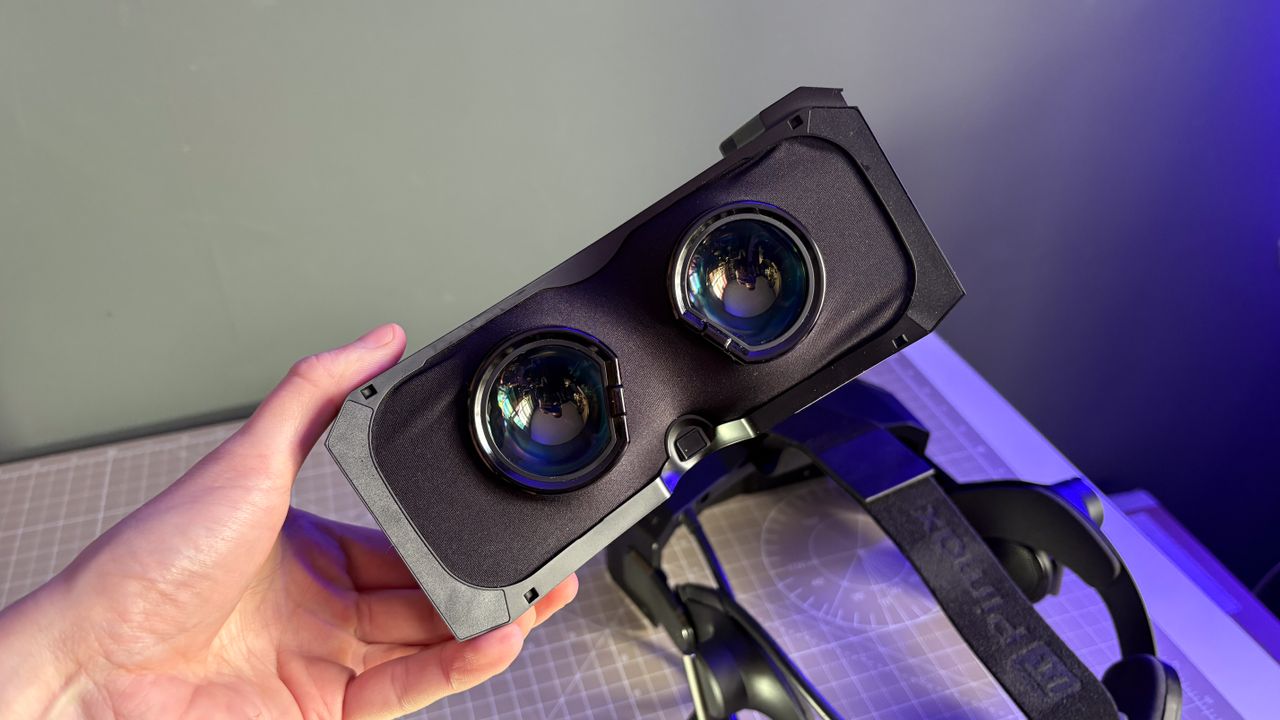
Our editor, Jacob Ridley, had the chance to test out Micro-OLED technology earlier this year in a Pimax VR headset. The experience was impressive, with the display outperforming traditional QLED optics. The headset used a Sony panel with a slightly lower vertical resolution but still managed a high pixel-per-degree clarity of 53, thanks to a reduced field of view. While there was a bit more glare than usual, it wasn't overly distracting. The display offered the typical vibrancy of OLED technology, along with a level of clarity that made screen door effects completely imperceptible. The only downside was the added cost of a few hundred dollars.
The Science Behind Micro-OLED Superiority
Micro-OLED's quality largely stems from its exceptional pixel density, which is made possible by placing light-emitting diodes on silicon substrates rather than the conventional glass used in standard OLEDs. This manufacturing process allows for far greater precision, resulting in pixel densities that are orders of magnitude higher than those found in typical high-density PC monitors. While the technology is still in its early stages, it has already found its way into products like the Apple Vision Pro and the Pimax headset. Sony has long been a dominant force in this space, but now Samsung is making its move, aiming to establish its presence in the production of these cutting-edge displays.
As the global memory and storage crisis continues to challenge the tech industry, the development of advanced display technologies like Micro-OLED offers a beacon of hope. While major changes in the VR landscape are still a couple of years away, the current momentum suggests that we may be on the brink of a new era in immersive technology.