Why Wall Street Thinks US Memory Maker Micron Is the Next Nvidia
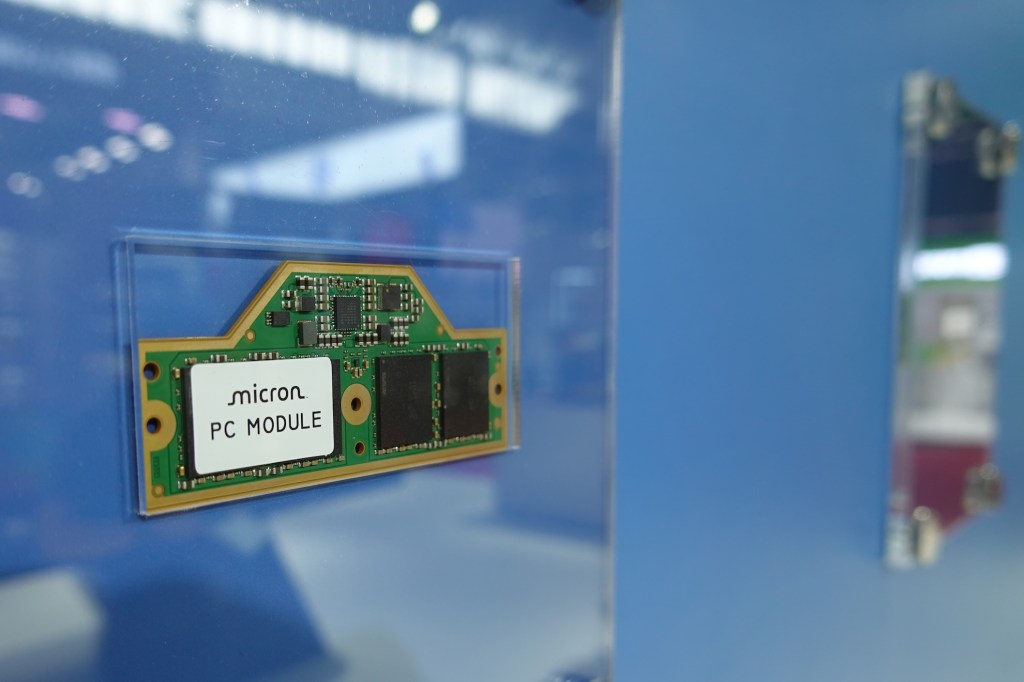
On Thursday, June 24, 2026, Micron Technology’s stock surged to a market valuation of nearly $1.27 trillion — briefly surpassing Meta and Tesla for the first time in the company’s history. This staggering figure marked a dramatic reversal for a firm once synonymous with low-margin, commodity-based memory chips. The rise has been fueled by a global AI-driven demand for high-performance memory, particularly High-Bandwidth Memory (HBM), which is essential for the next generation of data centers and AI systems.
The AI Boom Fuels a Memory Chip Renaissance
Micron’s fortunes have been inextricably tied to the explosive growth of artificial intelligence infrastructure. The company has positioned itself as a critical supplier of DRAM and NAND memory to the world’s largest tech firms, including Nvidia, Microsoft, Amazon, and Google. As AI systems require exponentially more memory than traditional computing architectures, demand for these chips has surged, creating what analysts have dubbed “RAMageddon” — a persistent shortage of memory chips expected to last through 2027.
This shortage has driven up the cost of consumer electronics, from gaming consoles to smartphones. Micron’s third-quarter earnings reflected this demand, with revenue quadrupling to $41.45 billion and profits soaring to $28.2 billion. The company also announced a positive outlook for the fourth quarter, projecting revenue between $49 billion and $51 billion.
Strategic Agreements and a New Business Model
Micron has been proactive in securing long-term supply contracts to mitigate the risks of market volatility. The company has inked 16 strategic customer agreements across data centers, consumer electronics, and the automotive sector. These deals are expected to reshape Micron’s revenue structure, moving it from a traditional commodity supplier to a more stable, contract-driven business.
Analysts like William Blair’s Sebastien Naji have noted that the expansion of these long-term agreements provides a clearer revenue outlook and stronger pricing power. “With demand continuing to outpace the rate at which new cleanroom space can be built, Micron is in a strong position to sustain higher average selling prices (ASPs) and durable earnings growth,” Naji wrote in a recent research note.
Micron’s ability to maintain these contracts, particularly with Nvidia and Anthropic, has given Wall Street confidence that Micron could replicate the kind of sustained success seen by Nvidia in the AI era.
A Test of Resilience in a Cyclical Industry
Despite the optimism, the memory chip industry has historically been prone to cycles of boom and bust. Companies like Samsung and SK Hynix have faced periods where oversupply led to sharp price declines and financial strain. Micron’s aggressive capital investments and strategic customer agreements are seen as a hedge against this volatility.
However, the question remains: Can Micron avoid the pitfalls that have historically plagued memory makers? The company’s ability to scale production while managing demand fluctuations will be crucial in the coming years. For now, its stock performance has captured the attention of investors, who are increasingly looking for the next Nvidia in the AI-driven tech landscape.
With AI continuing to reshape the tech industry, Micron’s trajectory could serve as a bellwether for how memory manufacturers adapt to the new era. If the company can maintain its momentum, it may not just be the next Nvidia — it could become one of the defining players of the AI age.