Watch Duty Is Adding Flood Alerts to Its Wildfire App
A wildfire tracking app has quietly expanded its mission to include flood warnings, a shift that underscores the evolving role of technology in disaster preparedness. Watch Duty, initially designed to monitor wildfires, has now integrated flood alerts, blending its focus from one of the most unpredictable natural disasters to one that, in many ways, is more predictable—but no less dangerous.
From Fire to Flood: A Strategic Expansion
Watch Duty’s introduction of flood alerts represents a strategic pivot, emphasizing the app’s broader goal of becoming a comprehensive natural disaster tracking platform. While wildfires remain its core function, the addition of flood monitoring signals a commitment to addressing a wider range of threats. This expansion isn’t just about diversification—it’s about filling a gap in the current disaster response ecosystem.
The nonprofit, which started in 2021, initially focused on California’s wildfires, where its real-time updates became critical for users navigating the Palisades and Eaton fires. Since then, it has grown to cover the entire U.S., leveraging a mix of paid reporters and volunteer monitors who track emergency responder radio channels. Now, the app is turning its attention to floods, which, though less chaotic than wildfires, require their own nuanced approach to monitoring.
Distilling Chaos into Clarity
Monitoring floods differs from tracking wildfires in both method and intent. While wildfires are driven by unpredictable factors like wind and terrain, floods can be mapped more precisely using water level buoys and historical data. Watch Duty’s CEO, John Mills, notes that this predictability allows the app to offer more actionable information.
“We wanted to start working on it in January of 2025, but you know what happened then,” Mills said, referencing the widespread wildfires that delayed progress. “This was always something we were going to do.”
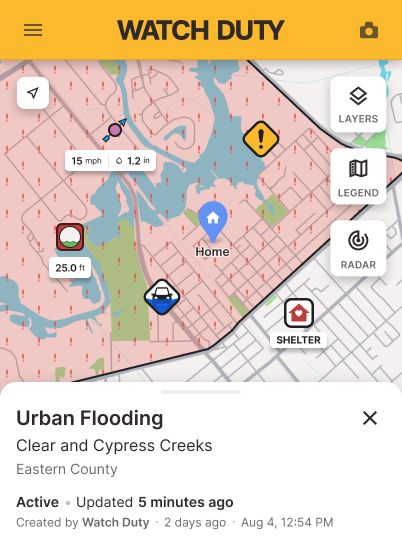
The flood feature currently focuses on water levels and floodplain locations, with push notifications triggered when thresholds are met. While it won’t track minute details like individual tree damage, it aims to give users a high-level overview of the risk they face. That’s a deliberate choice to avoid information overload and instead prioritize clarity and immediate action.
A Broader Vision for Natural Disasters
Mills envisions Watch Duty as a one-stop resource for all natural disasters, with floods being the first step in that ambition. The app has already begun developing AI-powered tools to help transcribe emergency responder radio traffic, a partnership with Google.org that highlights its growing technological footprint.
The app is expanding its team, doubling staff and leadership in the past year. Partnerships with companies like Amazon’s Ring have enhanced its ability to gather real-time data. The focus remains on natural disasters, with no plans to include crime or police-related monitoring.
As the climate crisis continues to reshape the frequency and intensity of natural disasters, apps like Watch Duty are becoming essential tools for preparedness. Whether it’s wildfires, floods, or future threats, the app’s approach reflects a growing need for centralized, easy-to-use disaster information.
In the coming years, Watch Duty’s integration of flood alerts may serve as a blueprint for how technology can adapt to the shifting landscape of environmental risk. With its foundation in wildfire tracking, the app is now setting its sights on a future where it can monitor any natural threat—no matter how unpredictable.