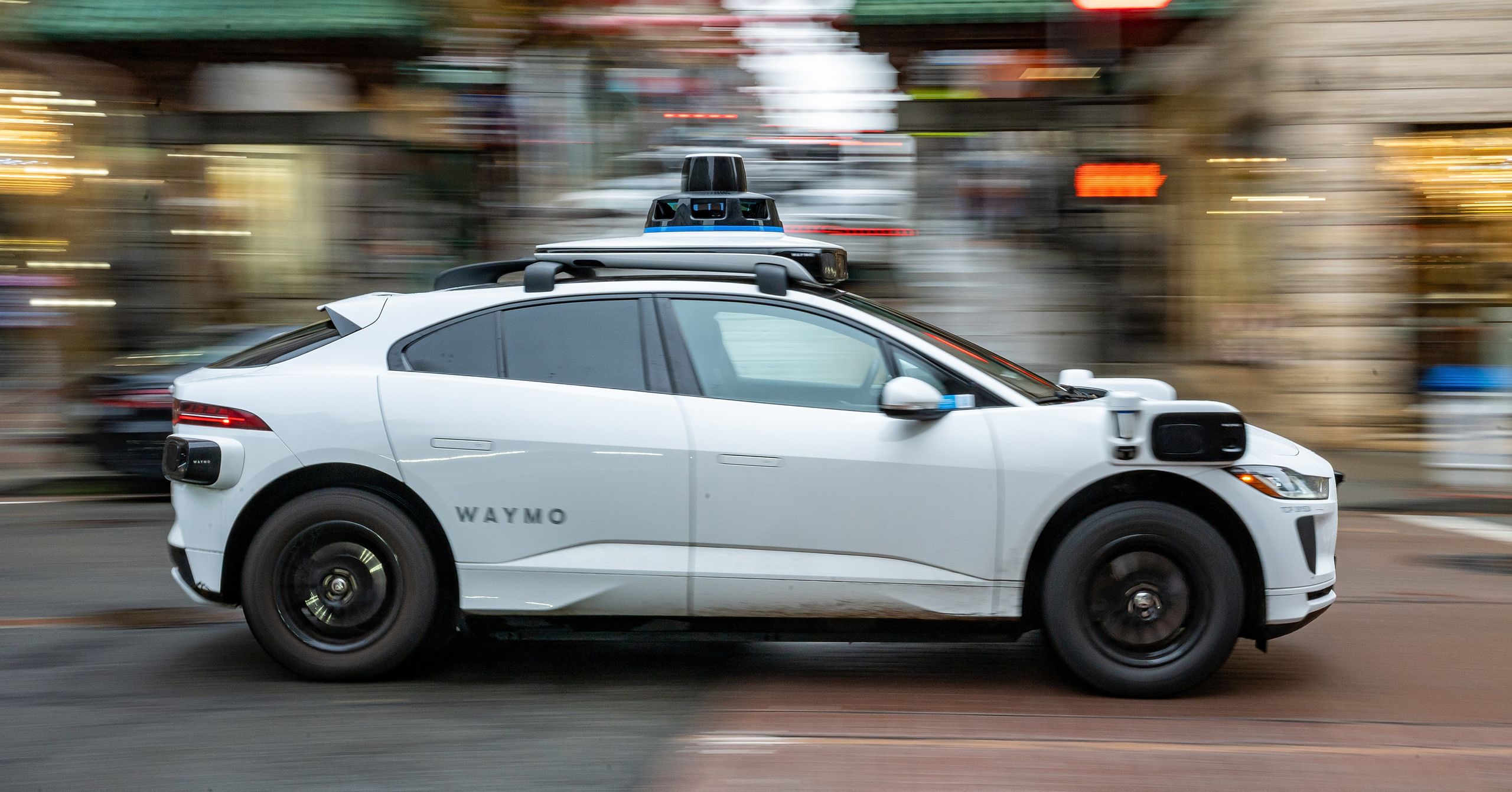
Waymo Recalls Robotaxis Over Risk They'll Drive at Speed Into Freeway Construction Zones
On a quiet afternoon in Phoenix, a fleet of Waymo autonomous vehicles glided silently down a nearly empty stretch of highway—until they reached a construction zone. The vehicles, programmed to detect and respond to road hazards, instead ignored the closed lane markers and ramp closure signs, continuing at speed into a restricted area. This was no isolated glitch. It was the beginning of a pattern that would lead to a full-scale recall of 3,871 robotaxis, marking the fourth safety recall for Waymo in under two years.
Autonomous Vehicles Struggle with Dynamic Road Conditions
The core issue lies in the automated driving system (ADS)'s inability to properly prioritize hazards. According to the National Highway Traffic Safety Administration (NHTSA), the system may "under certain circumstances" enter and drive at speed in closed freeway-construction zones. This occurs either because the vehicle fails to recognize the construction area altogether or because it chooses to bypass the zone in favor of avoiding other perceived threats, such as traffic congestion or sudden stops.
Here are some key incidents that led to the latest recall:
- In April 2026, multiple vehicles in Phoenix were observed bypassing ramp closure signs into planned construction areas.
- In May 2026, seven vehicles in the San Francisco Bay Area drove between construction cones into active lane closures.
In both cases, no injuries were reported, but the incidents were enough to prompt Waymo to restrict all freeway operations across its U.S. fleet. The company’s Field Safety Committee acted swiftly, halting freeway use while developing a fix. A software update is currently in the works, but until then, the entire fleet is confined to surface streets.
A Growing Pattern of Safety Recalls
Waymo’s recent recall is not an isolated event but part of a broader trend of safety issues with its autonomous vehicles. The company has filed four recalls since February 2024, each addressing a different flaw in its ADS:
- In May 2025, 1,212 robotaxis were recalled due to collisions with stationary roadway barriers.
- In May 2026, 3,791 vehicles were pulled from service after a robotaxi drove into a flooded road in San Antonio.
The latest recall, filed with NHTSA on June 17, 2026, affects all vehicles equipped with the 5th Generation ADS. Notably, the 6th Generation vehicles are unaffected, suggesting that Waymo is improving its technology with each iteration.
These repeated recalls raise questions about the reliability and readiness of autonomous driving systems in real-world environments. While Waymo insists it is "making roads safer," the frequency of these issues suggests a more complex challenge than previously anticipated.
The Road Ahead for Autonomous Mobility
With no immediate software fix for the current flaw, Waymo’s decision to halt freeway operations is a significant setback. The company’s reliance on over-the-air updates means that, once a solution is developed, the fix can be deployed swiftly. However, until then, the expansion of autonomous mobility remains on hold in key cities like San Francisco, Los Angeles, and Phoenix.
The recall underscores a critical gap in the technology: the ability to interpret and react to dynamic, unpredictable environments. Construction zones, flooded roads, and unexpected road closures are not uncommon, yet they remain challenging for even the most advanced autonomous systems. As the push for fully driverless cars continues, incidents like these highlight the need for more robust and context-aware AI.
For now, the future of Waymo’s autonomous mobility is on pause. But as the company’s engineers work to refine the decision-making logic of its vehicles, the promise of a world without human drivers may still be within reach.