Xbox Series S Has Gone From No-Brainer To No Thank You
Just a few years ago, the Xbox Series S was the go-to choice for budget-conscious gamers. I remember picking one up for $250 during Black Friday and gifting it to my brother, who was just getting into console gaming. With a Game Pass for Console subscription, he had access to a vast library of current-gen games and all of Xbox’s first-party titles the day they launched. While the graphical performance wasn’t as strong as the more powerful Xbox Series X, it was still good enough for casual gaming.
But with recent price hikes from Microsoft, the Xbox Series S no longer feels like a smart purchase. It’s still the cheapest way into next-gen gaming, but the entire Xbox ecosystem has seen significant price increases, making the Series S lose its unique appeal.
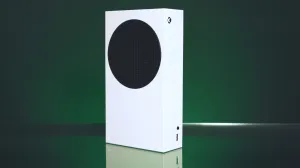
When Microsoft first introduced the Xbox Series S in September 2020, it was marketed as “the smallest, most affordable next-generation console.” Though it had slightly lower performance than the Xbox Series X, it was $200 cheaper and could play all the same games. This made it a Game Pass-centric machine, as the cost of buying the console and several months of Game Pass was still lower than buying the Series X.
As GameSpot noted in its 2020 review, “If you just want to access what the platform offers now or what’s to come in Xbox’s future, and don’t mind the gap in graphical details and storage space, this is the Xbox for you.” At the time, this made sense for budget-focused gamers.
Over time, however, the Xbox Series S began to fall short. Its lower specs affected which games were developed for both Xbox consoles. A notable example was Baldur’s Gate 3, which was initially exclusive to PS5 because Larian Studios couldn’t achieve parity between the Xbox Series X and S versions.
To resolve this, Microsoft allowed Larian to release a version of Baldur’s Gate 3 on the Series S without local co-op, a feature available on the Series X. This decision marked a turning point, making the Series S feel less like a true next-gen console.
The price increases didn’t stop there. In 2024, the Game Pass for Console was discontinued, and the cheaper Standard and Core tiers no longer included day-one releases. By 2025, prices had risen significantly. As of May 2026, the options are $10 a month for the limited Essential library, $15 a month for the Premium catalog that lacks day-one releases, or $23 a month for the Ultimate tier that includes everything.
On top of that, console prices have also seen unprecedented spikes. Due to component shortages and price increases from the AI boom, the Series S has gone from $380 in May 2025 to $400 in October 2025, and now to $500 in August 2026. Although it’s still cheaper than the Xbox Series X, the term “affordable” feels out of place when describing a $500 console.
A few years ago, I bought an Xbox Series S as a gift, but I wouldn’t do the same today. I’d rather give my brother cash or a gift card and let him choose a Nintendo Switch 2 or a refurbished PlayStation 5 Digital Edition for his current-gen gaming needs.
While the Xbox Series S was a smart move for Microsoft in 2020, it now feels like a liability. The company’s shift in focus toward AI and its constant changes to the Xbox Game Pass pricing have diminished the Series S’s appeal. What was once one of the most attractive Xbox consoles has now become a symbol of the platform’s struggles in the evolving gaming landscape.