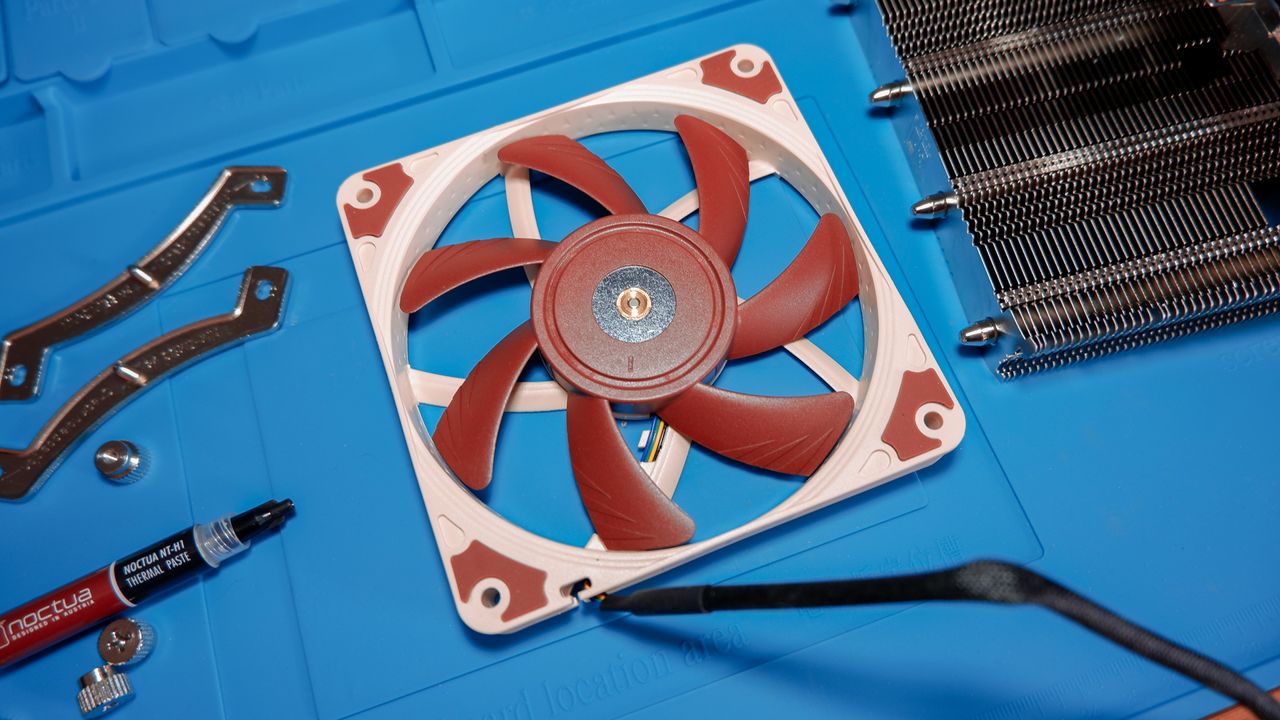
Noctua has officially released 3D CAD models for many of its popular fan designs, providing a massive boost for enthusiasts and builders integrating high-end cooling into custom projects. While this is a win for the maker community, there is a significant caveat: these files are not perfect replicas of the physical hardware.
Why Noctua's 3D CAD models won't perform well when printed
If you are planning to 3D print a functional replacement, proceed with caution. Noctua has clarified that while users can "gladly" print these models, the company has intentionally altered specific geometries to protect its intellectual property. Because of these subtle changes, the company warns that these 3D CAD models "will not perform well when printed."
The modifications primarily target crucial components like the fan impeller. While the files are excellent for spatial planning, they lack the precision required for high-performance airflow. Key limitations include:
- Modified Impeller Geometry: Altered shapes prevent direct cloning of their proprietary airflow tech.
- Lack of Performance Guarantees: Models are provided "as is" for reference and visualization only.
- Manufacturing Restrictions: The files are not intended for the mass reproduction or commercialization of Noctua products.
Designing around Noctua hardware dimensions
Despite the performance warning, these models serve a vital purpose for mechanical design. According to Noctua, the provided files accurately represent mounting dimensions and overall external footprints. This makes them an invaluable resource for anyone designing custom PC cases, shroud mounts, or specialized cooling rigs where knowing the exact physical space a fan occupies is critical.
However, recreating a functional Noctua fan is about more than just the plastic shell. The company highlighted several engineering hurdles that 3D printing alone cannot solve:
- Precision Assembly: Building the motor and bearings requires tolerances far beyond standard hobbyist printers.
- Advanced Materials: High-end models, such as the NF-A14x25 G2, utilize liquid-crystal polymer to maintain incredibly tight tolerances.
- Complex Development: Some designs represent nearly a decade of research and development.
For most hobbyists, these files are a perfect solution for ensuring a project integrates seamlessly with Noctua hardware without needing to guess at the dimensions. Just don't expect a 3D-printed impeller to match the silent, high-pressure performance of the original retail units.