When a whale dies on the ocean floor, its carcass creates a "whale fall"—a nutrient-rich ecosystem that sustains entire species for years. In the world of gaming, certain titles act much like these carcasses. They provide the essential building blocks for new life, allowing modders and developers to scavenge, innovate, and create entirely new worlds.
In 1999, a hobbyist programmer known as Phantom Menace began working on a custom PC replica of the NES classic The Legend of Zelda. What started as a simple tribute eventually evolved into a massive Zelda fangame engine, becoming a digital whale fall that has fed generations of creators for over two decades.
The Evolution of ZQuest Classic
Originally known as Zelda Classic, the project was eventually renamed to ZQuest Classic to distance itself from potential legal scrutiny. Today, the open-source engine is maintained by volunteers Connor Clark and Emily Venezia, both of whom discovered the tool as children.
Unlike heavy-duty development tools, ZQuest occupies a unique space between simple level editors like Mario Maker and complex engines like God_ot. The appeal lies in its incredibly low barrier to entry.
"You enter. You go. You maybe toggle some checkboxes to change how some settings work... but for the most part you don't need any coding knowledge yourself," says Venezia. Clark echoes this, noting that even a 12-year-old can boot up the engine and produce a playable game in a matter of clicks.
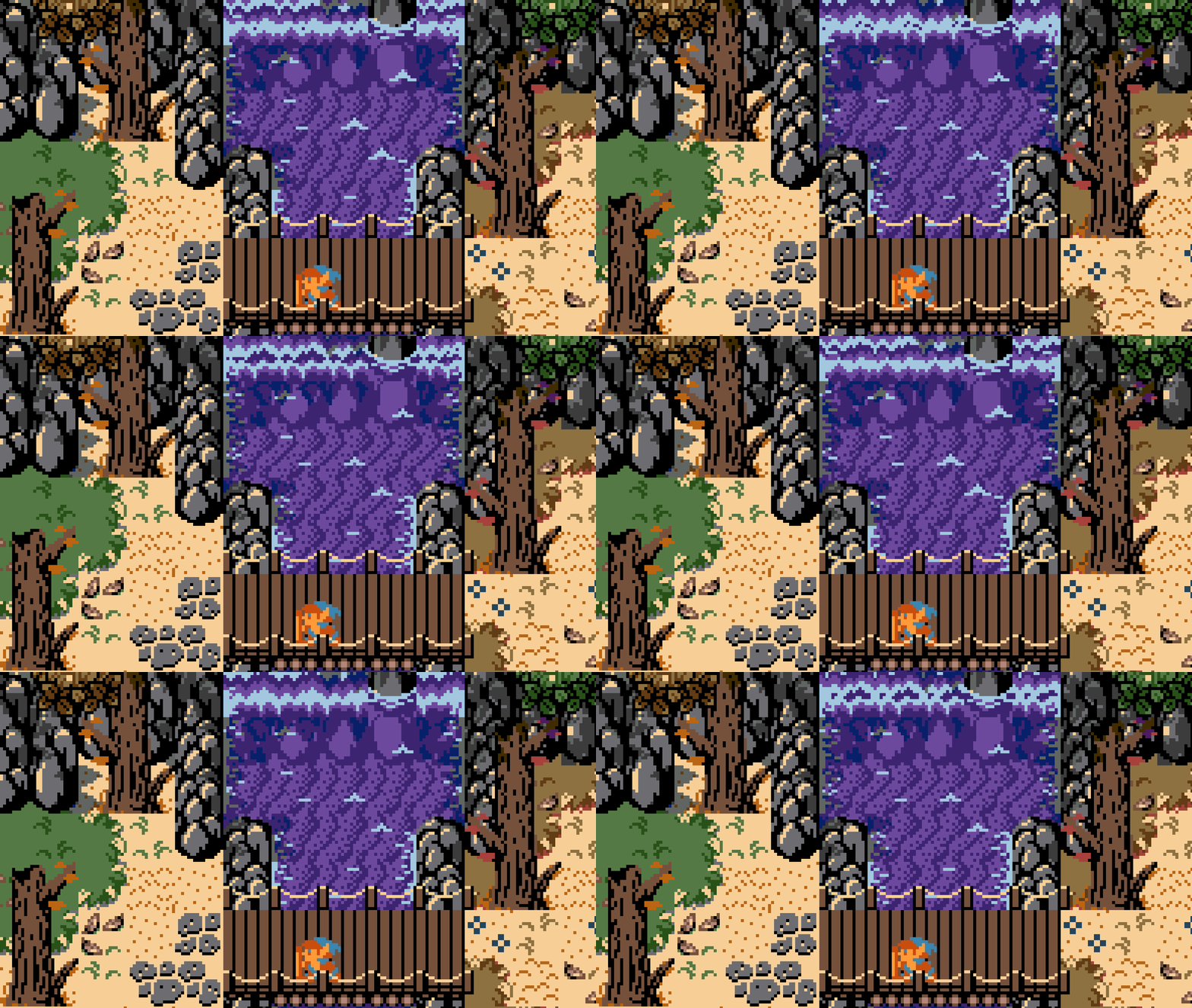
While the engine is specialized for creating 2D Zelda-style "clones," its versatility has allowed developers to build everything from Tetris facsimiles to Mega Man-inspired platformers. For those looking to push the boundaries, the inclusion of the ZScript language allows advanced users to write custom code and expand the engine's scope.
A Thriving Ecosystem of "Quests"
The community surrounding ZQuest is centered around a database and forum known as PureZC. It serves as a massive repository for "quests"—custom games distributed as .qst files that can be plugged directly into the engine. These player-made adventures generally fall into several distinct categories:
- Metroidvania: Games focused on exploration and ability-based progression.
- NES-style: Faithful recreations of the original 8-bit aesthetic.
- Dungeon Rompers: Titles built around navigating complex, trap-filled mazes.
- Randomizers: Reconfigured levels designed to provide unpredictable gameplay loops.
The quality of these projects ranges from charmingly simple to professional-grade. A standout recent example is The Deep, a Metroidvania quest released in 2024. Built in just over three weeks, it features advanced mechanics like shadow puzzles and conveyor belts, winning top honors in a community contest within its "non-scripted" category.
Other massive undertakings, such as Lost Isle and The Hero of Dreams, are multi-year projects that feel like lost titles from the Game Boy Advance era. Despite the diversity of these thousand-plus games, they all share a fundamental reverence for the 40-year-old Nintendo franchise.
Notable ZQuest Creations to Play
If you want to explore the heights of what this engine can achieve, consider checking out these standout community projects:
- Rite of the Storm: A short, impressive feat of development that uses a wind-based magic rod mechanic and thoughtful dungeon design, completed in just two weeks.
- Isle of Rebirth: A project that captures the pure, "meat-and-potatoes" essence of classic Zelda gameplay.
- Yuurand: Tales of the Labyrinth: An ambitious, semi-randomized experience that pushes ZScript to its absolute limit, featuring 67 playable characters and a massive library of unique spells.