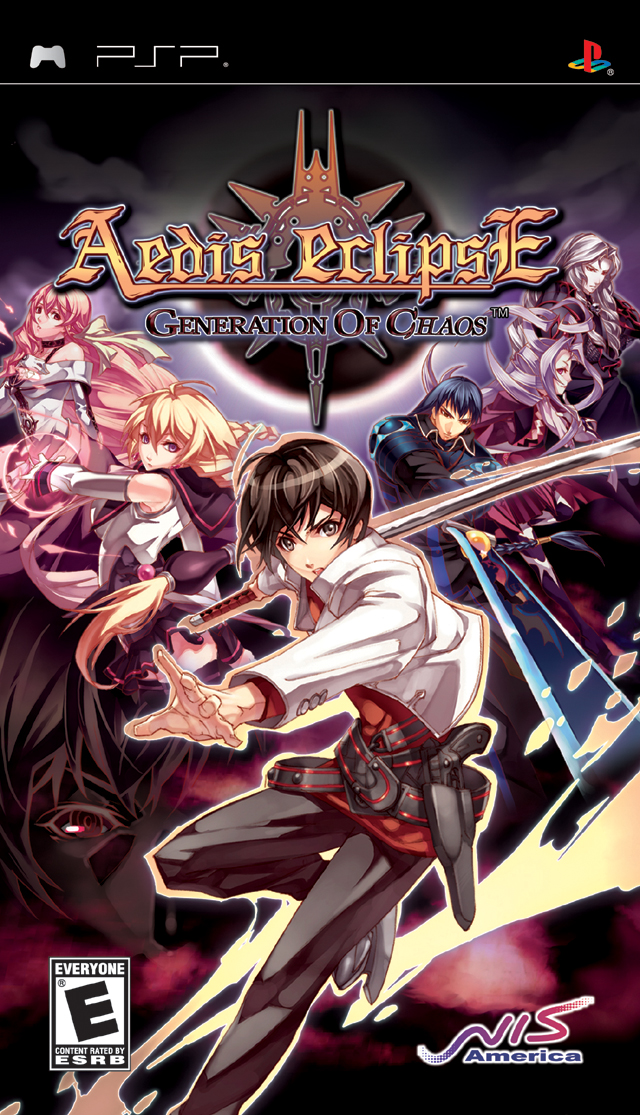
Aedis Eclipse: Generation of Chaos is a Strategy RPG developed by Idea Factory and published by NIS America, released for the Sony PlayStation Portable (PSP) in May 2006. Serving as the sequel to the original Generation of Chaos, this title refines the series' formula by introducing significant improvements to accessibility while maintaining the deep tactical complexity that defines the franchise. The game merges team customization and item crafting with a dynamic multi-unit battle system, offering a unique gaming experience designed to leverage the handheld format for strategic thinking on the go. With a Metacritic score of 62.00, the game is recognized for its strategic depth and polished mechanics compared to its predecessor.
Story and Setting: A World Divided
The game is set in a world called Aedis, which is structured as a three-tier plane of existence connected by a massive central tower. Players can choose their starting point among three distinct scenarios, each determining the protagonist and the initial tone of the narrative:
- The Lower World (Greckland): Filled with advanced technology, this region features citizens in cyber suits and mechanical weaponry. The story follows a group of high school military students, including Quinn, an enthusiastic samurai-in-training; his best friend Gon, a scrawny youth wielding a massive battle axe; and Keri, a tech-savvy rich girl whose family profits from cyber suit invention. This scenario is often considered the "main" path and is recommended for newcomers.
- The Surface World: This realm presents a medieval landscape populated by kingdoms of humans and mythical beasts, focusing on traditional fantasy elements and the conflict between kingdoms.
- The Divine World: A floating island in the sky serving as the home to heaven and hell, populated by angels and hellions.
Regardless of the starting scenario, the narrative explores themes of kingdoms at war, technology versus magic, and young heroes saving the world. Each path allows players to visit all three tiers, providing varied perspectives on the world's lore.
Aedis Eclipse: Generation of Chaos Gameplay Mechanics
Gameplay unfolds on a segmented map dotted with roads, structures, and monster encounters. The core objective is to capture the grid and defeat the enemy headquarters while defending your own. The system relies on several key mechanics:
- Grid and Elemental Strategy: Squares on the map may possess specific elements that restrict movement for certain commanders and influence battle outcomes. Players must manage terrain height and manipulate panel elements to gain advantages, with some stages revolving around altering the element of strategically important panels.
- Commanders and Formations: Before missions, players select commanders to lead their forces. During combat, armies engage in RTS-style battles where players choose formations. Formations modify unit stats; for example, an Offensive formation boosts Attack and Intelligence by 20% but reduces Defense and Psy by 10%.
- Tactical Depth: Success requires pairing commanders to boost effectiveness, capturing prisoners, and constructing buildings. While rank-and-file soldiers often serve as cannon fodder, the Captains are the primary powerhouses. The game fosters a "just-one-more-turn" dynamic, particularly as the largest maps can take several hours to complete.
Compared to its predecessor, Aedis Eclipse streamlines the experience by removing esoteric commands and reducing slowdown. However, the game remains a test of patience, demanding complex decision-making and featuring an AI that can sometimes struggle with basic expectations, requiring players to manage their allies' actions carefully.
Notable Features and Platform Availability
Released exclusively for the PSP, Aedis Eclipse: Generation of Chaos is designed for the portable format, allowing gamers to engage with strategic thinking anytime, anywhere. Key features include:
- Three Distinct Stories: The ability to start in Greckland, Aedis, or Galadia provides varied perspectives and replay value.
- Extensive Campaign: The game offers approximately 40 hours of content, with a structure that rewards long-term planning and map control.
- Improved Accessibility: The sequel addresses many of the obtuse mechanics found in the original, making the strategic depth more approachable while retaining the core challenge.
This title appeals to fans of turn-based strategy and tactical RPGs who enjoy grid-based movement, formation management, and deep customization. While the complexity and occasional clunkiness may challenge casual players, the improved combat system and multi-layered world make Aedis Eclipse a solid entry for strategy buffs and those seeking a substantial handheld RPG experience.