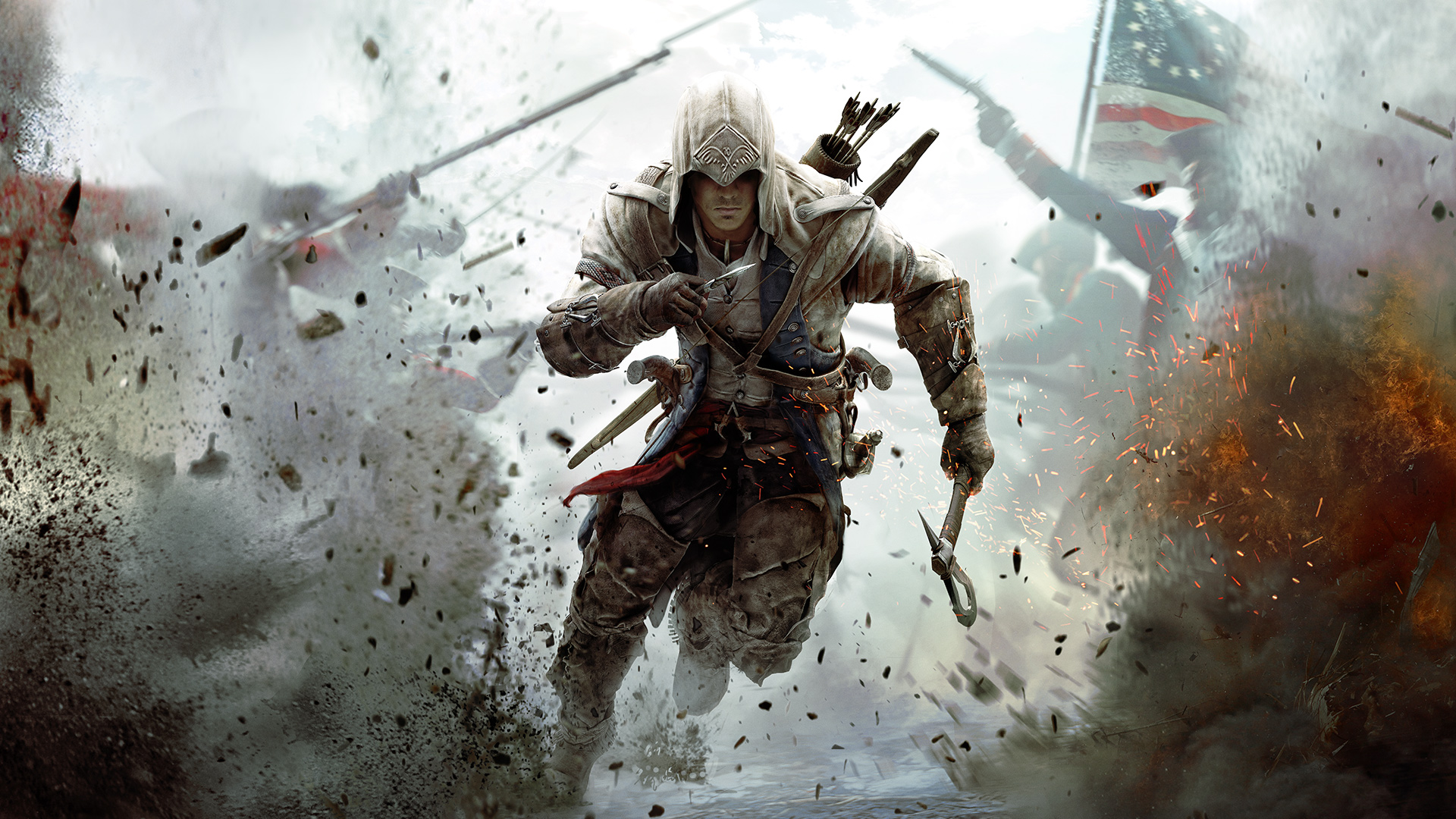
Assassin’s Creed III stands as a pivotal entry in Ubisoft’s acclaimed action-adventure franchise, delivering a sweeping narrative set against the backdrop of one of history’s most turbulent periods. Released originally in October 2012, this fifth installment marks a bold shift in tone and setting, positioning itself as a direct spiritual successor to the beloved Ezio trilogy while introducing players to a new era. With a Metacritic score of 80.00, the game has been widely recognized for its expansive open world, refined combat systems, and ambitious historical recreation. Whether experienced through the original launch or the modern remastered editions, Assassin’s Creed III offers a deeply immersive third-person experience that balances exploration, parkour traversal, and strategic warfare.
Assassin’s Creed III Gameplay and Core Mechanics
At its core, the title is a third-person action-adventure that emphasizes free-flowing movement, environmental exploration, and tactical combat. The gameplay loop revolves around navigating dense forests, colonial cities, and naval battlefields using a robust parkour system that allows players to scale structures and move seamlessly through the wilderness. Combat has been significantly overhauled to support the simultaneous use of two weapons, enabling fluid transitions between melee strikes and ranged attacks. Players must also manage resources, trade goods, and upgrade their equipment across a variety of micro-management systems. The early hours of the campaign are structured around comprehensive training sequences, ensuring that both newcomers and returning fans can quickly grasp the mechanics before diving into the larger narrative.
Key Systems
- Advanced hunting mechanics that allow players to track and utilize wildlife across the wilderness
- Expansive naval combat that transforms fleet engagements into large-scale strategic battles
- Dynamic world progression with changing seasons and historically accurate colonial architecture
- Integrated resource trading and ship exchange systems to optimize player capabilities
Assassin’s Creed III Story and Historical Setting
The narrative departs from the Italian Renaissance to immerse players in 18th-century Colonial America during the American Revolution. The protagonist, Connor, is a man caught between two worlds due to his English father and Mohawk mother, which creates a compelling internal and external conflict that mirrors the broader civil war. As the Templars and Assassins clash across the newly forming nation, players are constantly forced to weigh their allegiances and make difficult moral choices. The story is framed through the modern-day Animus, where Desmond Miles and his team access ancestral memories stored in the Grand Temple. By reliving these historical moments, they attempt to locate Power Sources and unlock the temple’s secrets to prevent a global cataclysm. While the historical campaign is praised for its emotional depth, the modern-day segments introduce conspiracy-laden plotlines involving ancient civilizations and the overarching struggle between order and chaos.
Platform Availability
Assassin’s Creed III initially launched for Xbox 360 and PlayStation 3 in October 2012, followed by Wii U and PC versions later that November. Recognizing the enduring popularity of the title, Ubisoft later released Assassin’s Creed III Remastered in March 2019, which was made available for PC, PlayStation 4, and Xbox One. The remastered edition later expanded to the Nintendo Switch in May 2019 and Google Stadia in December 2021. This updated version also bundles a remastered port of Assassin’s Creed: Liberation, providing a complete historical package for modern systems. The original game’s single-player focus remains intact, with the remastered edition intentionally omitting the multiplayer component to streamline the experience.
Who It Appeals To
Several standout elements define the Assassin’s Creed III experience. The introduction of advanced hunting mechanics allows players to track and utilize wildlife across the wilderness, adding a survivalist layer to exploration. The expanded naval combat system transforms traditional naval warfare into a strategic, large-scale affair that complements the on-foot gameplay. The game’s open world is meticulously detailed, offering diverse biomes that shift dynamically with the changing seasons and historical events. Due to its self-contained tutorial structure and immersive world design, Assassin’s Creed III appeals strongly to fans of historical fiction, open-world exploration, and character-driven narratives. Players who enjoy parkour-based traversal, tactical combat, and richly woven conspiracy stories will find this title to be a foundational entry in the series that successfully reinvents its formula while honoring its legacy.