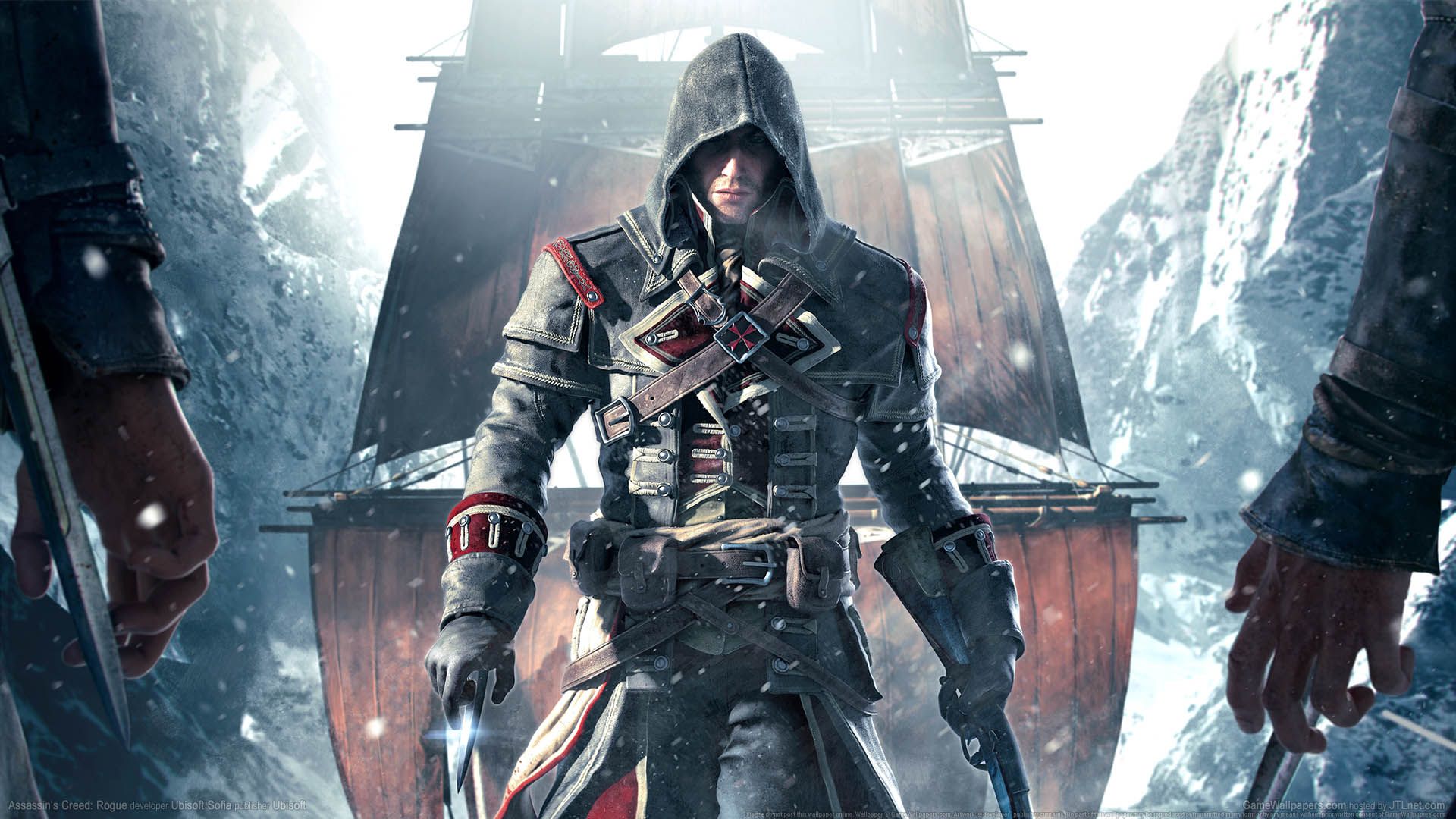
Game Overview
Assassin’s Creed Rogue stands as a pivotal entry in Ubisoft Sofia’s celebrated action-adventure franchise. Released on November 11, 2014, this seventh installment shifts the narrative focus by serving as both a direct continuation of Assassin’s Creed IV: Black Flag and a narrative bridge to Assassin’s Creed Unity. While it explores familiar franchise territory, it delivers a distinct perspective that recontextualizes the centuries-old conflict between Assassins and Templars.
Genre and Gameplay Mechanics
Categorized as an action-adventure title, Rogue embraces the series’ established combat and exploration systems while refining them through a new lens. Players control Shay Patrick Cormac as he navigates a world built around open-sea sailing, stealth parkour, and tactical combat. The gameplay heavily draws from the best elements of its predecessors, offering fluid ship-to-ship engagements, environmental traversal, and a combat system praised for its familiarity and responsiveness. The game actively rewards creative mission approaches, allowing players to utilize a versatile arsenal that includes swords, an air gun, pistols, and specialized grenades without imposing restrictive playstyles.
Story and Historical Setting
The narrative unfolds across two distinct timelines: the past during the Seven Years' War and the modern day. In the historical storyline, Shay Patrick Cormac is a young American assassin training alongside a French companion. Following a catastrophic mission that shatters his faith in the Assassin Brotherhood, Shay experiences a profound shift in allegiance, ultimately going rogue to side with the Colonial Templars. This arc is framed with tragic overtones, exploring his disillusionment and the devastating consequences for his former allies. Meanwhile, the modern-day plot follows an unnamed protagonist uncovering a major conspiracy within Abstergo Entertainment after a viral attack compromises the company's servers. The historical backdrop spans the frozen Atlantic seashores, Apache territories, the Hudson River Valley, and a meticulously reconstructed eighteenth-century New York.
Platform Availability
The title launched on eighth-generation consoles and PC, but has since been made accessible across a wide range of hardware. The game is available on PC, Xbox One, PlayStation 4, Nintendo Switch, and Xbox 360. This broad platform support ensures that both legacy console owners and modern gamers can experience Shay’s journey, with later iterations offering enhanced visual fidelity and performance improvements.
Notable Features of Assassin’s Creed Rogue
The game distinguishes itself through several key design choices that set it apart from its franchise peers:
- Ice-Breaking Naval Warfare: Shay commands the Morrigan, a heavily modified vessel equipped with oil barrels, Puckle guns, and reinforced hulls specifically designed to navigate frozen Atlantic waters and outmaneuver enemy ships.
- Recontextualized Exploration: While the game recycles familiar franchise environments, it heavily emphasizes the harsh, atmospheric beauty of the North American frontier, blending open-sea sailing with dense alpine forests and sprawling urban districts.
- Unrestricted Mission Design: Players are encouraged to approach objectives creatively, utilizing stealth, explosives, and naval tactics to minimize sailor casualties and dismantle enemy operations.
- Meta-Narrative Continuity: The modern-day Abstergo sequences delve deeper into the company's internal machinations, tying directly into the broader series lore and setting up future installments.
Who It Appeals To
Assassin’s Creed Rogue is ideally suited for players who appreciate historical fiction, naval simulation, and third-person action combat. Longtime franchise fans will appreciate the deeper lore connections and the chance to experience the Assassin-Templar conflict from a Templar perspective. The game’s strong combat mechanics, expansive side quests, and atmospheric exploration make it a compelling choice for those who enjoy open-world progression. While it shares DNA with its predecessors, its unique narrative arc and refined gameplay loops ensure it stands as a distinct and rewarding entry for both series veterans and newcomers looking to explore its place in the timeline.