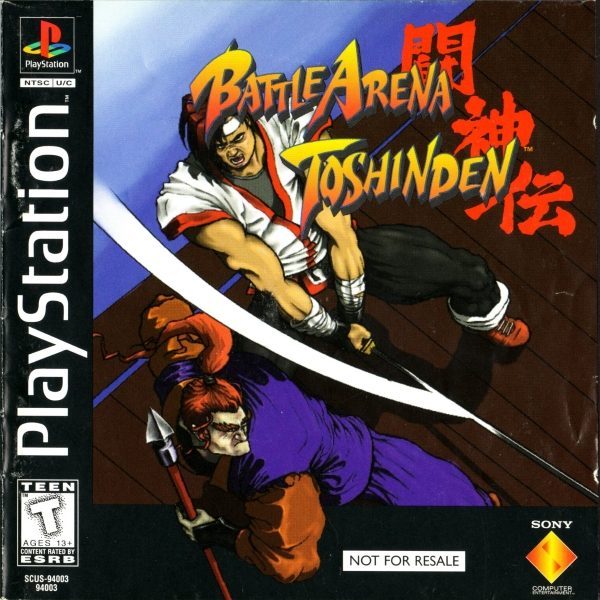
Released in January 1995, Battle Arena Toshinden stands as a defining entry in the early era of 3D arcade fighting games. Developed by Tamsoft and illustrated by Tsukasa Kotobuki, this title arrived during a pivotal moment for the industry, riding the wave of hardware transitions and ambitious new graphics engines. It quickly gained recognition for pushing visual boundaries on the PlayStation, earning a Metacritic score of 69.00 and cementing its place in gaming history as a pioneering weapons-based brawler.
Genre and Gameplay Mechanics
Positioned firmly in the arcade and fighting genres, Battle Arena Toshinden introduced players to a unique blend of three-dimensional movement and traditional one-on-one combat. Fighters navigate open 3D arenas using a directional pad, with shoulder buttons managing lateral dodges and defensive positioning. Combat revolves around a diverse arsenal of basic strikes, special attacks, and desperation moves that activate when a character drops to critical energy levels. The inclusion of weapons fundamentally differentiates this title from its contemporaries, as each fighter determines their speed, reach, and combo potential. Players must also master ring-out tactics, utilizing the 3D space to push opponents off the edge of the stage for a decisive victory.
Battle Arena Toshinden Story and Setting
The narrative framework centers on a legendary underground competition hosted by an enigmatic organization known only as the Secret Society. Participants receive mysterious invitations, prompting them to converge on the tournament grounds to settle personal debts, seek glory, or restore family honor. The roster features eight primary combatants, each brought together by distinct motivations, with two additional fighters waiting to be unlocked. While the overarching plot remains deliberately vague, the tournament structure provides a focused backdrop that emphasizes individual combat prowess and character-driven rivalries.
Platform Availability and Notable Features
- Originally launched as a flagship title for the PlayStation, the game was quickly ported to the SEGA Saturn, where it received additional enhancements as the Toshinden Remix version.
- A distinct handheld adaptation arrived for the Game Boy, featuring a scaled-down combat system that overcame hardware limitations with varied power levels and local link play.
- Subsequent releases and compilations have made the title available on PC and various retro collections, preserving its legacy for new generations.
The game is widely remembered for its groundbreaking visuals at the time, which rivaled high-end arcade cabinets and demonstrated the raw potential of early polygonal graphics. However, the combat system is often described as sluggish and floaty, with characters occasionally struggling to reorient themselves in the 3D space. The roster, while diverse and heavily weapon-focused, remains relatively small compared to other franchise competitors of the era.
Who It Appeals To
Battle Arena Toshinden primarily targets retro gaming enthusiasts, fighting game historians, and players interested in the evolution of 3D arena combat. Its blend of anime-inspired character designs, pioneering weapon mechanics, and historic significance as an early third-generation console launch title make it a fascinating subject for collectors and analysts. While modern players may find its movement and camera systems dated, those who appreciate the experimental nature of mid-nineties arcade ports and the foundational steps of the 3D fighting genre will find this tournament a worthwhile historical experience.