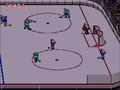
Blades of Steel stands as a legendary entry in the sports genre, originally captivating players with its unrelenting pace and unique blend of athletic simulation and brawling mechanics. Developed by Konami, this ice hockey classic challenges you to bring home the cup, win the MVP award, and secure your legacy on the ice. Whether you are looking to date a beautiful model or simply dominate the leaderboard, this game delivers a distinct experience where nothing is ever given to you, demanding both the artful skills of a finesse player and the bone-crushing brutality of an enforcer.
Blades of Steel Gameplay and Mechanics
The gameplay revolves around two primary modes: Exhibition matches for quick skirmishes and Tournament mode, which mimics the NHL playoffs where you must defeat a gauntlet of opponents to claim the Cup. Matches unfold over three periods, though the time is significantly sped up to ensure continuous action. Players can choose from three difficulty levels—Junior, College, and Pro—against the computer or engage in two-player competitive play. The roster consists of fictional city-based teams featuring distinct color palettes, each fielding three forwards, two defencemen, and a goaltender. Unlike some contemporaries where players have varying stats, Blades of Steel features uniform player abilities, placing the emphasis entirely on skill and strategy.
A defining feature is the fighting system, which is initiated when two players collide three times in succession. This shifts the screen to a 1-on-1 Street-Fighter style scenario where players exchange punches using high, low, and block attacks. Rapid punching can knock down an opponent without a penalty. Depleting the opponent's health bar sends them to the penalty box, granting a power play opportunity to score. This mechanic keeps the action fresh and allows players to settle scores directly on the ice.
Story and Setting Overview
Set in a fictionalized version of North American hockey, the game features teams based on real Canadian and American cities rather than official licensed franchises. The narrative hook invites players to pursue glory within this league. You are looking to bring home the cup, win the MVP award, get on the covers of major sports magazines, and even date a beautiful model. The league is ruthless; before reaching these goals, you must put the puck in the net and defend against unrelenting power plays. The environment captures the grit of the sport, requiring resilience as anger flares and gloves come off.
Platform Availability
Originally released in arcades in October 1987, the game quickly expanded to home consoles. The NES version launched in December 1988, following the Famicom Disk System release. The title was ported to various computer platforms, including the Commodore 64, MS-DOS, and Amiga around 1990, and later arrived on the Game Boy in 1991. For modern accessibility, the NES version was re-released on Nintendo's Virtual Console service for the Wii in 2007, while the arcade iteration was revived on Microsoft's Game Room service.
Notable Features and Target Audience
- Iconic Fighting Mechanics: Unique collision-based brawls that add a layer of physical strategy.
- Fast-Paced Action: Speeded-up periods and constant motion ensure no downtime.
- Versatile Modes: Exhibition and Tournament play with multiple difficulty settings.
- Local Multiplayer: Support for two players battling on the ice.
- Retro Accessibility: Available via Virtual Console and Game Room re-releases.
Blades of Steel appeals to retro gaming enthusiasts, hockey fans who appreciate the physicality of the sport, and players seeking a fast-paced, arcade-style challenge. The blend of strategy and brawl ensures it remains a memorable title for those who value action-packed gameplay over hyper-realism, offering a unique slice of gaming history where you must put the puck in the net and prepare to either make a name for yourself or be put on ice.