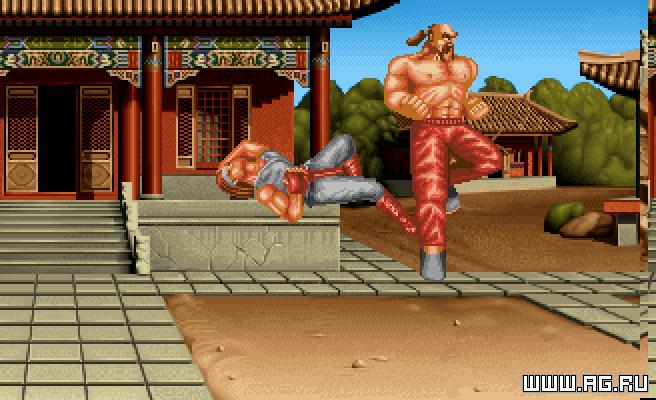
Released in March 1993 by the UK studio Team17, Body Blows is a fighting game designed to capture the arcade excitement of the early 1990s fighting game boom. Developed for the Amiga and MS-DOS, the game emerged during a period of immense hype surrounding genre rivals, yet it sought to establish its own identity by leveraging the specific graphical and performance strengths of its target hardware. Team17 positioned the title as a high-quality contender, delivering a fast-paced combat experience that emphasizes speed, smooth animation, and distinctive audio features.
Gameplay Mechanics and Controls
Body Blows adheres to the classic one-on-one fighting formula, where players engage in best-of-three matches. A defining characteristic of the game is its control scheme, which was optimized for the single-fire-button joysticks prevalent on the Amiga at the time. Players execute standard attacks and special moves through directional inputs combined with the fire button. One unique special move is performed by holding the fire button while standing still, while others require moving in one of eight directions and pressing fire. Additionally, a "super special" move can be triggered by holding the fire button for a few seconds. Blocking is achieved by holding the fire button while moving away from the opponent. The game notably lacks combos and throws, focusing instead on timing and effective move combinations. A distinctive mechanic labeled "mercy" locks the fire button when an opponent is knocked down until they recover, though this became optional in later updates.
Body Blows Roster and Play Modes
The game features a roster of 11 distinct fighters. In the one-player arcade mode, participants can choose from four characters:
- Danny and Nik: Brothers who share identical gameplay mechanics.
- Lo Ray: A Buddhist monk.
- Junior: A failed boxer.
Opponents include a diverse cast such as a ninja warrior, a businessman whose post-fight catchphrase is "I'm sorry about that," and a thin Spanish girl. Beyond the single-player campaign, the game supports multiplayer action through a two-player mode for local duels and a tournament mode allowing four to eight players to compete. In modes other than single-player, the full roster of 10 characters becomes selectable.
Visuals, Audio, and Technical Features
Team17 engineered Body Blows to showcase the graphical capabilities of the Amiga, utilizing a full 32-color overscan display. The visuals include animated backdrops that vary from wrestling rings and building sites to beaches, providing a colorful environment for the combat. The game is noted for its incredible speed and smooth performance. Audio-wise, the title includes a robust soundtrack with loads of sound effects and speech. A significant update released in summer 1993 enhanced the experience by increasing in-game speed, adding shadows to characters, and allowing non-boss characters to be selected in the story mode. This update also introduced the option to toggle the "mercy" mechanic and adjusted time limit settings.
Platform Availability and Appeal
Body Blows was originally launched for the Amiga, with a version for MS-DOS following later in 1993. It was subsequently included in collections such as the Team 17 Collection Volume One. The game's success led to further entries in the franchise, including Body Blows Galactic and Ultimate Body Blows. This title appeals to retro gaming enthusiasts and fans of classic arcade fighters who appreciate the unique adaptations of 16-bit computing. Players interested in Team17's early development history will find value in this title, as it exemplifies the studio's approach to delivering polished, hardware-specific experiences. Those looking to experience the mechanics and presentation of fighting games in the early 1990s will find Body Blows to be a historically significant and engaging experience.