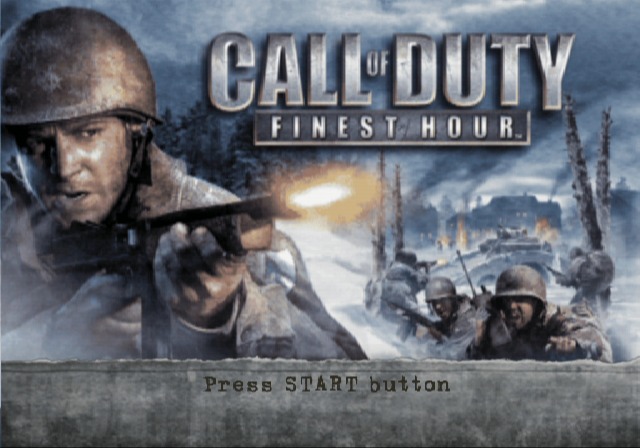
Released on November 16, 2004, Call of Duty: Finest Hour holds a unique place in gaming history as the first installment of the legendary franchise specifically developed for home consoles. While many players at the time compared it to its PC predecessor, this title was not a direct port but a brand-new experience crafted for the Xbox, PlayStation 2, and GameCube. As a standalone side-story and expansion of the main series' lore, it brings the visceral intensity of World War II combat to a handheld-adjacent era of gaming.
A Multi-Perspective War Experience
Unlike modern shooters that often follow a single protagonist through a linear progression, Call of Duty: Finest Hour utilizes a rotating perspective to tell its story. The game features three distinct, interconnected campaigns that allow players to witness the conflict through the eyes of different soldiers across various theaters of war:
- The Russian Campaign: Set during the chaotic siege of Stalingrad, where players must defend the city against German aggressors.
- The British Campaign: Taking place in North Africa in 1943, focusing on the destruction of German outposts and supply lines.
- The American Campaign: Set in 1944, following the U.S. Army's push through West Germany and the attempt to cross the River Rhine.
This structure provides a diverse range of environments, from the urban devastation of Red Square to the desert landscapes of North Africa, ensuring that the gameplay remains visually varied even as players jump between different characters.
Gameplay Mechanics and Combat
As a first-person shooter, the core gameplay focuses on "shoot to kill" mechanics using an array of authentic WWII weaponry. Players can carry two primary weapons at a time, supplemented by grenades and mines picked up from fallen enemies. While the controls are designed to be intuitive for console players, the game is noted for its difficulty; it lacks the modern "comforts" of regenerating health or forgiving checkpoints, often presenting a brutal challenge to those caught in the crossfire.
One notable mechanical feature is the implementation of the scope view. By holding the Left Trigger, players can slowly pull the scope to their eye, requiring them to maintain pressure on the trigger to keep the magnified view active—a unique alteration to the standard aiming experience of the era.
Notable Features and Production
The production value of Call of Duty: Finest Hour is elevated by high-profile contributions from the industry's top talent:
- Cinematic Score: The game features a sweeping musical score composed by Michael Giacchino, renowned for his work on the original Call of Duty and the Medal of Honor franchise.
- Star Power: Adding to the immersion, AC/DC singer Brian Johnson provides the voice for Sergeant Starkey, one of the prominent British commandos in the game.
Who Is This Game For?
This title appeals strongly to fans of historical military shooters and those interested in the evolution of the FPS genre. While it may lack the polished, cinematic sheen of modern triple-A titles, its raw difficulty and the sheer variety of its three campaigns offer a compelling experience for players seeking a gritty, old-school combat challenge. It is a must-play for enthusiasts looking to revisit the roots of the Call of Duty console legacy.