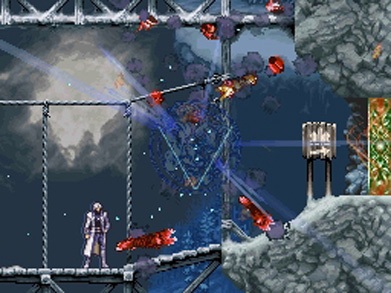
A direct sequel to the beloved Castlevania: Aria of Sorrow, Castlevania: Dawn of Sorrow stands as a landmark title for the Nintendo DS. Released on October 4, 2005, this action-RPG/platformer offers a refined and more complex experience than its predecessor, delivering deep gameplay mechanics alongside a striking visual overhaul. For fans of the "Castlevania" series, it provides a rare opportunity to continue a specific, interconnected narrative thread, making it a must-play for those invested in the destiny of its protagonist.
A Continuing Saga: The Fate of Soma Cruz
The story unfolds in the year 2036, one year after the events that saw the return of Dracula's Castle. Soma Cruz, having lived a quiet life with his friend Mina Hakuba, finds himself thrust back into the center of a supernatural conflict. A mysterious woman named Celia Fortner, leader of an evil chaos cult, emerges to threaten Soma’s life and execute a plan to resurrect a new Dark Lord.
The cult's ambitions involve using candidates like Dario Bossi and Dmitrii Blinov to usurp Soma’s position, effectively attempting to create a successor to Dracula. To protect himself and his loved ones, Soma must infiltrate the enemy's base—a towering, monstrous replica of Dracula's castle. Along the way, he is reunited with familiar faces from his past, including Genya Arikado, Julius Belmont, Yoko Belnades, and Hammer.
Gameplay Mechanics and Refined Combat
Castlevania: Dawn of Sorrow evolves the gameplay established in Aria of Sorrow by introducing greater complexity to its core loop. The game's standout feature remains the "Power of Dominance," which allows Soma to absorb the souls of defeated enemies. These collected souls can be utilized for powerful spells and various combat abilities.
However, the game introduces a significant layer of management through weapon synthesis. Players can visit Yoko Belnades' shop to use specific enemy souls to craft new, more potent weapons. While this adds depth to character progression, it also requires careful resource management; using a soul for weapon synthesis consumes it, which may necessitate more frequent combat to replenish your collection.
Notable Features
- Enhanced 2D Visuals: The game features impressive sprite work and detailed backgrounds, such as the stained-glass windows of the Clock Tower, representing a major leap forward for handheld 2D graphics.
- Soul Collection & Synthesis: A deep system of absorbing enemy souls to unlock abilities and crafting advanced weaponry via soul-based synthesis.
- Direct Narrative Sequel: A rare direct continuation of Soma Cruz's journey, providing much-needed closure and expansion to the previous game's lore.
- New Art Direction: A shift toward a more vibrant, anime-inspired art style that brings fresh energy to the character models and environments.
Who is this Game For?
This title is perfect for fans of the "Metroidvania" subgenre who enjoy exploration-heavy action games with RPG elements. If you appreciate deep progression systems, loot hunting, and a challenging combat loop, Dawn of Sorrow will provide many hours of engagement. However, players should be prepared for a significant "grind"—the soul drop rates can be stingy, and the requirement for specific souls to craft top-tier gear means that persistence is key to mastering the castle's depths.