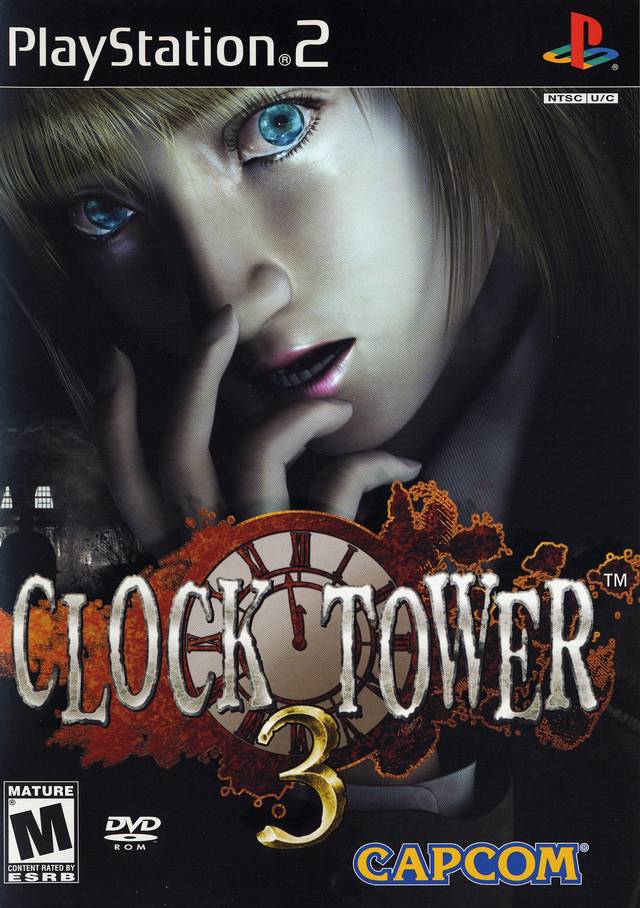
Clock Tower 3: A Cinematic Survival Horror Experience
Clock Tower 3 is a third-person survival horror adventure game developed by Capcom Production Studio 3 and Sunsoft, released for the PlayStation 2 in late 2002. Representing a significant departure from its predecessors, this fourth installment in the series abandons the traditional point-and-click interface in favor of a direct control scheme reminiscent of Resident Evil. The narrative follows 14-year-old Alyssa Hamilton, a boarding school student who is thrust into a sinister, otherworldly plot involving time travel, ancient spirits, and psychopathic serial killers. While the plot is a side story loosely connected to the history of the Barrows and Burroughs families from the original Clock Tower, it functions as a standalone experience that requires no prior knowledge of the franchise.
Story and Setting
The game begins in 2003 London, where Alyssa receives a distressing letter from her mother instructing her to go into hiding and avoid the family home. Ignoring the warning, Alyssa returns to find her mother missing and encounters a mysterious figure known as "The Dark Gentleman." This encounter triggers a journey through time, transporting Alyssa to different eras of London's past, including the streets of mid-World War II and the 1960s. As a member of a lineage of female warriors, Alyssa must confront "Entities" and "Subordinates"—sadistic murderers and tormented spirits—to bring peace to troubled souls and uncover dark truths about her familial history. Players will explore diverse locations ranging from a haunted mansion and ruined city to a concert hall, underground factory, and a castle featuring a prominent clock tower.
Survival Horror Gameplay Mechanics
Clock Tower 3 emphasizes stealth, evasion, and puzzle-solving over traditional combat. Played from a fixed third-person camera perspective, players must navigate through chapters while avoiding serial killers who hunt Alyssa in a deadly game of hide-and-seek. The gameplay introduces a "Panic Meter" that fills up when enemies are nearby; if it becomes too high, Alyssa loses control, making actions inaccessible until the player can escape and calm down. Progression relies on finding items to unlock new areas and solving basic puzzles. A unique mechanic involves "Spiritual Healing," where players must locate items of sentimental value to return to the corpses of victims, thereby pacifying their spirits and allowing Alyssa to move forward. While the core of the game focuses on evasion, specific boss battles are built directly into the overarching story, requiring players to satisfy certain goals to defeat these sadistic antagonists.
Notable Features and Production
One of the most distinct aspects of Clock Tower 3 is its heavy focus on cinematic presentation. The game's cutscenes, both pre-rendered and real-time, were directed by the late Kinji Fukasaku, best known for his work on the film Battle Royale. His influence is evident throughout, creating an interactive movie experience that blends high production values with gameplay. However, this emphasis on storytelling comes at the cost of gameplay depth. Critics and players alike noted that while the presentation, graphics, and script are strong, the actual mechanical execution is often criticized for being short and weak. Despite its commercial failure and mixed reception regarding its departure from classic survival horror roots, the game remains a notable entry in the genre for its ambitious attempt to merge film direction with interactive horror.
Who Should Play Clock Tower 3?
- Fans of Cinematic Horror: Players who prefer a strong narrative and atmospheric presentation over challenging gameplay mechanics will find much to appreciate.
- Slice of Time Travelers: Those interested in exploring multiple historical periods within a single, cohesive mystery will enjoy the diverse settings of 2003, WWII, and the 1960s London.
- Series Enthusiasts: Longtime fans of the Clock Tower franchise should approach this title with an open mind, recognizing it as a self-contained experiment that prioritizes direct action and stealth over the series' legacy.