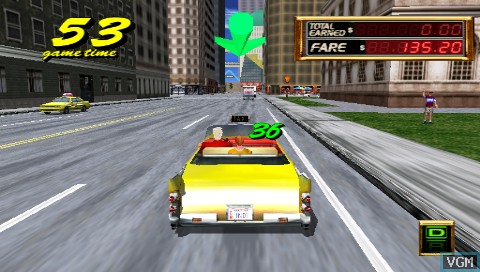
Crazy Taxi: Fare Wars delivers a high-velocity twist to the classic arcade racing formula, bringing the chaotic energy of the franchise to the PlayStation Portable. Released by SEGA on August 7, 2007, this title distinguishes itself from standard racing simulations by focusing on direct, competitive multiplayer action. It is not merely about crossing the finish line first; it is about outmaneuvering rivals in the most lucrative and aggressive way possible.
Gameplay Mechanics and Genre
Positioned squarely within the racing and arcade genres, the game fundamentally shifts the objective from time trials to a battle for revenue. The core gameplay loop revolves around the premise that "this is no ordinary cab ride, this is war." Players take control of a taxi in a bustling urban environment where the primary goal is to earn the biggest tips. However, the defining mechanic of Crazy Taxi: Fare Wars is the ability to target other players directly.
The game encourages a highly aggressive playstyle. As the tagline suggests, you are tasked to "steal fares right out of your friend's cab." This mechanic introduces a layer of sabotage not typically found in solo arcade racers. Players must balance the need to pick up passengers quickly with the necessity of disrupting opponents. The instruction to "make them crash" highlights the destructive physics engine at play, where ramming rivals into obstacles or off-road terrain is a viable strategy to secure a lead.
The War for Tips
The competitive nature of the game is driven by the "Fare Wars" concept. In this environment, the player with the highest accumulated fare at the end of the round emerges victorious. This dynamic forces players to constantly monitor their opponents' positions. The gameplay creates a frantic atmosphere where traffic laws are suggestions, and the streets become a battleground for the highest bidder.
Platform Availability and Release
Crazy Taxi: Fare Wars was developed exclusively for the PlayStation Portable (PSP). It was made available for download and physical distribution on August 7, 2007. The game is subject to the PlayStation®Network Terms of Service and User Agreement, and while the software is published by SEGA, it has been sublicensed by Sony Computer Entertainment America for the PSP platform.
For players who value technical documentation or wish to understand the specific controls and rules before diving in, a manual is available for download in PDF format from the official SEGA website. This release marked a significant moment for the franchise, bringing its signature fast-paced action to Sony's handheld hardware.
- Genre: Racing, Arcade.
- Platform: PlayStation Portable (PSP).
- Release Date: August 7, 2007.
- Metacritic Score: 64.00.
Notable Features
The game is defined by its aggressive multiplayer focus. Key features include:
- Direct Fare Theft: The unique ability to steal passengers directly from other cabs creates intense moments of conflict.
- Sabotage Mechanics: The game explicitly supports making opponents crash, allowing for physics-based interference.
- High-Speed Arcade Action: Maintaining the series' reputation for fast-paced driving and aggressive traffic navigation.
- Competitive Structure: A focus on the "highest tips" win condition rather than lap times.
Who It Appeals To
Crazy Taxi: Fare Wars is specifically tailored for fans of the arcade racing genre who crave immediate, chaotic competition. It appeals to PSP owners who enjoyed the original console titles and are looking for a multiplayer experience that emphasizes player interaction over solitary driving. The game is ideal for players who enjoy high-stakes, fast-paced environments where aggression is a valid and necessary strategy. It is less suited for those seeking realistic simulation or deep narrative progression, as the focus remains entirely on the "war" between cabs.
Technical Details
Crazy Taxi: Fare Wars is a trademark of SEGA Corporation. The intellectual property is registered in the U.S. Patent and Trademark Office. The game operates under a one-time license fee allowing for downloads to up to two console systems and two portable systems associated with the purchasing account. This ensures that the competitive spirit of the game can be shared across a small network of devices owned by the user.