Master Your Dynasty in Crusader Kings
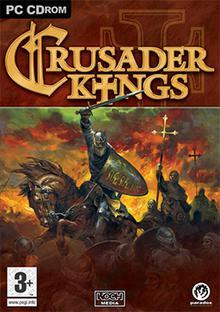
Released for PC, Crusader Kings is a deep, real-time grand strategy game that shifts the focus away from traditional battlefield unit management toward the intricate web of medieval politics and lineage. As a title from Paradox Entertainment, it serves as a prequel of sorts to the Europa Universalis series, offering an epic scope that prioritizes historical accuracy and the personal ambitions of its playable characters.
Unlike typical real-time strategy games where players command massive armies across a map, Crusader Kings centers on the survival and expansion of a dynasty. Players begin as a King, Duke, or Count, tasked with navigating several centuries of history. The ultimate objective is not mere conquest, but the accumulation of Prestige through secular achievements and Piety through service to the Church, aiming to reach the highest rankings possible within these two essential scores.
A Human-Centric Strategy Experience
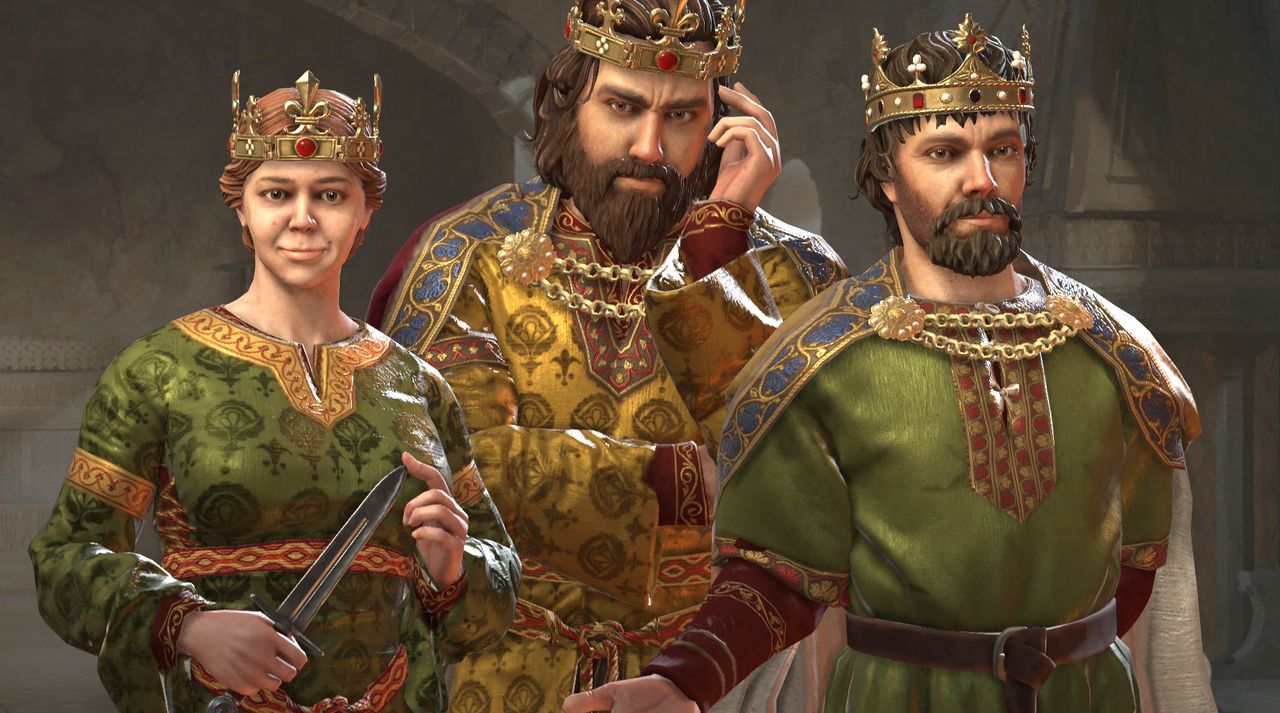
What sets this title apart from its predecessors is its focus on individual personages. The game features thousands of authentic characters, each equipped with a variety of personality traits that influence gameplay. While you may engage in economics, diplomacy, and military campaigns, you do so through the lens of a specific historical figure or a unique individual within feudal Christendom.
The game offers three distinct historical campaigns, allowing players to immerse themselves in pivotal eras of the Middle Ages:
- 1066: The turbulent aftermath of William the Conqueror's victory at the Battle of $Hastings$.
- 1187: The era of the Third Crusade.
- 1337: The onset of the Hundred Years' War.
While players can inhabit the roles of famous monarchs like King Richard I of England, others may find themselves managing less stable courts, such as that of Guy de Lusignan in Jerusalem. While Muslim states and the Papacy are present in the world, they remain non-playable factions within the Christian feudal structure.
Deep Character Mechanics and Court Management
The gameplay revolves heavily around character attributes and the management of your demesne. Every ruler is defined by four primary statistics that dictate how their provinces perform:
- Diplomacy: Influences relations and political maneuvering.
- Martial: Governs military prowess and combat effectiveness.
- Stewardship: Determines the efficiency of revenue and economic growth.
- Intrigue: Affects the ability to perpetrate or avoid assassinations.
Strategy extends to the management of your court, where you can appoint officials like a Steward or Chancellor to bolster your own stats. Furthermore, the RPG-like depth is bolstered by 26 character traits, alongside numerous education levels, special traits, and even various diseases. These features create a dynamic environment where a "vengeful" ruler might struggle against a "forgiving" rival, and a character's legitimacy—such as being a bastard—can directly impact their prestige.
Who Should Play Crusader Kings?
Crusader Kings is a demanding title that offers immense rewards for those with patience. Due to its complex layers of names, dates, and mechanics, casual gamers may initially find the experience overwhelming. However, for history enthusiasts and fans of grand strategy who appreciate rigorous attention to detail and deep, systemic complexity, it provides an unparalleled simulation of medieval life and political machination.