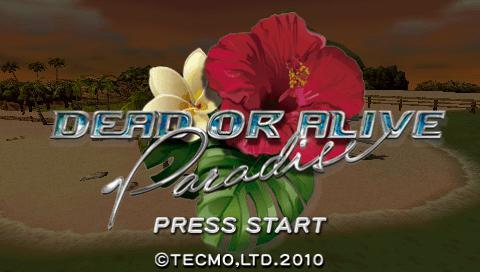
Dead or Alive Paradise: A PSP Vacation Sim
Released on March 30, 2010, Dead or Alive Paradise stands as the third entry in the franchise’s beach-focused spin-off series. Developed by Team Ninja and published by Tecmo Koei, this title was built specifically for the PlayStation Portable, bringing a resort-style simulation to Sony’s handheld market. Categorized primarily as a sports and simulation hybrid, the game strips away traditional fighting mechanics in favor of a leisure-driven experience centered on volleyball, social interaction, and photography. Despite its athletic premise, the project is widely recognized for its heavy emphasis on character customization and interactive resort activities rather than competitive match play.
Setting and Narrative Overview
Players are transported to a secluded private island, functioning as a tropical resort where the primary objective is relaxation and socialization. There is no overarching plot or traditional story progression; instead, the game operates as an open-ended vacation simulator. You are placed directly on the island with a starting budget of in-game currency, free to explore the environment at your own pace. The setting revolves around sun-drenched beaches, resort pools, and indoor lounges, creating an idyllic backdrop for the game's core interactions. The lack of a structured narrative is intentional, designed to let players focus entirely on character relationships and environmental exploration.
Gameplay Mechanics and Sports Elements
At its core, the gameplay loop revolves around building partnerships and fostering friendships with a cast of resort guests. The central mechanic involves purchasing gifts to increase your bond with specific characters. As your relationship levels rise, these characters become more receptive to invitations and shared activities. Volleyball serves as the primary athletic feature, though it functions more as a social icebreaker than a deeply strategic sport. The game also incorporates a variety of resort-based minigames and interactive elements that encourage players to engage with the environment and its inhabitants.
- Photography System: Capture candid moments and posed shots of characters, which can be stored in a personalized digital album for later viewing and editing.
- Pool Hopping and Beach Flags: Simple timing-based challenges that test your reflexes as you navigate floating platforms or compete in sprint-style races.
- Butt Battle and Casino Games: Lighthearted competitive minigames that provide alternative ways to win in-game currency and unlock new content.
- Gift and Wardrobe Customization: Buy and outfit characters with various apparel, allowing you to watch them model your preferred styles while listening to in-game music.
Platform Availability and Compatibility
The title launched exclusively for the PlayStation Portable in early 2010, marking the first time a mainline entry in the broader franchise was adapted for a portable console. The PSP version serves as a streamlined adaptation of the Xbox 360 title, adjusting the interface and features for handheld play. Notably, the game later gained backward compatibility with the PlayStation Vita, allowing owners of Sony’s successor handheld to enjoy the resort simulation on a more modern portable device. A separate mobile phone version also existed, though it featured distinct social online elements absent from the PSP release.
Notable Features and Critical Reception
One of the most defining aspects of the title is its unapologetic focus on character presentation and softcore thematic elements. The game features highly detailed character models, dynamic physics, and a mature rating that sparked notable discussion regarding its ESRB classification. While it successfully translates the resort vibe of its home console predecessor, the PSP adaptation faced criticism for its repetitive menu-driven interactions and lack of substantial gameplay depth. With a Metacritic score of 38.00, it stands as one of the least critically acclaimed entries in the franchise, often cited for prioritizing visual presentation over meaningful engagement. The game’s design leans heavily into voyeuristic mechanics, with many in-game items serving as passive inventory pieces rather than interactive tools.
Who It Appeals To
This title is primarily tailored for dedicated fans of the Dead or Alive Xtreme sub-series and players interested in open-ended resort simulation games. It appeals to those who enjoy character-focused interactions, wardrobe customization, and photography mechanics over traditional athletic competition or narrative-driven progression. Due to its mature themes and heavy emphasis on sensual presentation, the game is best suited for adult audiences comfortable with softcore erotic elements. Players seeking deep volleyball mechanics, competitive multiplayer, or a structured storyline may find the experience lacking, but it remains a notable experiment in handheld vacation simulation for niche audiences.