DEFCON, developed by the experimental British studio Introversion Software, stands as a stark and uncompelling entry in the strategy genre. Released on September 28, 2006, this title eschews traditional narrative campaigns in favor of a pure, abstract simulation of global thermonuclear warfare. Inspired heavily by the 1983 Cold War film *WarGames*, the game presents a unique RTS experience where the ultimate objective is not victory in the conventional sense, but rather the strategic mitigation of mutual destruction. It is a game that forces players to confront the futility of nuclear conflict through its chilling mechanics and minimalist aesthetic.
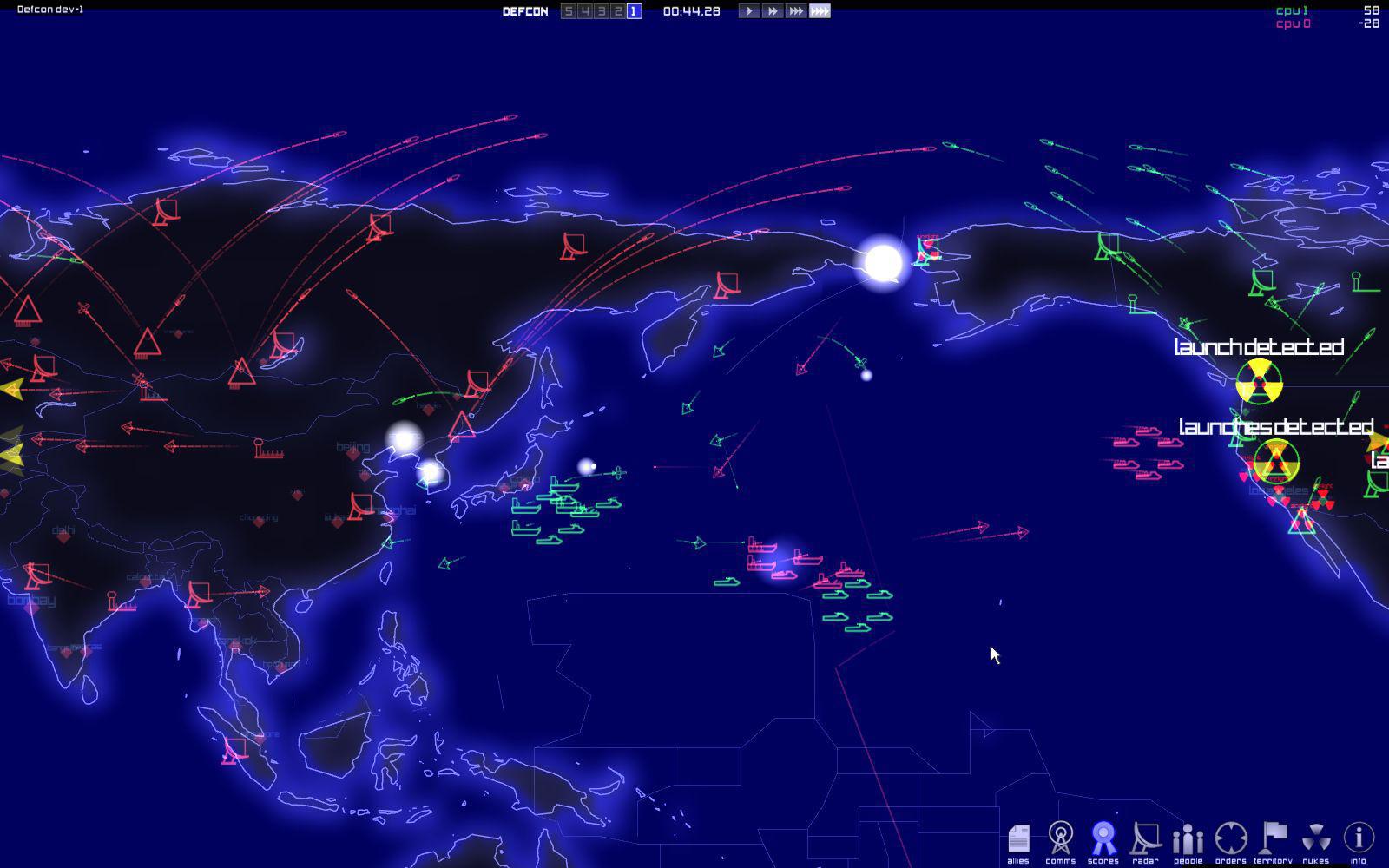
## Strategic Gameplay and Mechanics The core gameplay of DEFCON revolves around managing military assets on a real-world map displayed through a flat, horizontally scrolling interface. The visual style is distinctly vector-based and abstract, reflecting the geopolitical landscape of 1983, complete with a divided Germany and a united U.S.S.R. Players are tasked with placing forces—such as aircraft carriers, submarines, air defense systems, and missile silos—across this map to protect their territory while launching retaliatory strikes. The game is divided into DEFCON phases, which dictate the escalation of tension. The interface is deliberately minimalistic, resembling a tactical card or a computer terminal in a bunker. There is no complex history or story campaign; instead, the focus is entirely on gameplay. The winner of a match is determined by who effectively bombards enemy territory while sustaining the least amount of damage, reinforcing the game's central theme that in nuclear war, everyone dies, and the goal is simply to lose less than your opponent. ## Atmosphere and Presentation One of the most notable features of DEFCON is its immersive atmosphere. The game utilizes a purposeful lack of geographical detail and simple icons to create a clean, detached look. This visual abstraction is complemented by a haunting sound design that sets a sinister mood. Rather than traditional music, the game employs ambient sounds such as the hum of computers, recycled air, and indistinguishable radio chatter. The inclusion of distant sounds like coughing or crying adds a layer of unease, making the player feel like they are holed up in a bunker, dictating the end of the world through a remote terminal. The presentation also includes a manual that reads like a Cold War survival guide, offering half-serious suggestions on building shelters and fabricating fallout suits, further enhancing the authenticity of the experience. ## Modes and Platform Availability DEFCON is available for PC, macOS, and Linux. While the default matches last around 30-40 minutes, the game offers several modes to cater to different playstyles. "Speed Defcon" reduces matches to 20 minutes for frantic, chess-like strategy. "Office Mode" extends the game to six hours, allowing players to quickly minimize the window with a double-tap of the Escape key, making it discreet for workplace gaming. Additionally, an "Alliance Mode" introduces a dynamic where players start on the same side but eventually turn on each other, creating a frighteningly realistic depiction of dystopian escalation. Multiplayer is a key component, supporting up to six players online. This significantly complicates the gameplay, as opponents must guess the location of rival troops and coordinate or disrupt strikes. The game’s clever design allows for extensive customization, throwing open its rules to player modification, which has contributed to its status as a timeless classic. It appeals to strategy enthusiasts who appreciate deep, atmospheric experiences over complex tactical depth, offering a unique, unsettling look at global conflict.DEFCON
Sign up to build your game library and suggest edits
Join Now
User Reviews
No reviews yet. Be the first to share your thoughts!
Write a Review
Scores
84
Metacritic
N/A
User Score
Game Info
| Publisher | Introversion Software |
| Released | Sep 28, 2006 |
| Genre | Strategy, Indie |
| Platform | PC, macOS, Linux |