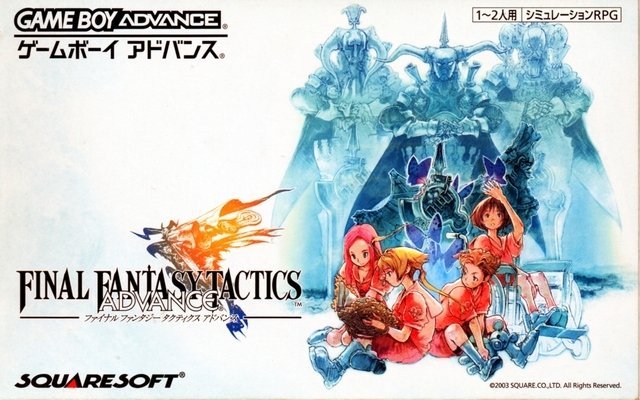
Final Fantasy Tactics Advance represents a significant milestone in portable gaming, delivering a deep and involving tactical role-playing experience on the Nintendo Game Boy Advance. Released on February 14, 2003, this spin-off of the iconic Final Fantasy series distinguishes itself from the 1997 PlayStation classic by offering a wholly original storyline and a dynamic class system. Marking the first Final Fantasy game to appear on a Nintendo console in many years, the title was developed by the team brought over from Quest Corporation. The game tasks players with assembling a clan of characters and controlling their actions over grid-like battlefields, blending strategic combat with extensive character customization.
Story and Setting in Ivalice
The narrative follows four children—Marche, Mewt, Ritz, and Doned—who live in the small town of St. Ivalice. After discovering an ancient magical book, they are transported to the realm of Ivalice, a world populated by creatures from the Final Fantasy universe. The story focuses on Marche as he attempts to find a way back to the real world, while his friends, whose insecurities have vanished in this new environment, pursue their own agendas. The plot explores relatable themes of identity and desire, touching upon insecurities characters wish they could get rid of. Wrapped in light humor, the story offers an immense sense of adventure and keeps the narrative moving at a steady, solid pace.
Gameplay Mechanics and Character Customization
Final Fantasy Tactics Advance offers gameplay that is accessible yet incredibly deep once mastered. Players command their clan across grid-based maps, utilizing familiar job types from the franchise. A defining feature is the freedom to decide classes, abilities, and statistics for each character. Characters begin with basic classes based on their race, such as hume, moogle, or viera, but can evolve based on the skills they learn. Skills are acquired by equipping items found in shops or earned through missions, allowing for immense flexibility. This system enables players to mix and match skills to create unique characters with specific moves, reactions, and perks. Unlike some strategy titles, characters do not permanently die, and the difficulty is streamlined, meaning that as long as players grind, they can overcome big battles. This accessibility ensures the game offers dozens of hours' worth of entertaining tactical battles suitable for a wide audience.
Platform Availability and Notable Features
Originally launched for the Game Boy Advance, Final Fantasy Tactics Advance was one of the initial products from the cooperation between Square and Nintendo for the handheld. The game has reached new audiences through re-releases, including a launch on the Nintendo Wii U Virtual Console in 2016. The game received positive reception, earning a Metacritic score of 87.00, and spawned Tactics Advance-themed merchandise following its release. It serves as a fantastic game that can be immensely rewarding for those who give it the time, and remains a great starting point for players looking to enter the strategy genre. The title also paved the way for a direct sequel, Final Fantasy Tactics A2: Grimoire of the Rift, for the Nintendo DS.
Key Features
- Deep character customization with a system that allows players to mix and match skills for unique builds.
- Grid-based tactical combat that challenges players to control clan actions over strategic maps.
- Multi-cartridge multiplayer support for cooperative or competitive play on the Game Boy Advance.
- Cartridge save functionality, essential for preserving progress on the handheld system.
- Evolution mechanics where characters evolve based on how many skills they learn in a class.