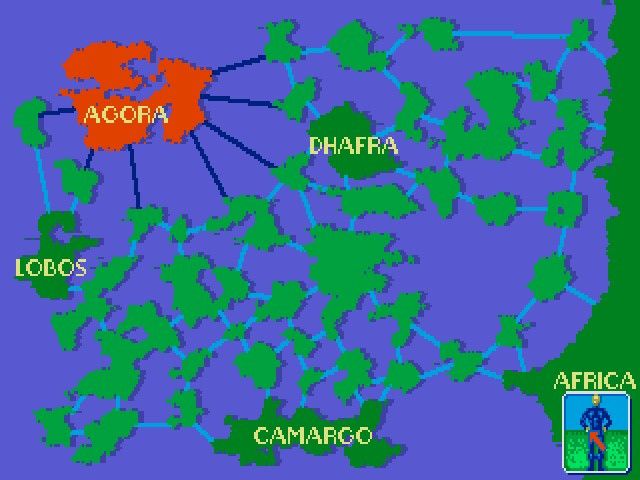
Overview of Flames of Freedom
Flames of Freedom, also recognized under its original working title Wildfire, stands as a notable entry in the tactical gaming landscape of the early 1990s. Developed by Maelstrom Games and published by the industry veteran MicroProse, this title arrived in 1991 as a direct sequel to the highly regarded 1989 release, Midwinter. Rather than adhering to a single rigid classification, the game pioneers a hybrid approach that merges first-person shooter mechanics with action role-playing depth and intricate simulation elements. This unique blend was designed to immerse players in tactical combat while rewarding strategic planning and character progression.
Genre and Gameplay Mechanics
At its core, Flames of Freedom operates as a first-person shooter action role-playing game with simulation elements. The simulation aspect introduces layers of tactical management, requiring players to carefully monitor resources, navigate complex environments, and make consequential decisions that affect both immediate engagements and long-term objectives. The action role-playing components allow for character development and skill utilization, ensuring that combat is never merely about reflexes but also about preparation and adaptability. Meanwhile, the first-person shooter perspective places players directly in the thick of the action, demanding precision and situational awareness. This multi-layered gameplay loop creates a challenging experience where strategic foresight and quick tactical execution are equally vital for survival.
Core Systems
- Tactical Management: Simulation mechanics demand careful resource tracking and strategic positioning.
- Character Progression: Action RPG elements reward skill development and adaptable playstyles.
- Immersive Combat: First-person perspective requires real-time awareness and precise execution.
Story and Historical Setting
As a follow-up to its predecessor, Flames of Freedom continues the narrative established in Midwinter, expanding upon the established world and conflict. While the original title focused heavily on military simulation and tactical warfare, the sequel builds upon that foundation to deliver a more expansive experience. The narrative context remains deeply rooted in the tactical and strategic challenges of its setting, allowing players to engage with a world where military precision and role-playing progression intersect. The story unfolds through the lens of a combat-heavy campaign, where every decision carries weight and the stakes of the ongoing conflict are reflected in the game's demanding mechanics.
Platform Availability and Release History
Upon its initial launch in 1991, Flames of Freedom was made available across the dominant personal computing platforms of the era. Players could experience the game on PC DOS, Commodore Amiga, and Atari ST systems, ensuring broad accessibility for the hardware landscape of the time. The game's enduring appeal was recognized well after its initial release, as evidenced by the Amiga version receiving a re-release in 1993 through Kixx XL. This later distribution helped introduce the title to a new wave of players and cemented its status as a cult classic within the retro gaming community.
Notable Features and Design Philosophy
Several distinctive characteristics set Flames of Freedom apart from its contemporaries. The project notably began under the working title Wildfire before ultimately adopting its final name, reflecting the iterative development process typical of early 90s software production. The seamless integration of simulation mechanics with action role-playing and first-person combat was a bold design choice for 1991, pushing the boundaries of what tactical games could offer. By combining resource management, character progression, and immersive first-person perspectives, the game established a hybrid framework that influenced subsequent tactical and simulation titles.
Key Highlights
- Hybrid Genre Blend: Pioneered the combination of FPS, ARPG, and simulation mechanics.
- Cross-Platform Release: Available on PC DOS, Amiga, and Atari ST upon launch.
- Long-Term Legacy: Amiga edition re-released by Kixx XL in 1993 for renewed accessibility.
Who Flames of Freedom Appeals To
This title is primarily tailored for enthusiasts of tactical gaming, simulation enthusiasts, and collectors of vintage PC and console software. Players who appreciate complex mechanical systems, strategic depth, and the pioneering spirit of early 90s game development will find particular value in its design. The game also appeals to dedicated fans of the Midwinter series, offering a direct continuation of its established gameplay and narrative framework. Additionally, retro gaming historians and players interested in the evolution of hybrid genre mechanics will recognize Flames of Freedom as an important transitional title that bridged simulation and action-oriented gameplay during a transformative period in the industry.