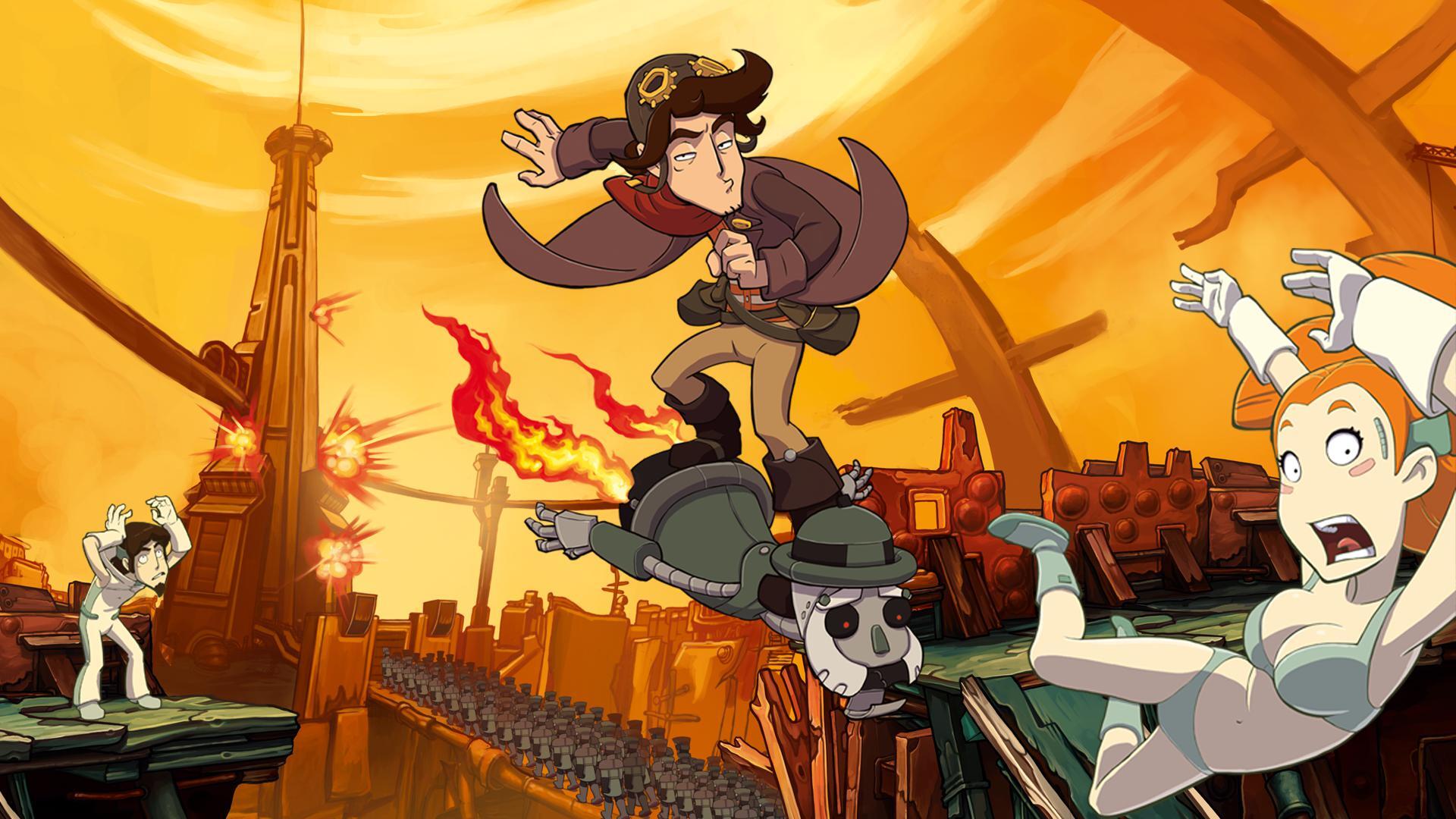
Goodbye Deponia: A Point-and-Click Adventure with a Complex Legacy
Goodbye Deponia stands as the dramatic conclusion to Daedalic Entertainment’s epic Deponia trilogy, offering players a final, sprawling point-and-click adventure that blends RPG elements with traditional graphic exploration mechanics. Released in October 2013, this third installment invites players to step back into the shoes of Rufus, the sardonic and deeply flawed anti-hero, as he embarks on one last quest to save his home from catastrophe. Available on PC, Xbox One, PlayStation 4, Nintendo Switch, and macOS, the game delivers a massive, hand-drawn world that is as visually striking as it is narratively contentious.
Story and Setting: From Junk to Paradise
The game’s world is defined by a stark dichotomy: Deponia, a planet entirely composed of rubbish and junk, and Elysium, a pristine, floating city in the sky that represents purity and beauty. The central narrative follows Rufus, a protagonist who is egoistic, indifferent to others, and largely unaware of his own flaws. Despite his unlikable nature, he is driven by a long-shot goal to leave the dump of Deponia and reach Elysium. In Goodbye Deponia, the stakes are raised as Rufus and his companions attempt to convince the inhabitants of Elysium not to destroy Deponia, setting off a chain of events that derails their original plans and forces them into a series of tricky, high-stakes situations.
The story picks up directly after the events of Chaos on Deponia, carrying over existing character arcs and returning cast members. While the plot introduces complex twists—including a sophisticated scenario where Rufus clones himself, resulting in three separate versions of the character navigating the ruined city of Porta Fisco—the narrative is deeply rooted in the lore of the previous two games. This continuity ensures that returning fans will appreciate the resolved storylines, though new players may find some context missing regarding the motivations of the returning cast.
Gameplay Mechanics and Puzzles
Goodbye Deponia adheres strictly to the traditional point-and-click adventure format. Players must collect items from an inventory, combine them in various ways, and interact with the environment and characters to solve puzzles. The gameplay is characterized by a mix of linear action sequences and open exploration. For instance, the early game takes place in the Hotel Menetekel, a multi-layered location where players must explore every room and speak to guests to uncover the necessary steps for progression.
As the game advances to the larger, more complex area of Porta Fisco, the scope expands significantly. The puzzles are described as zany and odd, often requiring trial and error due to the nonsensical logic of the world and Rufus’s unpredictable actions. While the first few hours offer a refreshing and manageable scope, the latter stages become crammed with hotspots and characters, demanding meticulous exploration. The game lacks an effective in-game hint system, meaning players may need to resort to external guides to progress through particularly obtuse puzzles.
Art Style and Tone
Visually, the game features a unique art style with hand-drawn 2D sprites that are highly reminiscent of comic books. This aesthetic contributes to the game’s light, self-knowing style, allowing for slapstick humor and jokes that address everything from Rufus’s ridiculous heroics to the game’s German origins. The humor is regularly described as delightfully crass, with the narrative not shying away from absurdity.
However, the tone of Goodbye Deponia has been a subject of significant debate. While some reviewers appreciate the slapstick charm and the reversal of traditional adventure tropes, others have criticized the game for its portrayal of characters. Rufus remains a defiantly unlikeable figure, and certain plot points involving stereotypical portrayals of various groups have been described as grotesque and uncomfortable. This divisive element adds a layer of complexity to the experience, making it a game that provokes strong reactions regarding its narrative choices.
Who Is This Game For?
Goodbye Deponia is best suited for fans of classic point-and-click adventures who enjoy intricate, if occasionally frustrating, puzzle design and do not mind a morally ambiguous or darkly humorous narrative. It is particularly recommended for players who have experienced the previous two games, as the story relies heavily on established character dynamics and continuity. Those new to the series may find the lack of contextual background and the game’s controversial thematic elements challenging, but the beautiful art style and epic scale of the final chapter offer a substantial experience for those willing to engage with its unique, if flawed, world.