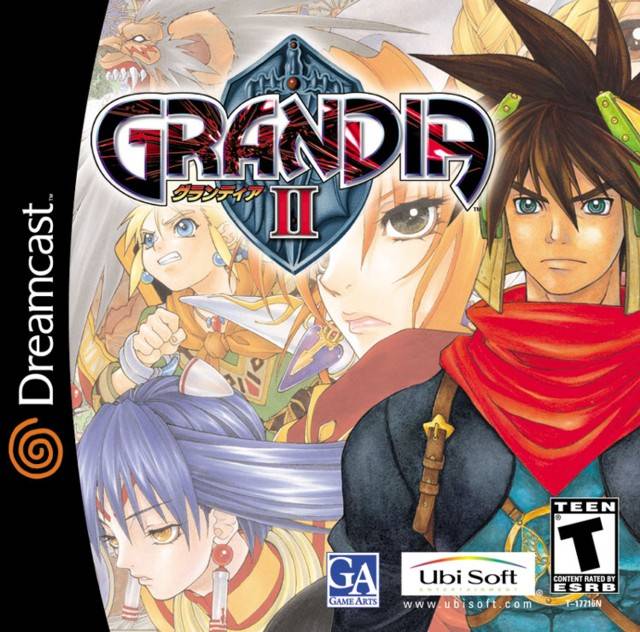
Grandia II stands as a landmark role-playing game developed by Game Arts, originally launching on the Sega Dreamcast in August 2000 before arriving in North America in December 2000. With a Metacritic score of 77, the title has cemented its legacy as one of the finest JRPGs of its generation. This third entry in the Grandia series was the first to utilize fully three-dimensional graphics, offering a mature narrative and refined gameplay mechanics that continue to resonate with RPG enthusiasts.
The World of Grandia II: A Tale of Light and Darkness
Set in a fantasy world millennia after a cataclysmic battle between Granas, the god of light, and Valmar, the god of darkness, the story unfolds in a society rebuilt by the Church of Granas. Valmar was shattered into pieces and scattered across the land, creating a world where faith dictates survival. Players step into the boots of Ryudo, a Geohound mercenary tasked with protecting Elena, a songstress and Sister of Granas. As their journey progresses, the party discovers that the Church's history and the true nature of the world are far more complex than doctrine suggests. The narrative explores themes of faith, the gray areas between good and evil, and features a compelling love triangle that adds emotional depth to the adventure.
Active Time Combat and Strategic Depth
Combat in Grandia II utilizes a dynamic active time battle system where commands must be charged before execution. This mechanic rewards tactical precision; players must time their attacks to interrupt enemy actions while they are charging, while simultaneously guarding their own party members from interruption. The system offers a rich variety of skills, spells, and passive abilities that can be learned using points earned in battle, allowing for deep character customization. The difficulty is well-balanced, encouraging strategic thinking over mindless grinding, with bosses that demand careful planning. While the game features linear progression with limited optional content, the core combat loop remains one of the most engaging and enjoyable systems in the genre.
Notable Features and Cast Performance in Grandia II
One of the standout aspects of the game is its exceptional voice acting and localization. The cast delivers vibrant, well-spoken lines that bring the characters to life, with Ryudo's evolution from an insensitive mercenary to a hero being particularly well-executed. The soundtrack, composed by Noriyuki Iwadare, features heavy percussion and accentuated strings that perfectly complement the game's atmosphere. Key features include:
- Icon-based UI and menus for streamlined navigation.
- A mature storyline with political and religious intrigue.
- A balanced difficulty curve that challenges players without requiring excessive backtracking.
- Memorable musical themes that remain iconic among JRPG fans.
Platform Availability and Port History
Grandia II has been released across multiple platforms, though the experience varies significantly depending on the version. The original Dreamcast release is widely regarded as the definitive version, praised for its technical performance and visual fidelity. Subsequent ports to the PlayStation 2 and Microsoft Windows in 2002 were met with criticism for technical shortcomings and inferior sound quality compared to the Dreamcast original. For modern players, the Grandia II Anniversary Edition released on Steam and GOG in August 2015 provides an enhanced experience based on the Dreamcast version, ensuring the game is accessible on contemporary systems with improved stability and features.
Who Should Play Grandia II?
This title appeals to fans of classic JRPGs who appreciate tactical combat, strong character development, and narratives that question established dogma. Players who enjoy games with a tight difficulty balance, excellent voice acting, and memorable soundtracks will find Grandia II to be a rewarding experience. It is highly recommended for those looking to explore the Golden Age of the Dreamcast or seeking a polished RPG where every battle requires focus and strategy.