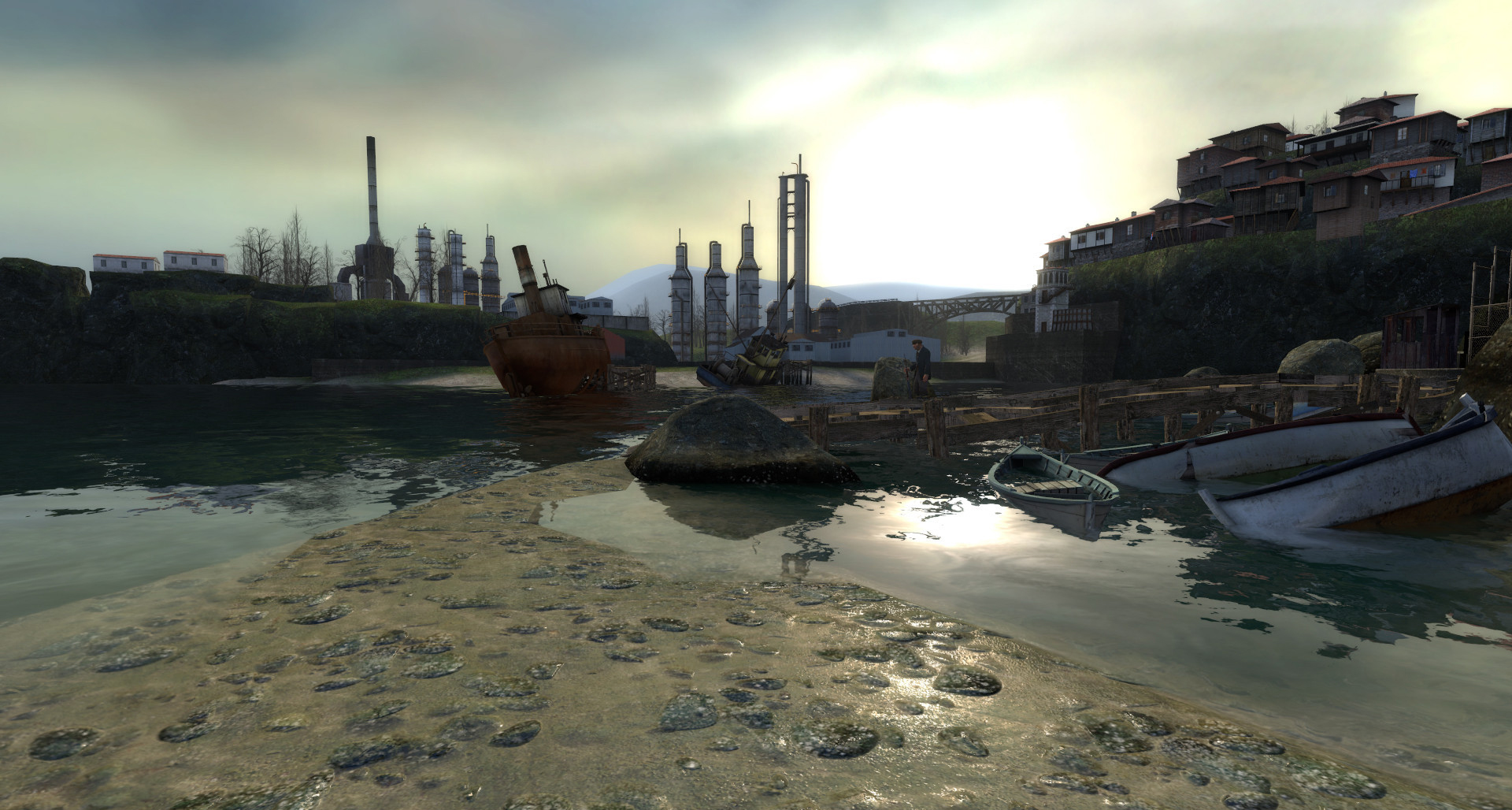
Experience a groundbreaking moment in gaming history with Half-Life 2: Lost Coast. Originally released by Valve on October 27, 2005, this title serves as a specialized addition to the Half-Life 2 experience. While it is often categorized as a technology demonstration, it provides a brief but intense foray into the world of Gordon Freeman, offering players a glimpse into the cutting-edge graphical advancements that would eventually define the next generation of the Source engine.
A Technological Marvel: High-Dynamic-Range Rendering
The primary purpose of Half-Life 2: Lost Coast was to showcase the implementation of high-dynamic-range (HDR) rendering within the Source engine. This feature introduced a level of realistic lighting previously unseen in the genre, emulating real-world photographic effects such as camera overexposure when facing intense light sources. To maximize this effect, the environment features an Eastern Orthodox architectural style, specifically chosen for its colorful materials and natural lighting extremes—ranging from deep shadows to blinding brightness.
For players with high-end, HDR-capable video cards, the visual impact is startling. The lighting makes the rugged coastal scenery feel more immersive and lifelike. Interestingly, this technology was so successful that many of its features were eventually integrated into the main Half-Life 2 experience and future Valve titles.
Gameplay Mechanics and Combat
While the experience is much shorter than the base game—typically lasting around 15 to 20 minutes—the gameplay mechanics are deeply familiar to fans of the franchise. Players retain access to Gordon Freeman’s iconic arsenal, including the crowbar, crossbow, shotgun, and submachine gun. While players do not have the upgraded gravity gun found in later stages of the main game, the combat remains visceral and challenging.
The gameplay loop involves navigating a rocky, vertical terrain. Players must fight through various Combine forces positioned on treacherous rock ledges, requiring keen awareness as shots often arrive from unexpected angles. The mission culminates in high-stakes action involving the destruction of heavy artillery and an attack helicopter using RPGs.
Setting and Story Overview
The narrative of Half-Life 2: Lost Coast is concise and delivered without traditional cutscenes. The adventure begins on a rocky coastline where players encounter a fisherman. He informs Gordon that the Combine have established a massive weapon atop a seaside monastery, which is being used to launch heavy artillery shells into a nearby town. After the fisherman unlocks the gate, the player must ascend the cliffs to disable the weapon and neutralize the threat.
Though it was originally conceived as a chapter for "Highway 17" in the main game, certain story elements and locations were removed during development, leaving this level as a unique, standalone piece of the Half-Life saga. This separation gives the level its distinct, somewhat isolated atmosphere.
Notable Features
- Developer Commentary Mode: Lost Coast was the first Valve title to feature a commentary mode, allowing players to hear developers explain specific design elements and technical hurdles as they progress through the level.
- HDR Showcase: Specifically engineered environments designed to push the limits of light and shadow.
- Free Access: Available as a free download via Steam for anyone who owns Half-Life 2.
Platform Availability and Appeal
Half-Life 2: Lost Coast is available on PC, macOS, and Linux. It is an essential experience for fans of the Half-Life series, tech enthusiasts interested in the evolution of real-time rendering, and players who enjoy short, high-intensity combat encounters. If you appreciate seeing the cutting edge of engine technology and want to explore a hidden corner of the Combine's occupation, this remains a must-play piece of gaming history.