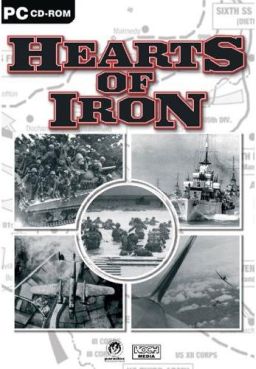
Hearts of Iron stands as a landmark title in the strategy genre, recognized as the first World War II PC game to offer true grand strategic scope. Utilizing a modified engine from its predecessor, Europa Universalis, the game moves away from tactical unit control and instead focuses on the massive, global-scale movement of nations. Players are thrust into a world spanning the entire globe, where they can select any nation to navigate the epic struggles between the era's defining ideologies: Fascism, Communism, and Democracy.
Grand Strategy and Gameplay Mechanics
Unlike traditional real-time strategy games that zoom in on individual combat maneuvers, Hearts of Iron operates at a strategic level. The gameplay is set in real-time but can be paused at any moment, with one minute of gameplay representing one hour of historical progression. Players do not manage individual soldiers; instead, they command divisions across a map divided into provinces. Success is determined by the quality, composition, morale, and numbers of the units you deploy, as well as your ability to maneuver them effectively.
The depth of the gameplay lies in managing the total war effort. To ensure victory, players must oversee several interconnected systems:
- Industrial Management: Construction of factories and infrastructure improvements are vital for sustained combat.
- Research and Development: A highly advanced research model allows players to develop super weapons and superior production capabilities to change the course of history.
- Logistics and Resources: Managing the trade of rare resources and the manufacturing of specific weapons and vehicles is essential for maintaining a modern military.
- Military Composition: Players must decide on the makeup of their forces, such as determining how much support artillery is required for an effective division.
Deep Diplomacy and Domestic Politics
Beyond the battlefield, Hearts of Iron features a sophisticated diplomatic model designed to simulate political systems and their impact on neutral nations. This system dictates how alliances form and how much influence a player can exert over the world order. Internally, players must also navigate a domestic political system that shapes the nation's stability and direction.
Historical Figures and Scenario Customization
The game breathes life into its map through the use of thousands of researched historical figures. Political leaders and generals are not mere statistics; they possess individual uniqueness and specialties. For example, a leader like Rommel may provide bonuses to camouflage and surprise, while Zhukov might excel in commanding armored formations. These leaders gain experience through combat, making the strategic placement of your best commanders a critical decision.
For players looking to move beyond documented history, the game includes a robust scenario generator. This allows players to modify settings, construct custom campaigns, and add national detail in thousands of different combinations, effectively allowing for "alt-history" playthroughs where the outcome of the war is entirely up to the player's skill.
Who Is This Game For?
Hearts of Iron is a dense, complex experience that appeals strongly to history enthusiasts and hardcore strategy fans. It is not intended for players seeking granular tactical control or simple combat mechanics. However, for those who find satisfaction in managing the vast, overwhelming machinery of a global war effort—from resource scarcity to geopolitical machinations—it offers an unparalleled level of depth and replayability on the PC platform.