What is Hotel for Dogs?
Hotel for Dogs is a family-oriented adventure title that adapts the chaotic charm of the 2008 film into an interactive experience. Released on January 6, 2009, the game tasks players with transforming a vacant, run-down hotel into a safe sanctuary for a growing pack of stray dogs. Stepping into the shoes of siblings Andi and Bruce, you must manage daily canine care while outsmarting a persistent dogcatcher. Blending action and puzzle mechanics, the title offers a lighthearted journey focused on exploration, resource gathering, and creative construction.
Story and Setting Overview
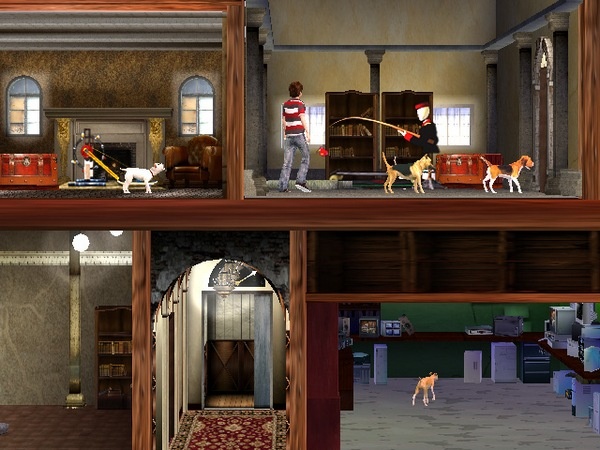
The narrative centers on a young couple who take over a derelict building to hide dozens of stray dogs from authorities. The environment is presented through a unique cutaway view, allowing players to see every room, hallway, and the various characters moving about simultaneously. As the story progresses through a series of chapters, new friends and pups join the household, requiring players to adapt their strategies and expand their living spaces. The game utilizes film clips to narrate the plot, guiding players through the evolving challenges of keeping a hidden sanctuary running smoothly.
Gameplay Mechanics and Genre
Categorized under action and puzzle genres, the game diverges from traditional virtual pet simulations. Instead of long-term monitoring, gameplay is structured around short chapters that focus on immediate objectives. The core loop involves feeding, grooming, and playing with the dogs through simple click-based interactions. However, the primary challenge lies in the seek-and-find mechanics. Players must scour the hotel rooms to locate specific parts and tools. Once collected, these items are used to build over a dozen functional gadgets designed to entertain the dogs, solve environmental puzzles, and protect the sanctuary from discovery.
Notable Features and Platform Availability
The title launched across PC, Nintendo DS, and Wii platforms, offering a total playtime of approximately four hours to complete the main story. A key distinction between the versions lies in their presentation and how they handle narrative transitions.
- The Wii edition incorporates cutscenes featuring clips from the original movie to contextualize each chapter.
- The DS version skips the cinematic transitions and jumps straight into the action, which can make character introductions feel abrupt.
- Both versions feature voice work from the main cast to help players learn controls quickly.
- The game is divided into ten distinct levels, each requiring players to locate hidden items, assemble contraptions, and manage the growing pack efficiently.
While the voice acting is noted as functional rather than deeply emotional, it serves its practical purpose for younger audiences. The consistent use of a cutaway building view ensures that players always have a clear overview of their objectives and the locations of needed resources.
Who It Appeals To
This experience is primarily designed for younger audiences and families looking for a relaxed, cooperative play session. Its straightforward mechanics, clear objectives, and lighthearted tone make it an accessible entry point for players who enjoy puzzle-solving and creative building games. While it may not appeal to veterans seeking complex strategy or deep narrative immersion, its charming premise and hands-on approach to sanctuary management provide a pleasant diversion for fans of the source material and casual gamers alike.