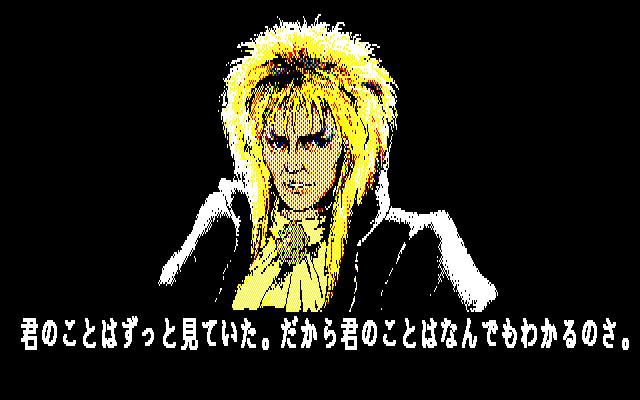
Labyrinth: The Computer Game Overview
Labyrinth: The Computer Game stands as a landmark title in the history of interactive entertainment, released in November 1986 by Lucasfilm Games and published by Activision. This graphic adventure game adapts the beloved fantasy film created by Jim Henson, offering players a unique digital interpretation of the maze world inhabited by the Goblin King. As one of the earliest licensed video games to achieve significant cultural impact, the title challenges players to navigate treacherous environments, solve intricate puzzles, and evade the perils of a shifting labyrinth to achieve a singular objective.
Gameplay Mechanics and Innovation
At its core, the game is a graphic adventure that departs from the text-heavy parsers common in the era. Designed by David Fox, the title introduces the innovative "word wheel" interface. Instead of typing commands, players utilize two scrolling menus to construct sentences by selecting verbs and nouns, streamlining the interaction process. The gameplay revolves around maneuvering a character through a lateral-scrolling maze, solving logic puzzles, and managing a critical resource: time. Players must locate and defeat the antagonist, Jareth, within exactly 13 real-time hours, or face eternal entrapment.
The experience begins with a meta-textual introduction where players input their name, sex, and favorite color, the latter of which determines the protagonist's appearance. Following a brief text-based sequence at a cinema, the game transitions to its graphic format. Once inside the labyrinth, the player encounters a variety of challenges, including deadly oubliettes that threaten to consume valuable time. Strategic items, such as a magical peach, can provide temporary relief from these traps. The game also features cryptic puzzles, such as the Wise Man's garden, where players must decipher riddles to progress, and a bestiary of goblins and fantastical creatures brought to life through the game's distinctive visuals.
Story and Setting
The narrative draws heavily from the 1986 film, featuring a story by Terry Jones and the iconic conflict between the teenage protagonist and the glam-punk Goblin King. The game reproduces many events and characters from the movie, though it offers a distinct path through the adventure. Upon entering the game world, Jareth transports the player into his labyrinthine prison, initiating the countdown. The setting is populated by the whimsical yet dangerous aesthetic of Henson's Creature Shop, blending humor with high stakes. Players encounter various inhabitants of the maze, navigate magical mysteries, and must make choices that determine their fate in the quest to break the curse.
Platform Availability
Upon its release, Labyrinth: The Computer Game was made available on several prominent home computer systems of the mid-1980s. The title supports the following platforms:
- Apple II
- Commodore 64 and 128
- MSX2
- PC-88
Each version delivers the core adventure experience, tailored to the graphical and processing capabilities of the respective hardware.
Notable Features and Legacy
Labyrinth: The Computer Game holds a special place in gaming history as the first adventure game developed by Lucasfilm, predating the studio's more famous point-and-click engine. The game was met with positive reviews and achieved remarkable commercial success, notably outselling the film itself in the United States market.
Development and Creative Influence
Developed under the leadership of David Fox, the project marked a departure from traditional text parsers. Fox's invention of the word wheels was a direct response to the frustration of guessing syntax in earlier adventure games. Furthermore, the inclusion of author Douglas Adams in the early brainstorming phase ensured the game retained a strong sense of humor and clever writing, distinguishing it from other licensed titles of the time. This creative partnership helped shape the final product, resulting in a title that balances humor with genuine challenge. The design innovations of Labyrinth: The Computer Game directly influenced Lucasfilm's subsequent projects, including the critically acclaimed Maniac Mansion. The title remains a testament to the creative synergy between film and gaming, appealing to fans of the original movie, lovers of classic puzzle adventures, and players interested in the evolution of interactive storytelling.